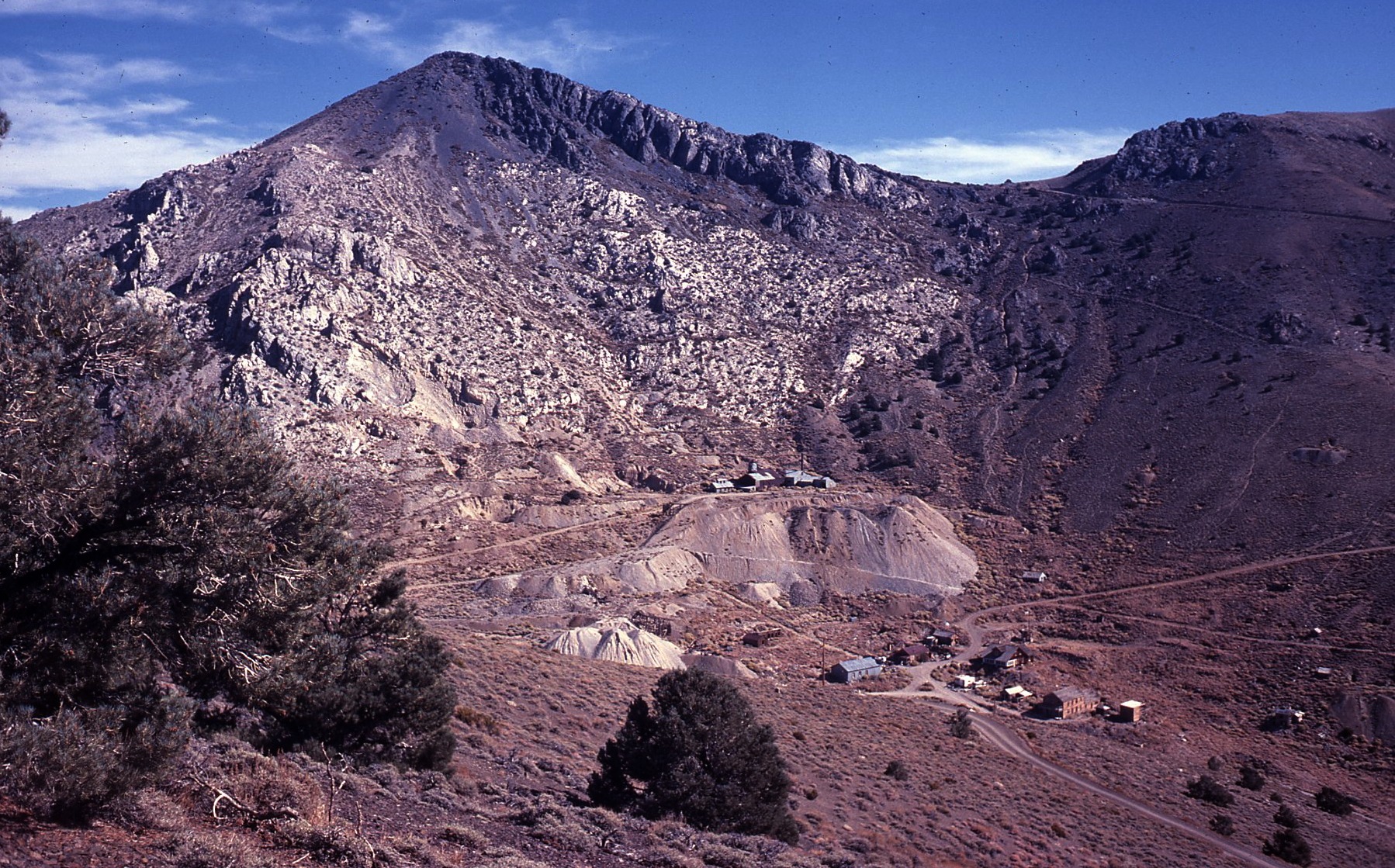
Cerro Gordo Mines
"That's the craziest idea I have ever heard." Robert McCulloch's reaction to buying London Bridge for Arizona was measured compared to what Pablo Flores must have thought in 1865 when he discovered silver ore glinting near the summit of Buena Vista Peak. Flores began primitive mining operations in one of the most hostile environments in California, where summer temperatures soar and winter storms bury the mountain roads for months. The name Cerro Gordo, Spanish for "Fat Hill," proved prophetic. This remote peak in the Inyo Mountains would yield one of the richest silver deposits in the American West, spawn a boomtown of 4,700 residents, and fuel the growth of a small pueblo called Los Angeles.
Silver in the Sky
The Inyo Mountains rise like a wall east of Owens Valley, and Cerro Gordo sits near their crest at nearly 9,000 feet. Getting the silver out proved almost as difficult as finding it. Early miners used adobe ovens and open trenches, extracting ore through backbreaking labor. Victor Beaudry, a businessman from Independence whose brother Prudent served as Los Angeles mayor, saw opportunity in the chaos. He opened a store, then began accepting mining claims to settle debts until he controlled the richest veins. But it was Mortimer Belshaw who transformed Cerro Gordo from a rough camp into an industrial operation. In 1868, he brought the first wagon load of silver to Los Angeles, secured financing for a superior smelter, and built the Yellow Road, a toll route cut through golden rock that gave him control over every ounce of metal leaving the mountain.
Building Los Angeles, One Ingot at a Time
The connection between this remote ghost town and California's largest city runs deeper than most realize. Smelters along Owens Lake at Swansea and Keeler processed Cerro Gordo ore, producing ingots that traveled by mule train across the Mojave to Los Angeles. Between 1879 and 1880 alone, the district produced gold bullion worth over $88,000 in today's dollars and silver bullion exceeding $3.7 million. Over its full operating history from 1865 to 1949, the mines generated an estimated $17 million in lead, silver, and zinc. This wealth flowed into a growing Los Angeles, financing construction and commerce that helped transform a dusty town into a metropolis. The silver from Cerro Gordo even supplied the nascent California film industry, as documented in the 2013 Artbound episode "Agh20: Silver and Water."
Three Eras of Extraction
Cerro Gordo's story unfolds in three acts. The silver and lead boom peaked in the early 1880s, when the population swelled and violence became common enough to fill a cemetery on the hillside. Then came decline and near-abandonment. But in the 1910s, Louis D. Gordon discovered zinc deposits and launched a second boom, the "Great Zinc Era." The town electrified in 1916, replacing steam power with modern machinery. By 1920, only ten miners remained. Mining largely ceased by 1938, though one determined prospector, a former high school teacher, worked the tunnels alone starting in 1997, selling small amounts of silver to tourists while searching for a productive vein well into his seventies. The underground workings honeycomb the mountain with extensive tunnels, testament to a century of extraction.
Ghost Town Living
The American Hotel stood since 1871, the oldest hotel in California east of the Sierra Nevada, until fire destroyed it on June 15, 2020, along with the neighboring icehouse and a residence. The loss came just two years after Brent Underwood and Jon Bier purchased the entire ghost town with Los Angeles investors. Underwood moved to Cerro Gordo full-time, documenting his solitary existence restoring the ghost town through a YouTube channel that has captivated millions. His 2024 book "Ghost Town Living" chronicles four years of isolation, challenges, and discovery. In 2025, the reconstructed American Hotel was completed, and Cerro Gordo appeared on the Dropout TV series "Game Changer," when comedian Jacob Wysocki delivered a cardboard cutout of host Sam Reich deep into the mines for the show's "most remote location" challenge.
The Mountain Today
Controversy arrived in 2021 when it emerged that previous owners had sold mining claims in the adjacent Conglomerate Mesa Formation to K2 Gold Corp, raising fears of a cyanide open-pit mining operation near Death Valley. Environmental groups and Native tribes opposed the expansion, and in March 2022, the company suspended its proposal after the Bureau of Land Management required an environmental impact statement. Today, Cerro Gordo exists in a state of "arrested decay," preserved enough to tell its story but weathered enough to feel authentic. The Belshaw House still stands from 1868, as does the 1909 Gordon House. Ghost Adventures filmed an episode here in 2019, drawn by the same atmosphere of history and isolation that keeps visitors making the treacherous drive up the mountain.
From the Air
Cerro Gordo sits at coordinates 36.538N, 117.795W in the Inyo Mountains at approximately 8,500 feet elevation. From the air, look for the historic structures clustered on the steep mountainside above Owens Valley. The Sierra Nevada rises dramatically to the west, with the white salt flats of Owens Lake visible below. Nearest airports include Lone Pine Airport (O26) approximately 10nm southwest and Bishop Airport (KBIH) 40nm north. Maintain safe altitude for mountain terrain and be aware of severe turbulence potential along the Sierra escarpment.