Cerro Rico
They call it the mountain that eats men. Cerro Rico rises above the city of Potosi in southern Bolivia, its conical silhouette so central to Bolivian identity that it appears on the national coat of arms alongside the condor and the alpaca. In 1545, a Quechua miner named Diego de Huallpa discovered silver here while searching for an Inca shrine. What followed was one of history's great acts of extraction: the mountain's veins yielded so much silver that Potosi became one of the largest cities in the world, rivaling London and Paris. That wealth flowed to the Spanish Crown, financed European wars, and reshaped the global economy. The cost was borne by the indigenous and enslaved workers who descended into the tunnels. Historians debate the precise toll, but the scale of human suffering was enormous, and the mountain is still taking lives today.
Silver and the Mita
The Spanish Empire built its extraction system on an Inca foundation. In 1574, Viceroy Francisco de Toledo reintroduced the mita, a system of rotational forced labor that the Inca had used for public works, and turned it toward the silver mines. Under the colonial mita, indigenous men from communities across the Andes were conscripted for months of underground labor. They descended into tunnels where they worked by candlelight, carrying ore on their backs up ladders that could stretch hundreds of feet. The Spanish Crown preferred indigenous labor to enslaved African workers in the mines, citing the high mortality and low productivity rates of the latter in high-altitude conditions. The first decades of extraction were straightforward: the mountain held vast deposits of pure silver and silver chloride near the surface. By 1565, those high-grade ores were exhausted.
Mercury and the Human Cost
When the easy silver ran out, a new technology arrived: the patio process, which used mercury to extract silver from lower-grade ores. It was effective and devastating. Mercury poisoning became endemic among the workers, attacking their nervous systems, kidneys, and lungs. Combined with silicosis from inhaling rock dust, collapsing tunnels, and the sheer physical toll of working at altitudes above 4,000 meters, the mines consumed human lives at a rate that horrified even some colonial-era observers. The mountain earned its name, la montana que come hombres, the mountain that eats men. The exact death toll remains contested among historians. Some sources cite a figure of eight million deaths, though scholars like Peter Bakewell, Enrique Tandeter, and Raquel Gil Montero argue that number likely represents total deaths across the entire Viceroyalty of Peru, not Potosi alone. What is beyond dispute is that hundreds of thousands of people, indigenous conscripts, enslaved workers, and free laborers called mingas who stayed on after their mita service, died in and around these mines.
A Mountain Hollowed Out
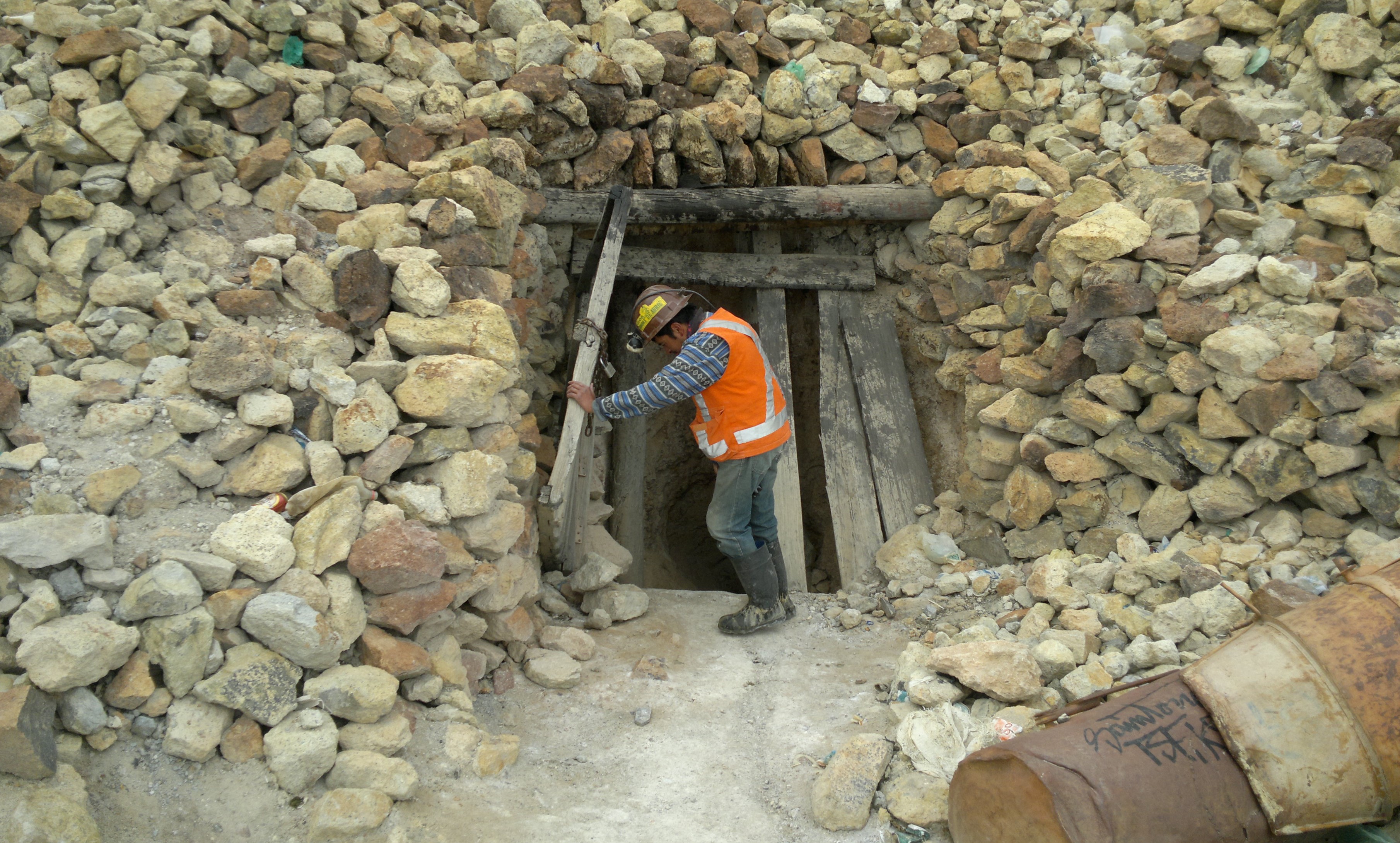
Five centuries of mining have reshaped the mountain itself. Spanish-era extraction removed the original summit through mountaintop mining, giving Cerro Rico its current conical profile, which dates to the 17th century. The interior is honeycombed with tunnels, some dating back centuries, intersecting and collapsing into one another. In 2011, a sinkhole opened at the summit, serious enough that it had to be filled with ultra-light cement. The peak continues to sink by several centimeters each year. In 2014, UNESCO placed Cerro Rico and Potosi on its list of endangered World Heritage Sites, citing uncontrolled mining operations that risk degrading the site. The mountain still employs roughly 15,000 miners, many of them working in cooperatives with limited safety equipment. Miners today contract silicosis at alarming rates and have a life expectancy of around 40 years.
The Weight of Legacy
Cerro Rico's silver did not just enrich Spain. It reshaped global trade, flowing through Manila galleons to China and fueling the first truly worldwide economy. The city of Potosi, built on extraction wealth, filled with baroque churches and colonial mansions. San Luis Potosi in Mexico was named after the mountain, a tribute to the riches other colonial towns hoped to replicate. According to tradition, Simon Bolivar waved a flag from the summit during the independence struggles, and the mountain was incorporated into Bolivia's coat of arms. Today, the cooperative miners who work Cerro Rico occupy a complex position in Bolivian society, powerful enough politically to have helped elect President Evo Morales in 2006, yet trapped in dangerous work with few alternatives. As one former miner told a reporter: "You have to be crazy to work in the mines, with the conditions. But there are no other alternatives."
From the Air
Located at 19.62S, 65.75W in southern Bolivia at approximately 4,824 meters elevation. The mountain's distinctive conical shape is visible from considerable distance. Nearest airport is Capitan Nicolas Rojas Airport (SLPO) at Potosi, though the high altitude limits aircraft performance significantly. From the air, mining scars and the sinkhole at the summit may be visible. The city of Potosi spreads at the mountain's base. Caution: extremely high terrain with unpredictable mountain weather.