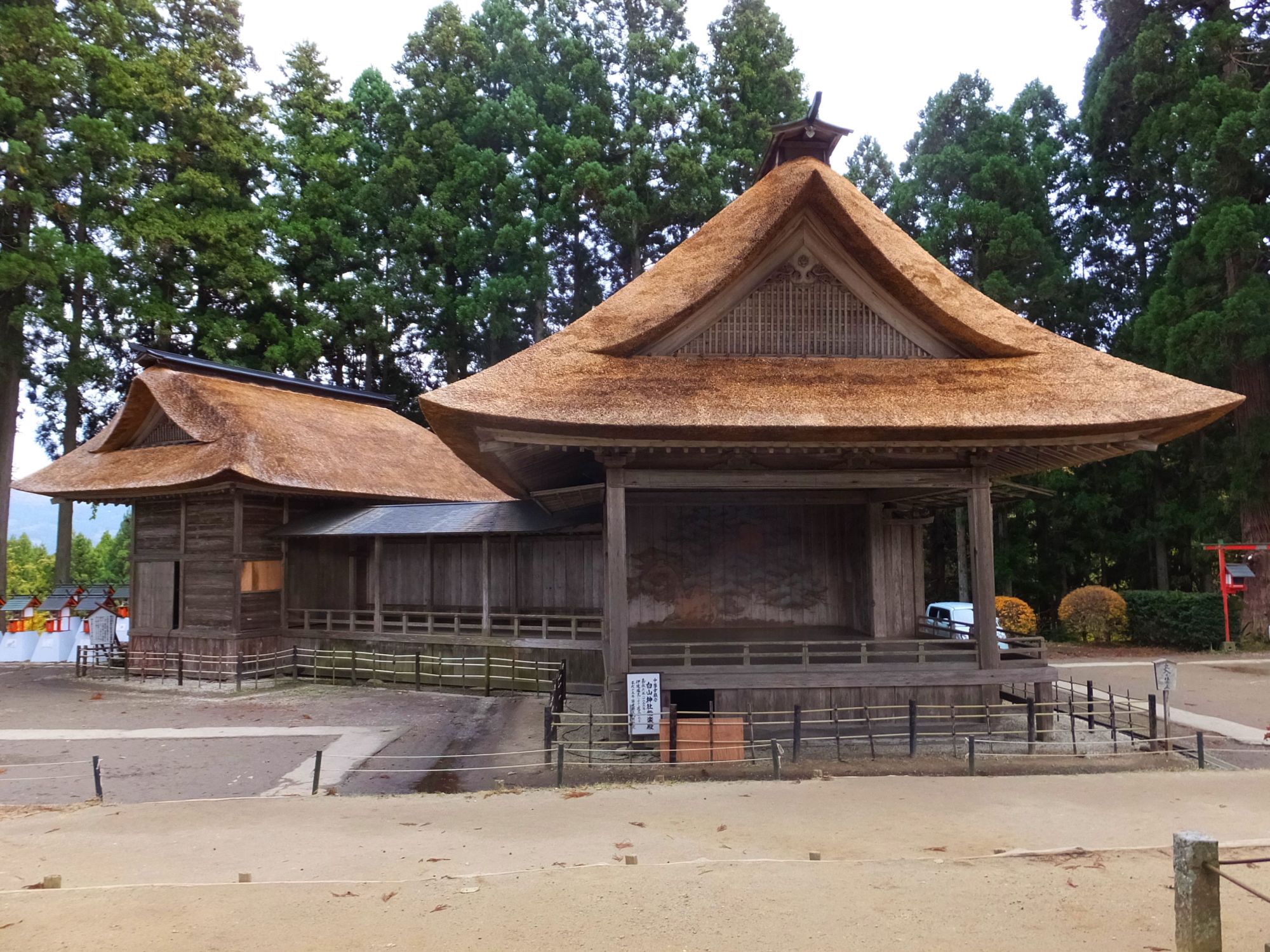
Chūson-ji
Beneath three gilded altars in a five-and-a-half-meter hall, the mummified bodies of three warlords have rested for nearly nine centuries. Beside one of them sits a wooden casket containing the severed head of a fourth. This is Chūson-ji, a Buddhist temple on a wooded hillside in the small town of Hiraizumi, Iwate Prefecture, where the gold leaf still gleams on surfaces laid down in 1124 and the dead are separated from the living by nothing more than lacquered wood and mother-of-pearl. It is a place built on grief, designed as a paradise, and now recognized as a UNESCO World Heritage Site -- one of the most remarkable survivals of Japan's Heian period.
A Paradise Born from Bloodshed
Fujiwara no Kiyohira knew war intimately. He had fought through both the Former Nine Years War and the Latter Three Years' War, losing his family in the carnage that swept through northern Honshu in the eleventh century. When the fighting ended and he emerged as the founder of the Northern Fujiwara clan, he did not build a fortress. He built a temple. Beginning in the early twelfth century, Kiyohira poured his resources into creating a Buddhist complex that would placate the souls of every person killed in those wars -- on every side. According to the Azuma Kagami, the official history of the Kamakura shogunate, Chūson-ji at its peak contained more than 40 halls and pagodas and over 300 monks' residences. His son Fujiwara no Motohira continued the vision, commissioning the great temple Mōtsū-ji nearby. His grandson Fujiwara no Hidehira added Muryōkō-in. For nearly a hundred years, Hiraizumi rivaled Kyoto in splendor.
The Golden Hall That Outlasted Everything
The Konjiki-dō is the reason people come to Hiraizumi. Completed in 1124, this compact building -- just five-and-a-half meters on each side and eight meters tall -- is covered in gold leaf inside and out. The interior brings together mother-of-pearl inlays, intricate metalwork, lacquerwork, and paintings that represent the pinnacle of late Heian period craftsmanship. Three altars line the interior, each centered on a seated Amida Nyōrai flanked by standing Kannon and Seishi Bosatsu, six Jizō figures, and guardian Niten statues. The Konjiki-dō was the first structure ever designated a National Treasure of Japan. In 1288 -- more than 160 years after its construction -- a wooden shelter was built over it to protect it from the elements. Today it sits inside a concrete building constructed in 1965, visible through thick acrylic glass. Even filtered through modern protection, the gold still burns.
The Dead Beneath the Altars
What makes the Konjiki-dō extraordinary beyond its artistry is what lies beneath it. The building doubles as a mausoleum for three generations of Fujiwara lords. When researchers last examined the mummies in 1950, they confirmed what centuries of tradition had maintained. Fujiwara no Kiyohira's mummified remains rest under the central altar. Motohira, identified by evidence of the cerebral hemorrhage that killed him, was found under the northwest altar. Hidehira's remains occupy the southwest altar -- but he does not rest alone. Beside him sits a casket containing the severed head of his son, Fujiwara no Yasuhira, who was beheaded in 1189 when Minamoto no Yoritomo's armies destroyed Hiraizumi and ended a century of Fujiwara rule. Father and son, reunited in death beneath gold leaf and mother-of-pearl.
Fire, Neglect, and a Poet's Tears
Hiraizumi's fall in 1189 began a long decline. Chūson-ji survived Minamoto no Yoritomo's campaign, but with its patrons gone, the complex slowly crumbled. A devastating fire in 1337 destroyed most of the remaining structures, though more than 3,000 National Treasures and Important Cultural Properties were saved. During the Edo period, the Date clan of Sendai Domain partially rebuilt the temple, and it became a subsidiary of Kan'ei-ji in Edo. The poet Matsuo Bashō visited during his famous journey recorded in Oku no Hosomichi. Standing among the ruins, he composed one of his most celebrated haiku, moved by the contrast between the former glory and the silence he found. Today only two original buildings survive from Kiyohira's time: the Konjiki-dō and a sutra repository. But those two buildings, along with the thousands of artifacts preserved through centuries of upheaval, earned Chūson-ji its place on the UNESCO World Heritage list in 2011.
From the Air
Located at 39.00N, 141.10E in the town of Hiraizumi, southern Iwate Prefecture. The temple complex sits on a wooded hillside and is not easily distinguished from the air, but the town of Hiraizumi is identifiable along the Kitakami River valley. Nearest major airport: Hanamaki Airport (RJSI), approximately 60km north. Sendai Airport (RJSS) lies approximately 130km south. The area is accessible via the Tohoku Shinkansen to Ichinoseki Station. Best viewed in clear conditions; autumn foliage season (October-November) is particularly dramatic in the surrounding hills.
Sources
- Chūson-ji
- A History of Japan to 1334
- 中尊寺境内
- Chūson-ji - Wikipedia
- Chusonji Temple - Japan Guide