Chagai-II
Where a small hillock once rose from the rolling Kharan Desert, there is now a crater. On May 30, 1998 -- two days after Pakistan detonated five nuclear devices beneath the granite of the Ras Koh Hills -- a single boosted fission weapon was lowered into an L-shaped horizontal shaft in this remote corner of Balochistan and fired. The blast yield measured 20 kilotons of TNT equivalent, confirmed by the Theoretical Physics Group and later corroborated by Dr. Abdul Qadeer Khan himself. Chagai-II, as the test was codenamed, completed Pakistan's entry into the nuclear club and remade the geopolitics of South Asia in a weekend.
A Desert Chosen for Its Emptiness
The search for a suitable test site began more than two decades before the weapon was ready. In 1976, nuclear physicist Dr. Ishfaq Ahmad and seismologist Dr. Ahsan Mubarak conducted a three-dimensional geological survey of the Kharan region, a desert valley squeezed between the Ras Koh Hills to the north and the Siahan Range to the south. The requirements were exacting: extreme isolation, minimal wildlife, and weather conditions harsh enough to discourage habitation. The Kharan Desert delivered on every count -- temperatures swing from 55 degrees Celsius in summer to near freezing in winter, rainfall is negligible, and vegetation barely clings to the poor soils. Prime Minister Zulfikar Ali Bhutto gave final clearance, and the Pakistan Armed Forces took over logistics. Military engineers, acutely aware of satellite surveillance, built the site with extraordinary caution.
Tunnels Beneath the Sand
The Special Development Works division constructed what amounted to a hidden underground complex: 24 cold test sites, 46 short tunnels, and 35 subterranean accommodations for troops, command centers, and monitoring stations. The main test shaft stretched 300 meters in an L-shaped configuration, threaded with diagnostic cables and motion sensors. Preparations took nearly three years and were finished by 1980 -- before Pakistan had actually assembled a functional atomic bomb. The Frontier Works Organization later modernized the laboratories, though its role in construction went largely uncredited for years. When the device was finally placed in the shaft in May 1998, it occupied infrastructure that had been waiting underground for almost two decades.
Thirty-Six Hours Between Tests
Chagai-II did not happen in isolation. On May 28, Pakistan had conducted Chagai-I -- five simultaneous detonations inside the Ras Koh granite mountains, a direct response to India's Pokhran-II tests earlier that month. The second test, two days later, used a different site and a different approach. The device was a boosted fission weapon fueled by weapons-grade plutonium, based on a design that had been cold-tested in 1992. Its yield reached roughly 60 percent of the combined Chagai-I output. Lieutenant Colonel Zulfikar Ali Khan oversaw final preparations alongside PAEC chairman Munir Ahmad Khan and Dr. Ishfaq Ahmad. Samar Mubarakmand led the technical team from the Pakistan Atomic Energy Commission, supported by directors from divisions spanning isotope applications, technical development, and science engineering services.
A Crater Where a Hill Once Stood
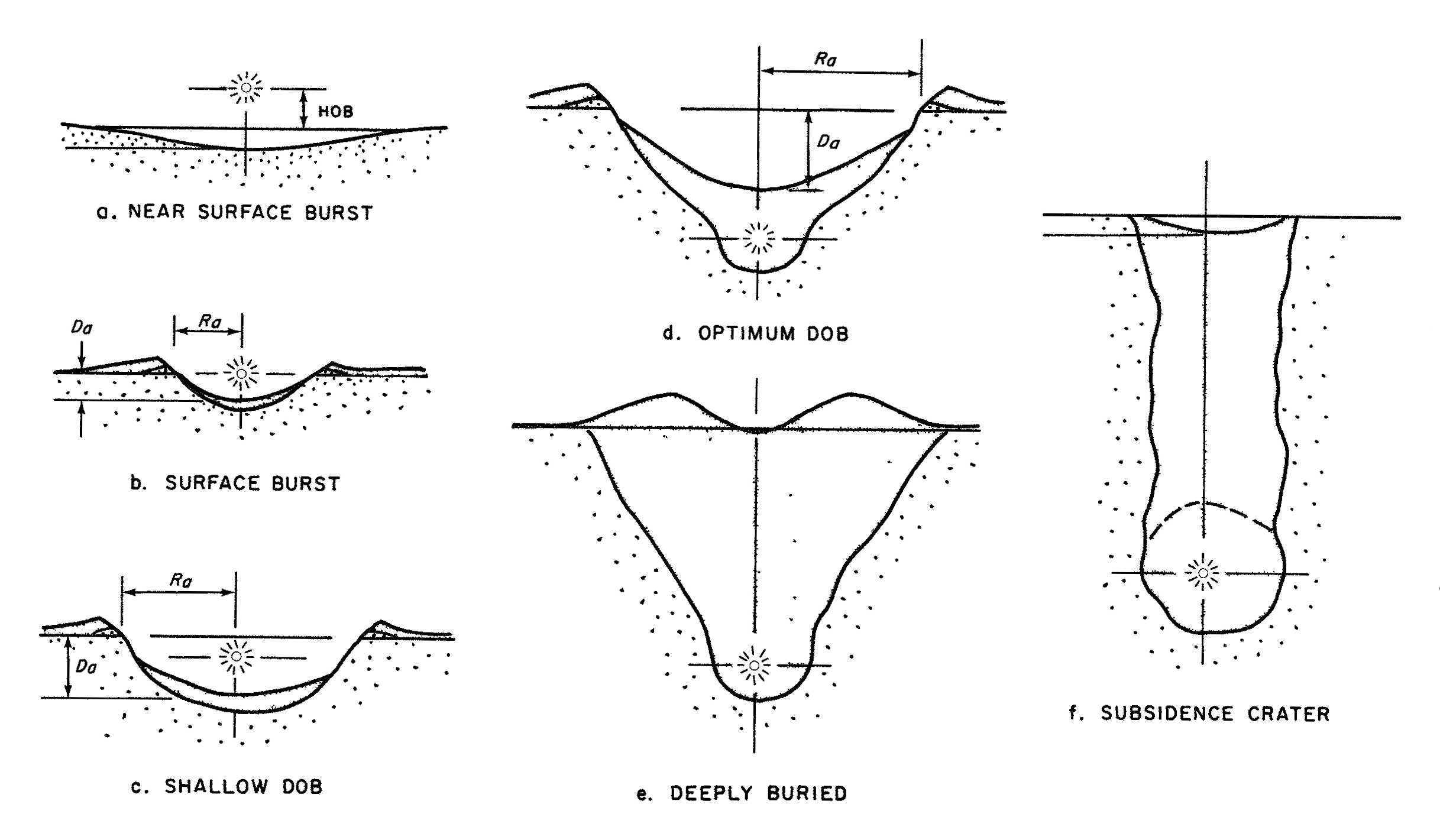
Today the Kharan test site is a place defined by absence. The hillock that marked ground zero is gone, replaced by a depression in the desert floor. The tunnels and monitoring stations remain buried beneath sand and silence. No monument marks the spot -- the desert itself serves as the memorial, indifferent to the geopolitical weight of what happened beneath its surface. The test triggered international sanctions, reshaped Pakistan's relationship with the global community, and cemented a nuclear rivalry with India that persists to this day. But in the Kharan Desert, where summer heat distorts the horizon and wind scours the sparse scrub, the landscape has already begun reclaiming the evidence. The crater softens with each passing year, slowly filling with the same dust and grit that covers everything else in this vast, empty quarter of Balochistan.
From the Air
Located at 28.43N, 63.86E in the Kharan Desert of Balochistan, Pakistan. The site lies in a desert valley between the Ras Koh Hills to the north and the Siahan Range to the south, roughly 100 km southwest of Kharan town. Nearest significant airports include Quetta International Airport (OPQT) approximately 350 km northeast. The terrain is flat desert with minimal features; the test crater may be visible at lower altitudes in clear conditions. Summer temperatures are extreme. Best viewed in winter months when visibility improves.