Chakulia Airport
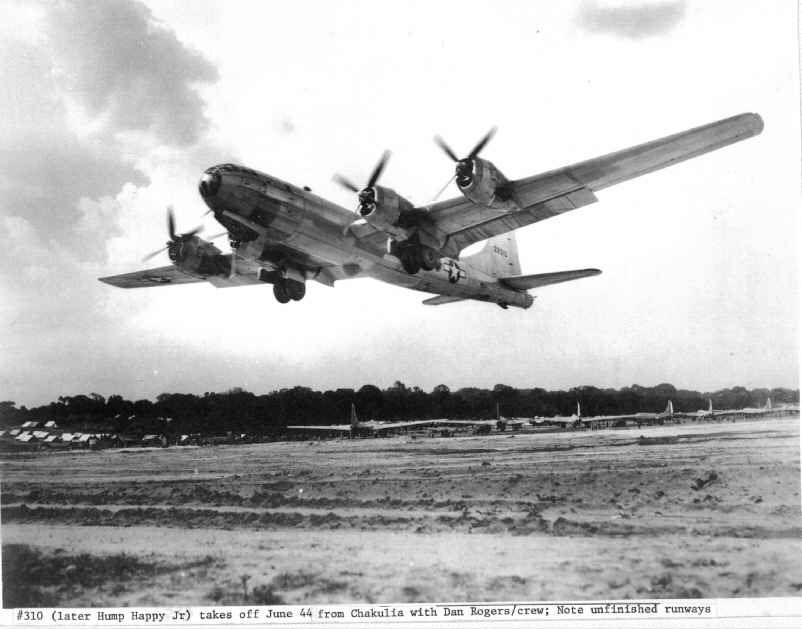
The runway at Chakulia has not seen a scheduled flight since World War II ended. Weeds push through cracked concrete, and abandoned hardstands are visible only from the air, their outlines softened by decades of monsoon seasons. But in 1944, this strip of eastern India was one of the most strategically important pieces of pavement on Earth -- a launching point for B-29 Superfortress missions against the Japanese home islands, the first American bombers to strike Japan since the Doolittle Raid two years earlier. The story of Chakulia is a story about the extraordinary lengths to which a wartime air force will go, and the equally extraordinary inefficiency that sometimes results.
Built for Burma, Rebuilt for Tokyo
Chakulia Airfield was constructed in 1942 by British contractor Das & Mohanty, originally designed for B-24 Liberator operations against the advancing Japanese in Burma. The 22nd Bombardment Squadron of the 341st Bombardment Group arrived on December 30, 1942, flying B-25 Mitchells on missions targeting bridges, locomotives, and railroad yards to disrupt Japanese supply lines in central and northern Burma. By December 1943, however, the airfield had been redesignated for a far more ambitious purpose: it would become one of four B-29 Superfortress bases established by the Americans in India as part of Operation Matterhorn, the XX Bomber Command's plan to bomb Japan from the Asian mainland. Thousands of Indian laborers worked to lengthen the runways and upgrade the facilities, a transformation that was still incomplete when the first Superfortresses touched down.
Kansas to Calcutta the Long Way
The 40th Bombardment Group arrived at Chakulia on April 2, 1944, after a deployment from Pratt Army Air Field in Kansas that took nearly two weeks and spanned most of the globe. The route ran south from Florida through the Caribbean to Natal, Brazil, then across the South Atlantic to West Africa. The group reassembled in Marrakesh, Morocco, flew east through Algeria and Egypt, and finally reached Karachi before heading to their new home in Jharkhand. By the time the crews arrived, both men and machines were exhausted. The conditions at Chakulia were poor, and within days of arrival, the B-29s were grounded by engine fires -- the Wright R-3350 engines had not been designed for ground temperatures exceeding 115 degrees Fahrenheit, a threshold regularly surpassed in the Indian summer. Modifications to the engines and cowl flaps eventually allowed flights to resume, but the problems were a preview of the operational headaches that would define Chakulia's wartime role.
Six Trips to Fly One Mission
The logic of Operation Matterhorn was elegant in theory and punishing in practice. From Chakulia, the 40th Bomb Group would fly combat missions against Japan from forward staging bases near Chengdu in south-central China. But Japan controlled the sea lanes around China, making resupply by ship impossible. Everything -- fuel, bombs, spare parts -- had to be flown 1,200 miles from India over the eastern Himalayas, a route Allied pilots called "the Hump." The B-29s themselves served as flying tankers for these supply runs, stripped of combat equipment and loaded with seven tonnes of fuel for a six-hour one-way flight that pushed the aircraft to the edge of its range. Each Hump crossing was counted as a combat mission because of the extreme danger involved. It took six round-trip supply flights to accumulate enough materiel at the forward base for a single bombing mission. The first combat strike from Chakulia came on June 5, 1944 -- a 2,261-mile round trip to the Makasan railroad yards in Bangkok, the longest bombing mission attempted during the war to that point.
From Superfortresses to Silence
On June 15, 1944, the 40th participated in the first American air attack on the Japanese home islands since the Doolittle Raid of 1942, earning a Distinguished Unit Citation for bombing the iron and steel works at Yawata in August of that year. But Operation Matterhorn was bleeding resources faster than it could produce results. By late 1944, the Joint Chiefs of Staff concluded that staging B-29 operations from China was unsustainably expensive in men and materiel. In February 1945, the 40th Bombardment Group departed Chakulia, flying south to Ceylon, across the Indian Ocean to Perth, and north through New Guinea to their new home at West Field on Tinian in the Mariana Islands. With the B-29s gone, Chakulia reverted to reserve status. The 28th Service Group performed caretaker duties until the last Americans left in late 1945 and the airfield was turned over to the British colonial government. Today, the sprawling wartime base is classified as a civil airport but has no scheduled service. The taxiways and hardstands remain, crumbling monuments to a brief, intense period when this quiet corner of Jharkhand was connected by steel and aviation fuel to the most consequential air campaign of the twentieth century.
From the Air
Chakulia Airport is located at approximately 22.47N, 86.71E in the Purbi Singhbhum district of Jharkhand. The old wartime runway and surrounding infrastructure are visible from the air, though in significant disrepair. Abandoned hardstands and taxiways can be traced in aerial imagery. The nearest airport with regular commercial service is Birsa Munda Airport (VERC) in Ranchi, approximately 150 kilometers to the northwest, or Sonari Airport near Jamshedpur. The terrain is relatively flat with scattered vegetation, and the former airfield footprint remains large despite decades of abandonment.