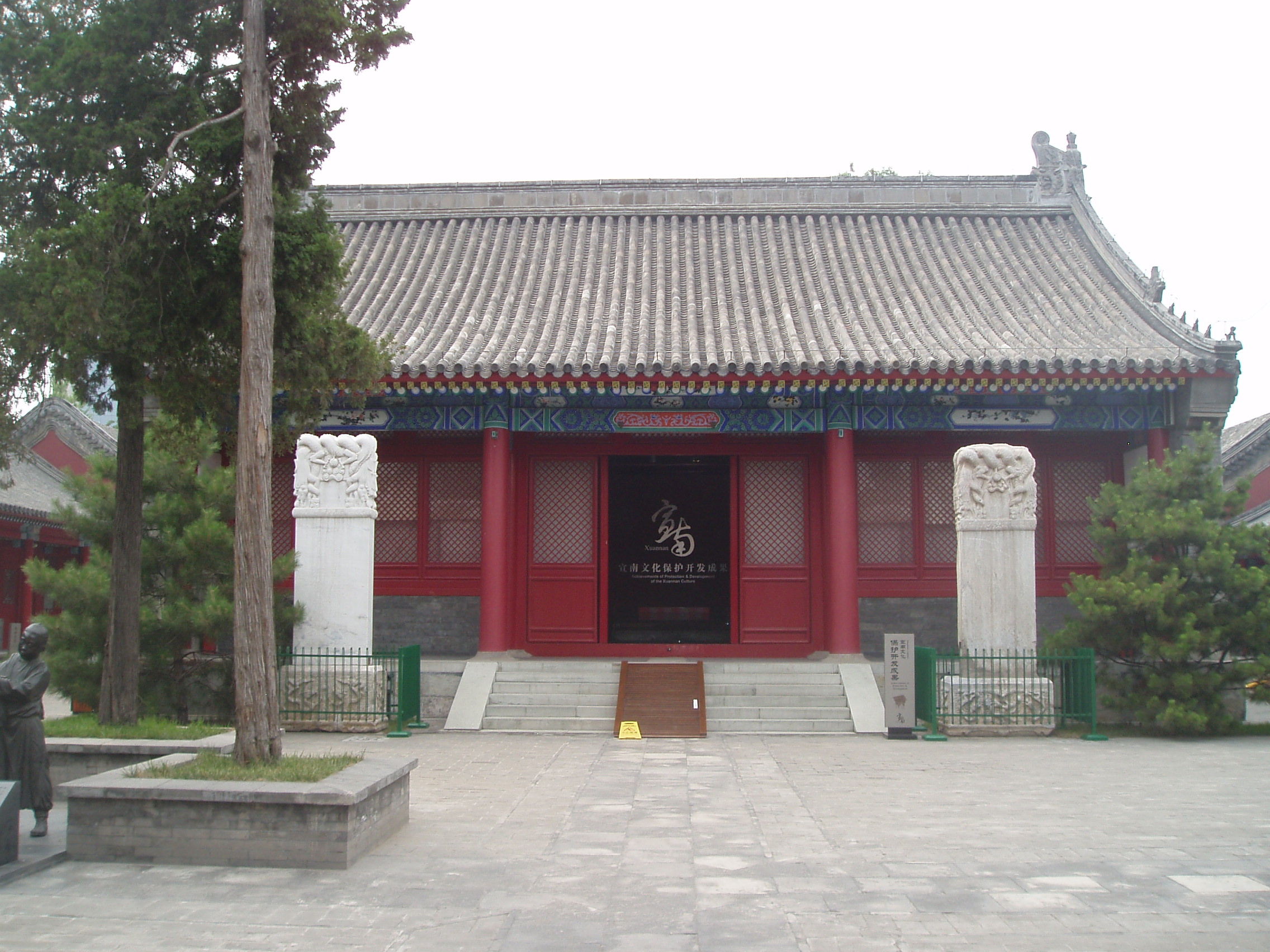
Changchun Temple
The Changchun Temple has been, at various points in its four-century existence, a place of Buddhist devotion, a storage facility for coffins, somebody's apartment, and finally a museum. Built in 1592 on the orders of the Wanli Emperor's mother during the Ming dynasty, the temple at 9 Changchun Jie in what was then Xuanwu District has absorbed the shocks of Beijing's turbulent history with a resilience that belies its modest scale. Its three halls arranged around a single courtyard tell a compressed story of survival, loss, and reinvention.
Imperial Origins
The temple's founding in 1592 placed it squarely in the late Ming dynasty, a period when Beijing's religious landscape was dense with temples, monasteries, and shrines competing for imperial patronage. That the Wanli Emperor's mother commissioned its construction gave the Changchun Temple a measure of prestige, but the Ming court's favor was no guarantee of permanence. The Wanli Emperor himself is remembered as one of the most reclusive rulers in Chinese history, a man who refused to hold court for decades. His mother's piety was, by contrast, visible and active. The temple she built reflected the devotional culture of the era: compact, centered on a single courtyard, and designed for quiet contemplation rather than the grand ceremonial functions of larger Beijing temples.
Earthquake and Decline
The 1679 Sanhe-Pinggu earthquake devastated much of Beijing, and the Changchun Temple suffered heavily. It was never fully restored to its former condition. Over the centuries that followed, the temple drifted from its original purpose. At one point it became a storage space for coffins, a practical if melancholy use for a damaged religious building. After the establishment of the People's Republic of China in 1949, the transformation was even more dramatic: the temple grounds were converted into residential housing. Families lived in spaces once dedicated to Buddhist worship, a common fate for many of Beijing's smaller temples during the decades when religious sites were repurposed for secular needs.
Resurrection as Museum
In 2001, the temple was placed under cultural protection, marking the beginning of its most recent transformation. An extensive renovation costing nearly 200 million RMB restored the buildings, and in 2005 the Changchun Temple reopened as the Xuanwu Cultural Museum. The museum preserves the temple's architectural form while filling its halls with exhibits on the cultural history of the surrounding district. The Xuanwu Municipal Bureau of Tourism now occupies an adjacent space, turning the temple compound into both heritage site and administrative hub. For visitors, the Changchun Temple offers a glimpse of the quieter, neighborhood-scale Buddhism that once saturated Beijing's residential quarters, a counterpoint to the grand monasteries that dominate the tourist circuits.
From the Air
Located at 39.89N, 116.36E in central Beijing, within the former Xuanwu District (now part of Xicheng District). The temple sits in the dense urban core southwest of the Forbidden City. Beijing Capital International Airport (ZBAA) is approximately 30 km to the northeast. Beijing Daxing International Airport (ZBAD) is about 45 km to the south. From the air, this area appears as tightly packed low-rise hutong neighborhoods amid taller modern development.