Changdeokgung
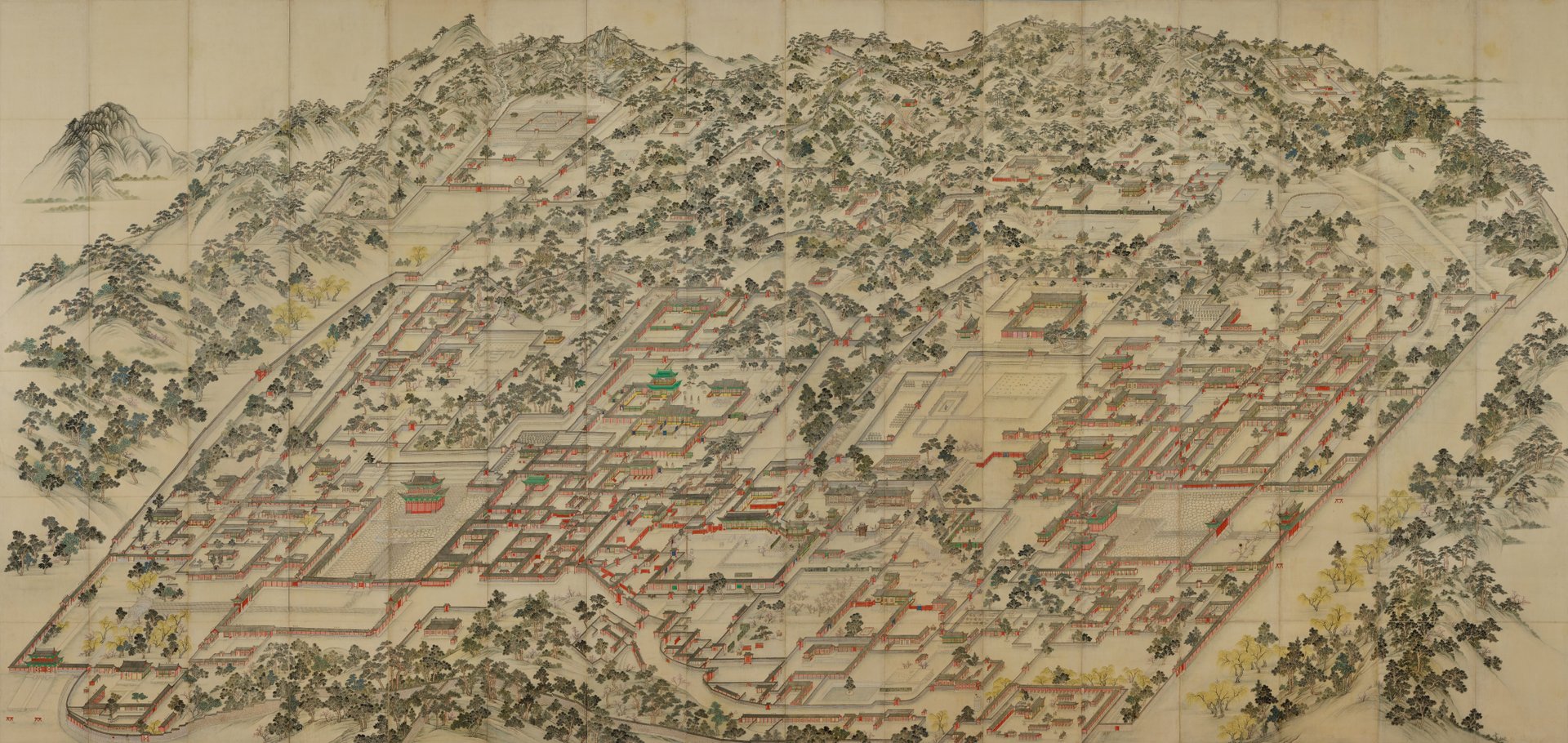
Gyeongbokgung was the official palace. Changdeokgung was the one the kings actually wanted to live in. Established in 1405 as the second royal palace in Seoul, Changdeokgung spent most of the Joseon dynasty as the de facto seat of power, preferred by a majority of monarchs despite its technically subordinate status. The reason was partly practical -- when all the palaces burned during the Imjin War of 1592, Changdeokgung was rebuilt while the grander Gyeongbokgung sat in ruins for 270 years. But the reason was also something harder to quantify: the palace fits its landscape rather than imposing upon it, following the contours of the hills behind it in a way that even UNESCO recognized when it designated the site a World Heritage property in 1997.
The Preferred Palace
King Taejong ordered Changdeokgung built in 1405, and from the beginning it was conceived as a complement to Gyeongbokgung rather than a rival. Together with the adjacent Changgyeonggung, it formed what Koreans called the East Palace. Yet comfort and circumstance conspired to make it the center of Korean royal life. After the Japanese invasions of the 1590s reduced every palace in Seoul to ash, the Joseon treasury could only afford to rebuild Changdeokgung and Changgyeonggung. For the next several centuries, Changdeokgung functioned as the nation's primary palace. Diplomatic audiences, royal ceremonies, and the daily governance of a peninsula-spanning kingdom all happened within its walls. It was only in the late nineteenth century, when the reforming monarch Gojong rebuilt Gyeongbokgung, that the royal family finally moved out.
The Secret Garden
Behind the formal palace buildings lies Huwon, the rear garden that most visitors remember long after the throne halls have blurred together. Covering roughly 60 percent of the palace grounds, this landscaped woodland of lotus ponds, pavilions, and ancient trees was the private retreat of the royal family for five centuries. The garden's design philosophy embodies a distinctly Korean aesthetic: minimal intervention, maximum harmony with existing terrain. Pavilions are tucked into hillsides rather than placed on leveled ground. Ponds follow natural depressions. The trees -- some centuries old -- were allowed to grow without the aggressive pruning that characterized formal gardens elsewhere in East Asia. Walking through Huwon today, you encounter the Buyongjeong pavilion reflected in Buyongji pond, Yeongyeongdang hall built in the style of a scholar's private home, and Jondeokjeong perched on a hillside clearing where kings once composed poetry.
The Last Royal Residents
In 1907, when Japan forced King Gojong to abdicate, his son Sunjong -- the last Korean monarch -- chose Changdeokgung as his official palace. After Japan formally colonized Korea in 1910, the colonial government began systematically altering the grounds. A Japanese-style building was constructed, traditional structures were demolished or repurposed, and the palace zoo and botanical garden at neighboring Changgyeonggung were connected to Changdeokgung and opened to the public as an amusement park. Yet remarkably, members of the Korean royal family continued living within the palace walls. Sunjong died there in 1926. His wife, Empress Sunjeong, remained until her death in 1966. Other members of the Yi royal household persisted even longer, their presence a quiet assertion of continuity in a palace that colonial and postwar governments had tried to strip of meaning.
Heritage Reclaimed
Changdeokgung's UNESCO inscription in 1997 cited its outstanding integration of architecture and landscape -- a quality that survived precisely because the palace was less aggressively targeted during the colonial period than the more symbolically charged Gyeongbokgung. Restoration work that began in the 1990s focused on removing colonial-era additions and returning buildings to their Joseon-period appearance. Today, visitors must join guided tours to enter the rear garden, a deliberate choice to protect its fragile ecology and maintain the contemplative atmosphere that made generations of kings prefer this palace over all others. The injeongjeon throne hall, with its ornate ceiling and stone courtyard lined with rank markers, conveys the formality of Joseon governance. But it is the garden -- quiet, unhurried, shaped more by the land than by human ambition -- that explains why Changdeokgung endured.
From the Air
Located at 37.579N, 126.991E in central Seoul's Jongno District. The palace grounds and extensive rear garden are visible at 2,000-3,000 ft AGL, appearing as a large wooded area adjacent to Changgyeonggung to the east. Nearby airport: Gimpo International (RKSS), approximately 13 nm west. The forested garden creates a distinctive green patch amid Seoul's dense urban fabric.