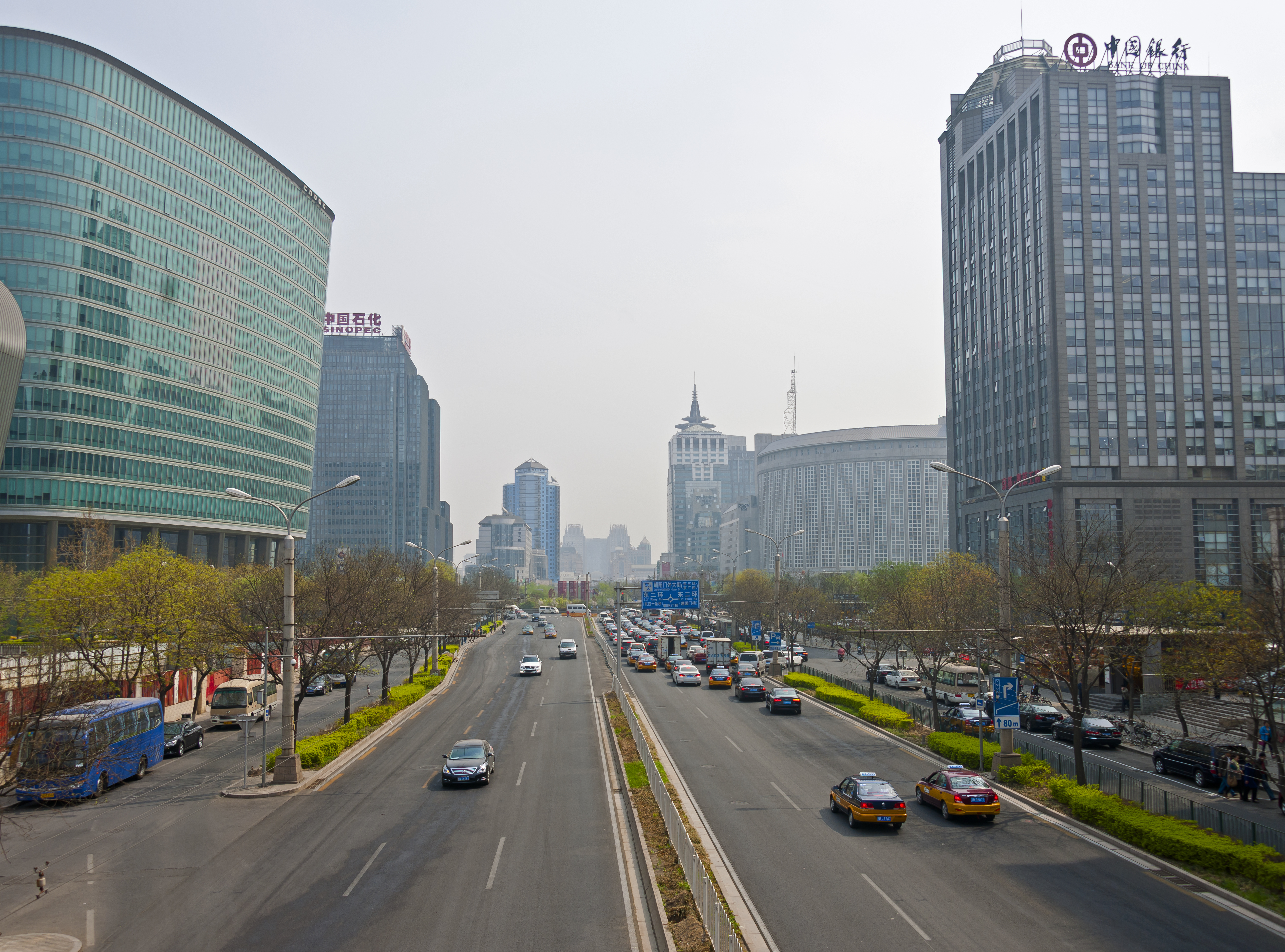
Chaoyangmen
The gate is gone, but its name shapes the neighborhood. Chaoyangmen -- the Gate Facing the Sun -- was the main eastern entrance to Beijing's Inner City for centuries, the portal through which grain shipments arrived from the Grand Canal. In the 1950s, the gate was demolished, along with the walls and moat that defined the old city's eastern boundary. A ring road replaced the moat. An elevated roundabout replaced the gate. But the name stuck, and today Chaoyangmen is both a subway station and a district border, a place where the invisible outline of vanished walls still organizes the city around it.
The Gate That Fed the Capital
In imperial Beijing, each gate of the Inner City had its specialty. Chaoyangmen's role was grain. Shipments arriving from the south via the Grand Canal entered the city through this gate, making it the functional mouth of the capital's food supply. The Manchu name for the gate, recorded in Mollendorff transliteration as "shun be aliha duka," carried the same sun-facing meaning. The gate complex included a main gate tower and an outer barbican, connected by walls that enclosed a courtyard large enough to hold the carts that lined up daily with their loads. When the decision came to demolish Beijing's city walls in the 1950s, Chaoyangmen disappeared with the rest, replaced by the infrastructure of a city that no longer needed medieval defenses.
Oil, Ghosts, and the Ring Road
Today the intersection is dominated by corporate towers and transit infrastructure. The distinctively shaped headquarters of CNOOC, the China National Offshore Oil Corporation, sits on the northwest corner, one of the first landmarks visible when emerging from the Chaoyangmen subway station on Lines 2 and 6. Just a block west along Chaoyangmen Inner Street stands a very different kind of landmark: two French-style villas at number 81, Beijing's most famous haunted house. The main villa once housed the French manager of the Pinghan Railway Company, then served various government offices, and is now owned by the Beijing Diocese of the Catholic Church. Locals and tourists still come to peer through the gates, drawn by ghost stories that the archdiocese has spent years trying to debunk.
East of the Bridge
Cross the elevated roundabout eastward and you enter Chaoyang District. Chaoyangmen Outer Street leads to the Chaowai commercial area, a different world from the historic hutong fabric that still clings to the streets west of the bridge. The headquarters of Sinopec Group, one of the world's largest petroleum companies, sits northeast of the interchange, placing two of China's major energy corporations within a block of each other. Further east along the outer street, the Zhihua Temple survives as a quieter presence -- a Buddhist temple built during the Ming dynasty, its wooden architecture and ancient music traditions persisting amid the concrete and glass. China's Foreign Ministry building occupies the southeastern corner, adding another layer of institutional weight to an intersection already heavy with power.
From the Air
Located at 39.92°N, 116.43°E on the eastern Second Ring Road in Beijing. The elevated interchange is visible from lower altitudes as a major traffic node on the ring road. Nearest major airport is Beijing Capital International (ZBAA/PEK), approximately 23 km northeast.