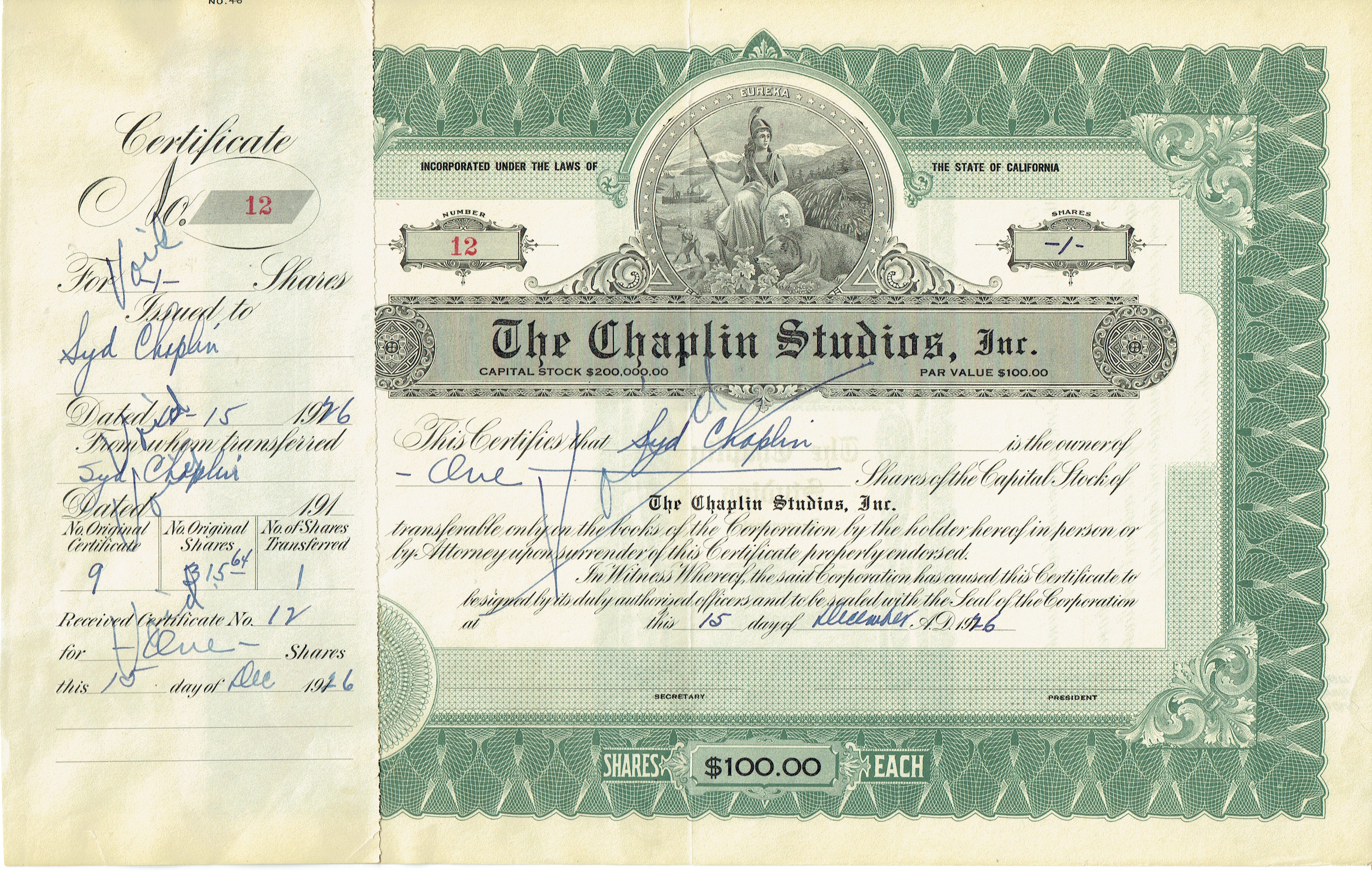
Chaplin Studios
There is a corner in Hollywood where the twentieth century seems to have concentrated itself. At La Brea and De Longpre, a complex of English cottage-style buildings sits behind a white fence, looking more like a prosperous village than a film studio. Charlie Chaplin built it in 1917. Everything that happened here afterward seems to have happened because of what he set in motion.
The Tramp's Studio
In October 1917, Chaplin was the most famous man in the world. His contract with First National Pictures had made him wealthy enough to build his own facility, and he chose a site at the corner of La Brea Avenue and Sunset Boulevard—though the entrance faced De Longpre—to construct what he called simply Charlie Chaplin Studios.
The construction took about three months and cost roughly $35,000. Chaplin designed the street-facing buildings in an English Tudor style, a nod to his London origins. Behind them were functional production spaces: sound stages, a backlot large enough to build sets, and a swimming pool. For the next three and a half decades, nearly everything Chaplin made emerged from this lot—The Kid, The Gold Rush, City Lights, Modern Times, The Great Dictator. The studio was the physical expression of his creative independence at a time when the studios were consolidating power.
The Transition
Chaplin sold the studio in 1953, a year after he had been barred from re-entering the United States on suspicion of communist sympathies during the McCarthy era. He never returned to live in America. The lot passed through several owners before A&M Records purchased it in 1966 and established their headquarters there.
A&M would occupy the studio for more than three decades. The swimming pool was converted into a recording facility. Herb Alpert and Jerry Moss, A&M's founders, signed a roster that at various points included Carole King, Cat Stevens, the Police, and Janet Jackson. The lot became a gathering place for the music industry in ways that echoed its earlier life as a film center.
A Night in January
On January 28, 1985, the former Chaplin swimming pool hosted one of the largest recording sessions in history. Forty-five artists—Michael Jackson, Lionel Richie, Diana Ross, Willie Nelson, Cyndi Lauper, Bruce Springsteen, Ray Charles, Bob Dylan, and dozens more—gathered at the studio overnight to record 'We Are the World,' the charity single written by Jackson and Richie to benefit African famine relief.
The session lasted until dawn. Signs posted outside the studio that night read: 'Check your egos at the door.' The record sold more than 20 million copies and became one of the best-selling singles in history. That it was recorded in Charlie Chaplin's old swimming pool is a detail that sounds invented but isn't.
Later Lives
A&M Records sold the property in 1999. The Jim Henson Company purchased it in 2000 and spent two decades there, adding a Kermit the Frog weathervane to the main building's tower—a gesture of whimsy that Chaplin might have appreciated. The lot was purchased by musician John Mayer and director McG—announced in late 2024 and finalized in January 2026—who renamed it Chaplin Studios, restoring the name to the address where it had always belonged.
The complex is only the second entertainment industry building to receive Los Angeles Historic-Cultural Monument designation. It is a rare case of a place that has been continuously, genuinely creative across more than a century—not as a monument to a single person, but as a location that seems to attract people who need to make something.
From the Air
Chaplin Studios sits at the corner of La Brea Avenue and De Longpre Avenue in Hollywood, about a mile south of the Hollywood Hills. Flying north from KLAX along La Brea, the English Tudor-style buildings are recognizable by their white facades and distinctive rooflines. The Hollywood Walk of Fame runs east-west on Hollywood Boulevard about half a mile to the north. The 101 Hollywood Freeway is visible two miles to the east. Nearest airports: KLAX (Los Angeles International) to the southwest, KBUR (Burbank) to the north via the Cahuenga Pass.