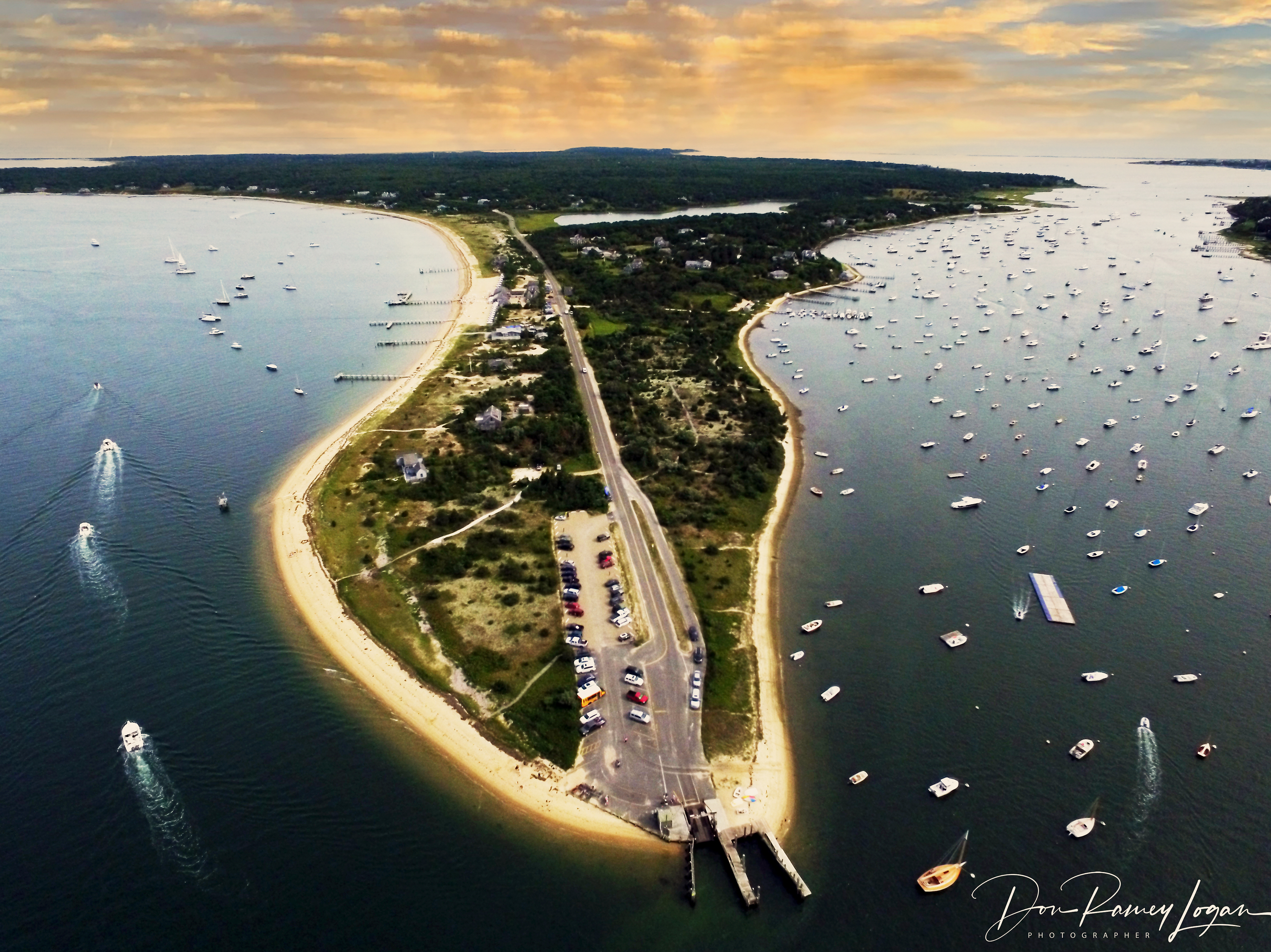
Chappaquiddick
Shortly before midnight on July 18, 1969, Senator Edward Kennedy drove his Oldsmobile off Dike Bridge on Chappaquiddick Island, Massachusetts. The car flipped into Poucha Pond and sank. Kennedy escaped; his passenger, 28-year-old Mary Jo Kopechne, did not. Kennedy didn't report the accident until the next morning, after Kopechne's body was discovered by fishermen. His explanation - that he had made a wrong turn leaving a party, that he had tried to rescue her, that he had been in shock - satisfied few. He pleaded guilty to leaving the scene of an accident and received a suspended sentence. His presidential ambitions, once considered inevitable, were effectively ended. 'Chappaquiddick' entered the lexicon as shorthand for scandal, coverup, and the limits of political privilege. The tiny island and its narrow wooden bridge became permanent symbols of the night Ted Kennedy let a woman drown.
The Party
Kennedy had come to Martha's Vineyard for the Edgartown Yacht Club regatta. On the evening of July 18, he attended a party on Chappaquiddick Island - a small island connected to the larger island by a two-car ferry. The gathering was a reunion for the 'boiler room girls,' young women who had worked on Robert Kennedy's 1968 presidential campaign. Robert had been assassinated just a year before. The mood was reportedly subdued. Around 11:15 PM, Kennedy left the party with Mary Jo Kopechne. He claimed to be driving her to the ferry. Instead, he turned onto a dirt road leading to Dike Bridge, a narrow wooden bridge with no guardrails that crossed a tidal inlet.
The Accident
Kennedy's Oldsmobile went off the bridge and landed upside down in the water. Kennedy escaped through an open window. Kopechne did not. Kennedy later said he dove repeatedly trying to rescue her, that the current was too strong, that he was in shock. He walked back to the party cottage and returned to the bridge with two friends, who also failed to rescue Kopechne. Then, instead of reporting the accident, Kennedy returned to his hotel in Edgartown. He later said he expected someone else would report it, that he was hoping it was all a dream. The next morning, two fishermen spotted the car. Kopechne's body was found inside. Kennedy reported the accident only after learning the body had been discovered.
The Questions
The official account raised more questions than it answered. Why was Kennedy on that road if he was heading for the ferry? Why didn't he report the accident immediately? Could Kopechne have been saved if help had been called? A diver who recovered her body believed she had survived in an air pocket for some time. Why was there no autopsy? Why did Kennedy's influential family seem to manage every aspect of the investigation? The theories multiplied: Kennedy was drunk, Kennedy was having an affair, Kennedy was covering up something worse than negligence. Kennedy's televised statement a week later, in which he asked Massachusetts voters whether he should resign, was seen as manipulative rather than contrite. They told him to stay. But his national ambitions were finished.
The Legacy
Kennedy pleaded guilty to leaving the scene of an accident and received a two-month suspended sentence. He won reelection to the Senate in 1970 and served until his death in 2009, becoming the 'Lion of the Senate' and one of the most effective legislators in American history. But he never became president. When he ran in 1980, Chappaquiddick followed him. When asked about it in a television interview, he couldn't give a coherent answer. The incident had revealed something about his character - recklessness, privilege, the assumption that rules didn't apply to Kennedys - that voters couldn't forget. Mary Jo Kopechne was buried in Pennsylvania. She would have been in her eighties today.
Visiting Chappaquiddick
Chappaquiddick is a small island off the eastern shore of Martha's Vineyard, accessible by a two-car ferry from Edgartown. The ferry ride takes approximately two minutes. Dike Bridge has been replaced; the current bridge is wider and has guardrails. A small memorial to Kopechne, placed by an admirer, has appeared at the site periodically over the years. The island is largely residential and has no commercial facilities. Visitors come for beaches and privacy - and, inevitably, to see the bridge. The experience is strange: a beautiful, peaceful place forever associated with a young woman's death and a senator's disgrace. Martha's Vineyard is reached by ferry from Woods Hole on Cape Cod or by small plane to Martha's Vineyard Airport (MVY). The island is a summer resort for the wealthy; Kennedy connections run deep.
From the Air
Located at 41.36°N, 70.45°W on Chappaquiddick Island, off the eastern tip of Martha's Vineyard, Massachusetts. From altitude, Chappaquiddick appears as a small island separated from Edgartown by a narrow channel. Dike Bridge crosses a tidal inlet on the island's southeast side. The beaches and salt marshes that make the island attractive are clearly visible from the air.