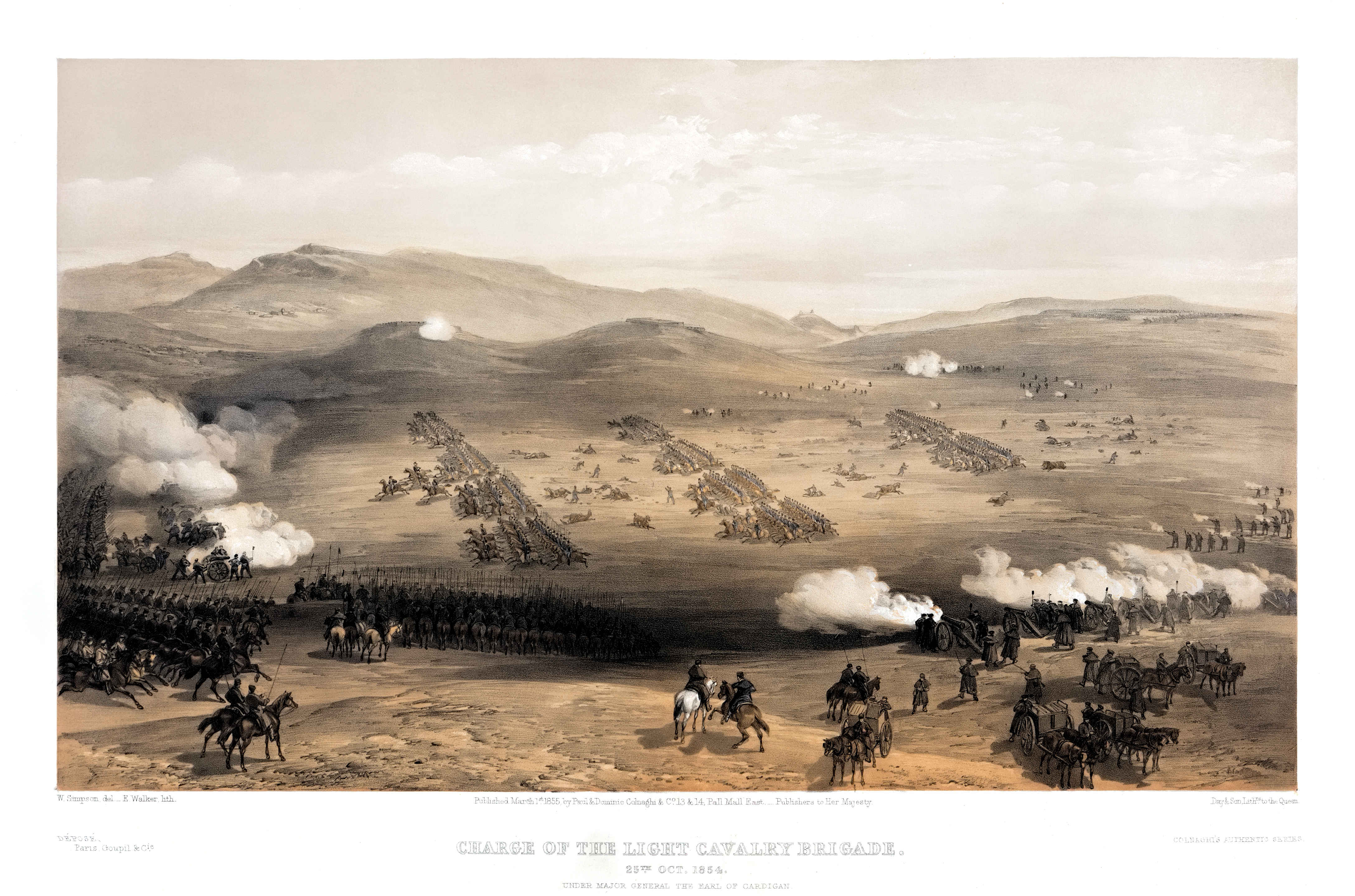
The Charge of the Light Brigade: The Most Famous Military Blunder in History
On October 25, 1854, during the Battle of Balaclava in the Crimean War, 670 British light cavalrymen received an order to charge. Due to vague wording and poor visibility, they believed they were to attack Russian artillery at the end of a mile-long valley - directly into the mouths of the guns. They knew it was probably suicide. They charged anyway. In 20 minutes, 278 men and 335 horses were killed or wounded. The charge accomplished nothing militarily, but it became the most famous cavalry action in history, immortalized in Tennyson's poem as the epitome of heroic obedience in the face of certain death: 'Theirs not to reason why, / Theirs but to do and die.'
The Order
The British army at Balaclava was positioned on heights overlooking a valley. Lord Raglan, the British commander, could see Russian forces retreating with captured British guns. He sent an order to Lord Lucan, commanding the cavalry: 'Lord Raglan wishes the cavalry to advance rapidly to the front, follow the enemy, and try to prevent the enemy carrying away the guns.'
The order was delivered by Captain Nolan, a hotheaded staff officer. Lucan, in the valley, could not see the guns Raglan meant. When Lucan asked which guns, Nolan waved vaguely toward the Russian artillery at the end of the valley. It was a gesture that would kill 278 men.
The Valley
The 'Valley of Death,' as it would become known, was about a mile long, with Russian guns at the far end and on both ridges flanking it. A charge down the valley would expose the cavalry to fire from three directions. It was tactical suicide.
Lord Cardigan, commanding the Light Brigade, knew this. So did his men. When the order came, Cardigan reportedly said, 'Here goes the last of the Brudenells' - his family name. The trumpeter sounded the advance. The Light Brigade began its ride into history.
The Charge
The Light Brigade advanced at a trot, then a canter, then a gallop. Russian guns opened fire immediately. Men and horses fell. The survivors rode on. Captain Nolan, riding with the brigade, was killed almost immediately - possibly trying to redirect the charge, possibly simply caught in the crossfire.
The cavalry reached the Russian guns at the end of the valley. They sabered the gunners and scattered the Russian cavalry behind the guns. For a moment, they held the position. Then they realized no support was coming. They had ridden through a mile of artillery fire, and they would have to ride back through it.
The Return
The survivors reformed and began the ride back up the valley. The Russian guns, briefly silenced, resumed firing. The French cavalry, watching from the heights, charged into the Russian flank to provide cover. Without this diversion, the casualties would have been total.
Of the 670 men who began the charge, 278 were killed or wounded. 335 horses were killed. The charge had taken about 20 minutes. The captured guns had not been recovered. The Russians had not been dislodged. Nothing had been accomplished except the demonstration that British cavalry would charge anything they were ordered to charge.
The Legend
News of the charge reached England within weeks. Tennyson published his poem 'The Charge of the Light Brigade' in December 1854, just two months after the event. The poem transformed a military disaster into a monument to courage: 'When can their glory fade? / O the wild charge they made!'
The charge became the defining image of the Crimean War and of Victorian military valor. It was used to celebrate blind obedience. It was also used to criticize aristocratic incompetence. The valley itself, near modern-day Balaklava in Crimea, is now a heritage site. The glory and the folly remain inseparable.
From the Air
The Charge of the Light Brigade took place in the Valley of Balaclava (44.50N, 33.60E) near modern Sevastopol, Crimea. Sevastopol International Airport (UKFB) is 15km west. The valley is visible from the air - a north-south depression between ridges. The area is now part of Russian-annexed Crimea. The terrain is hilly, semi-arid. The battlefield is largely unchanged from 1854, with monuments marking the charge route.