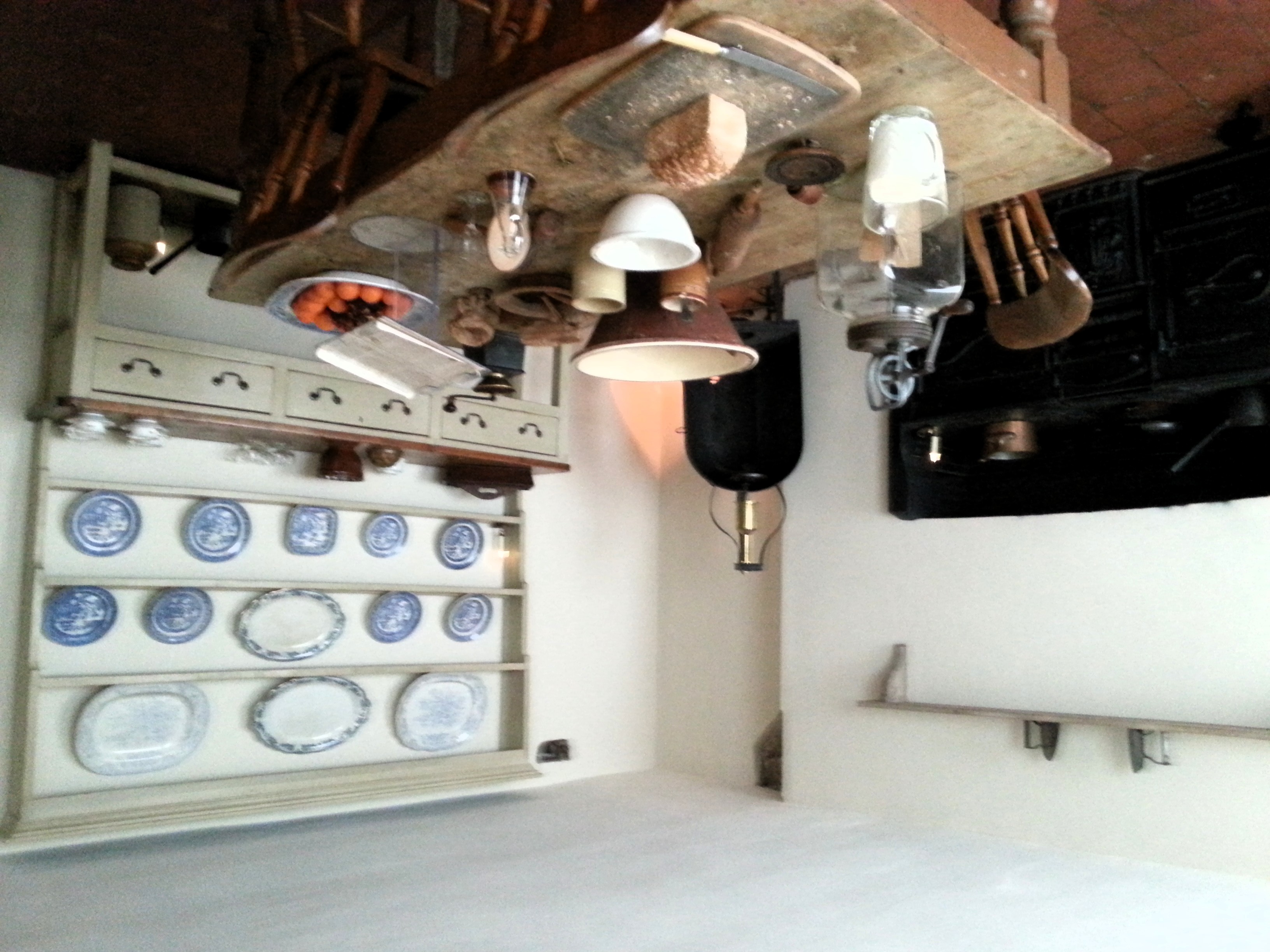
48 Doughty Street: The House Where Dickens Became Dickens
Charles Dickens lived in many London houses, each grander than the last, as his fame and family grew. Only one survives. Number 48 Doughty Street is a typical Georgian terrace in what is now King's Cross, unremarkable from the outside except for the blue plaque beside the door. Dickens moved here in March 1837, a year after his marriage, and stayed until December 1839. In those 32 months, he completed The Pickwick Papers, wrote the entirety of Oliver Twist and Nicholas Nickleby, and began work on Barnaby Rudge. He was 25 when he arrived. He left as the most famous writer in England.
A Street with Gates
In the 1830s, Doughty Street was an exclusive residential address with iron gates at either end staffed by porters who controlled entry. It was the kind of street a newly successful young author could afford at 80 pounds a year, respectable enough to receive visitors but not so grand as to invite scrutiny of his finances. Dickens filled the house immediately. He and his wife Catherine moved in with their first child, and two more daughters -- Mary and Kate -- were born in the house. His younger brother Frederick joined the household. So did Catherine's seventeen-year-old sister Mary Hogarth, who came to help the growing family. The house was noisy, crowded, and alive with the energy of a man who wrote as compulsively as he breathed.
The Death That Changed Everything
On 7 May 1837, just weeks after the family moved in, Mary Hogarth collapsed after an evening at the theater. She died in Dickens's arms the following morning. She was seventeen. The loss devastated him in a way that no subsequent bereavement quite matched. He kept a ring from her finger and wore it for the rest of his life. He expressed a wish to be buried beside her. Mary's death haunted his fiction. The character of Little Nell in The Old Curiosity Shop, whose prolonged and sentimental death scene moved Victorian readers to tears, drew directly from this grief. Rose Maylie in Oliver Twist, written in this very house in the months after Mary's death, carries the same innocent radiance. Dickens had already demonstrated comic genius in Pickwick. Mary's death gave him access to something deeper and darker.
The Workshop
The house functioned as both family home and factory. Dickens wrote in a study on the first floor, producing installments of his serialized novels on a relentless monthly schedule. He was simultaneously writing Pickwick, which was making him famous, and planning Oliver Twist, which would make him immortal. The workload was extraordinary: each installment of each novel had to be finished on deadline, with no stockpile to fall back on. Visitors to the museum can see his writing desk, his chair, and the room where these scenes took shape. The most celebrated exhibit is Dickens's Dream, an unfinished painting by R. W. Buss showing the author surrounded by the characters he created, a ghostly crowd emerging from his imagination. The museum also holds the only surviving item of Dickens's clothing: a court suit and sword worn when he was presented to the Prince of Wales in 1870, just months before his death.
Saved from the Wrecking Ball
Dickens outgrew Doughty Street, moving to larger homes as his wealth and family expanded. The house passed through other hands and by 1923 faced demolition. The Dickens Fellowship, founded in 1902 by admirers of his work, raised the mortgage and bought the freehold. The museum opened in 1925 and has operated ever since as a registered charity. It holds first editions, original manuscripts, letters in Dickens's hand, and personal effects that bring the man behind the novels into sharp focus. The house is small by the standards of London literary museums, but that smallness is the point. This is not a monument to success. It is the place where success began, where a young writer lost someone he loved, and where grief and genius fused into a body of work that still defines how the English-speaking world imagines Victorian London.
From the Air
The Charles Dickens Museum is at 48 Doughty Street, King's Cross, central London (51.524N, 0.117W). The Georgian terraced house is difficult to distinguish from the air among similar buildings, but the area is identifiable by its proximity to Gray's Inn Gardens to the south and Brunswick Square to the east. Nearest airports are London City (EGLC) 12km east and London Heathrow (EGLL) 25km west. The museum is approximately 500m south of King's Cross St Pancras station.