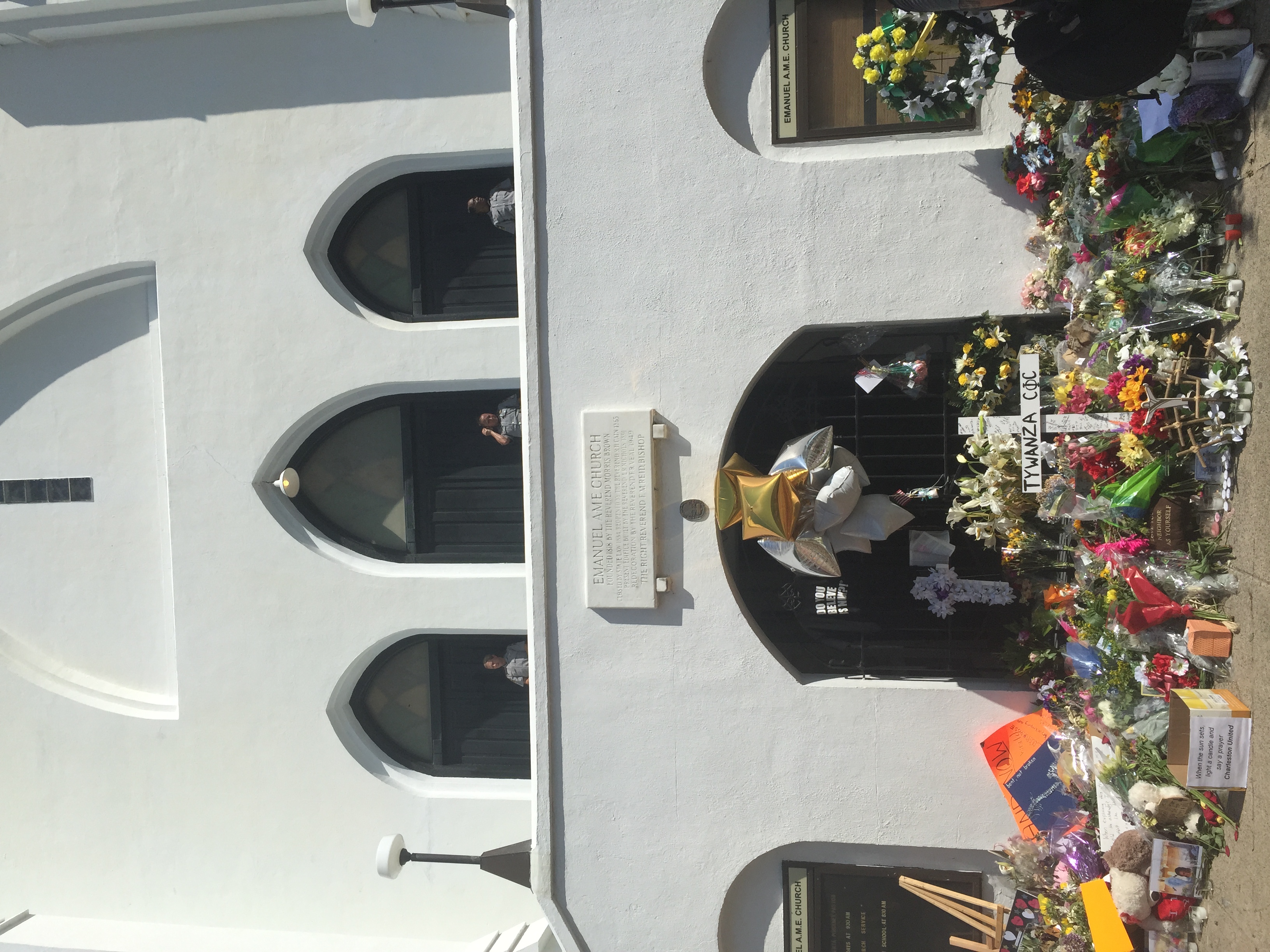
Charleston Church Shooting
They called it Mother Emanuel. Founded in 1816, Emanuel African Methodist Episcopal Church on Calhoun Street in Charleston is the oldest Black church in the Southern United States. When co-founder Denmark Vesey was suspected of plotting a slave rebellion in 1822, thirty-five people were hanged and the church was burned to the ground. It was rebuilt. On the evening of June 17, 2015 - the 193rd anniversary of that thwarted uprising - twelve people gathered in the church's fellowship hall for Wednesday night Bible study. A young white stranger asked to sit next to the pastor. He listened for nearly an hour. Then he stood up and opened fire, killing nine people. The youngest victim was twenty-six. The oldest was eighty-seven.
The Emanuel Nine
The nine people murdered that evening were pillars of their community. The Reverend Clementa C. Pinckney, the church's senior pastor and a South Carolina state senator, was forty-one. Cynthia Graham Hurd managed a branch of the Charleston County Public Library. Susie Jackson, the oldest victim at eighty-seven, was a lifelong church member who sang in the choir. Ethel Lee Lance served as the church's sexton. Depayne Middleton-Doctor was a pastor and school administrator at Southern Wesleyan University. Tywanza Sanders, at twenty-six the youngest to die, was Susie Jackson's grandnephew. The Reverend Daniel L. Simmons served at Greater Zion AME Church in Awendaw. Sharonda Coleman-Singleton was a pastor, speech therapist, and track coach at Goose Creek High School. Myra Thompson was a Bible study teacher. They became known collectively as the Emanuel Nine. Eight died at the scene; Daniel Simmons died at the hospital.
An Act of Racial Hatred
Dylann Roof was twenty-one years old. He had driven to Charleston from his home near Columbia specifically to target Emanuel AME because of its history and its significance to the Black community. He sat through nearly an hour of Bible study before standing and firing at close range with a .45-caliber handgun. He told one survivor he was leaving her alive so she could tell others what happened. Roof fled the church and was captured the next morning during a traffic stop in Shelby, North Carolina, after a woman recognized his car from news broadcasts and followed him until police moved in. He had published a white supremacist manifesto online before the attack and had posed with symbols of racial hatred including the Confederate battle flag. Federal prosecutors determined he had been self-radicalized through white supremacist websites. In December 2016, Roof was convicted of thirty-three federal hate crime and murder charges. He was sentenced to death on January 10, 2017.
Grace Under Fire
What happened in the days after the shooting stunned the nation. At Roof's bond hearing, family members of the victims spoke directly to their loved ones' killer. They told him they forgave him. They said they were praying for his soul. This extraordinary act of grace did not mean the pain was less - it meant the community refused to let hatred answer hatred. Thousands gathered at Morris Brown African Methodist Episcopal Church for a memorial service. People of every race and faith attended, proclaiming the attack would not divide Charleston. Senator Pinckney's body lay in state at the South Carolina State House. President Barack Obama delivered the eulogy at Pinckney's funeral before five thousand congregants at the College of Charleston, closing with a rendition of "Amazing Grace." The funerals continued for weeks. Daniel Simmons, the last victim, was buried on July 2. Nine artists from across the country painted portraits of each victim, displayed at the Principle Gallery before being given to the families.
The Flag Comes Down
In the shooting's aftermath, attention turned to the Confederate battle flag flying at the South Carolina Confederate Monument near the State House. While other flags had been lowered to half-staff, state law prohibited removing the Confederate flag without a two-thirds legislative vote. An online petition demanding its removal gathered over 370,000 signatures. On June 22, Governor Nikki Haley, flanked by officials from both parties including Republican senators Lindsey Graham and Tim Scott, called for the flag's removal, saying it was "an integral part of our past" but "does not represent the future" of South Carolina. On July 6, the Senate voted to take it down. After thirteen hours of debate, the House passed the measure 94 to 20 on July 9. The governor signed the bill that day. On July 10, 2015, the Confederate flag was removed from the State House grounds for the last time. Major retailers including Walmart, Amazon, and eBay stopped selling Confederate flag merchandise. Across the country, a wave of Confederate monument removals followed.
What Remains
Emanuel AME Church still stands at 110 Calhoun Street in downtown Charleston, its white steeple rising above the surrounding rooftops as it has for generations. The church continues to hold services and Bible study, its doors still open to anyone who wishes to worship. In 2019, the Evangelical Lutheran Church in America declared June 17 a day of repentance and recognized the Emanuel Nine as martyrs. Allen University in Columbia announced a renovation that prominently features the names of all nine victims. In 2021, the Justice Department agreed to pay $88 million to the victims' families after the FBI acknowledged that a background check failure had allowed Roof to purchase the weapon used in the attack. Mother Emanuel endures, as it has endured since 1816 - through arson, through persecution, through the worst that hatred can deliver. The church's history is Charleston's history: scarred, resilient, and unfinished.
From the Air
Located at 32.79°N, 79.93°W in downtown Charleston, South Carolina. Emanuel AME Church sits at 110 Calhoun Street in the historic district, identifiable by its white steeple among the dense urban fabric of the Charleston peninsula. The church is approximately 1.5 miles northwest of Fort Sumter in Charleston Harbor. Charleston Executive Airport (JZI) is about 5 miles west; Charleston International Airport (KCHS) is 12 miles northwest. From altitude, the Charleston peninsula's distinctive pattern of church steeples is visible, though individual buildings require lower altitudes to distinguish.