Charleston: The Holy City That Fired the First Shot
Charleston calls itself the Holy City for its church steeples, but holiness and sin have always coexisted here. This is where the first shot of the Civil War was fired, where 40% of enslaved Africans entered North America, where the secession that tore the nation apart was debated in drawing rooms that still welcome tourists. The architecture survived because Sherman marched to Savannah instead, leaving Charleston's antebellum facades intact while Atlanta burned. The result is America's most beautiful Southern city and its most complicated - where the beauty depends on wealth that depended on slavery, where every historic house tour must reckon with who built the house and who was bought and sold to pay for it.
The Trade
Between 1670 and 1808, Charleston was the center of the American slave trade. Nearly 40% of all enslaved Africans brought to North America arrived through Charleston Harbor. They were processed at Sullivan's Island, held for quarantine and auction, then sold at markets in the city center. The wealth that built Charleston's grand houses came from rice and cotton plantations worked by enslaved labor; the wealth that bought those enslaved people flowed through Charleston's merchant houses. The city's economic foundation was human trafficking. Gadsden's Wharf, where enslaved people were disembarked, is now the site of the International African American Museum, opened in 2023.
The War
Charleston's elite led secession. The Ordinance of Secession was signed in Charleston's Institute Hall in December 1860. Four months later, Confederate batteries opened fire on Fort Sumter in Charleston Harbor - the shots that began the Civil War. Charleston endured siege for most of the war, bombarded by Union forces, blockaded by the Navy, never captured until Sherman's march made Confederate resistance pointless. The city that started the war survived it largely intact, while cities that hadn't seceded burned. The irony wasn't lost on Northerners, who spoke of Charleston's arrogance; it wasn't lost on Charlestonians either, who cultivated defiance into identity.
The Architecture
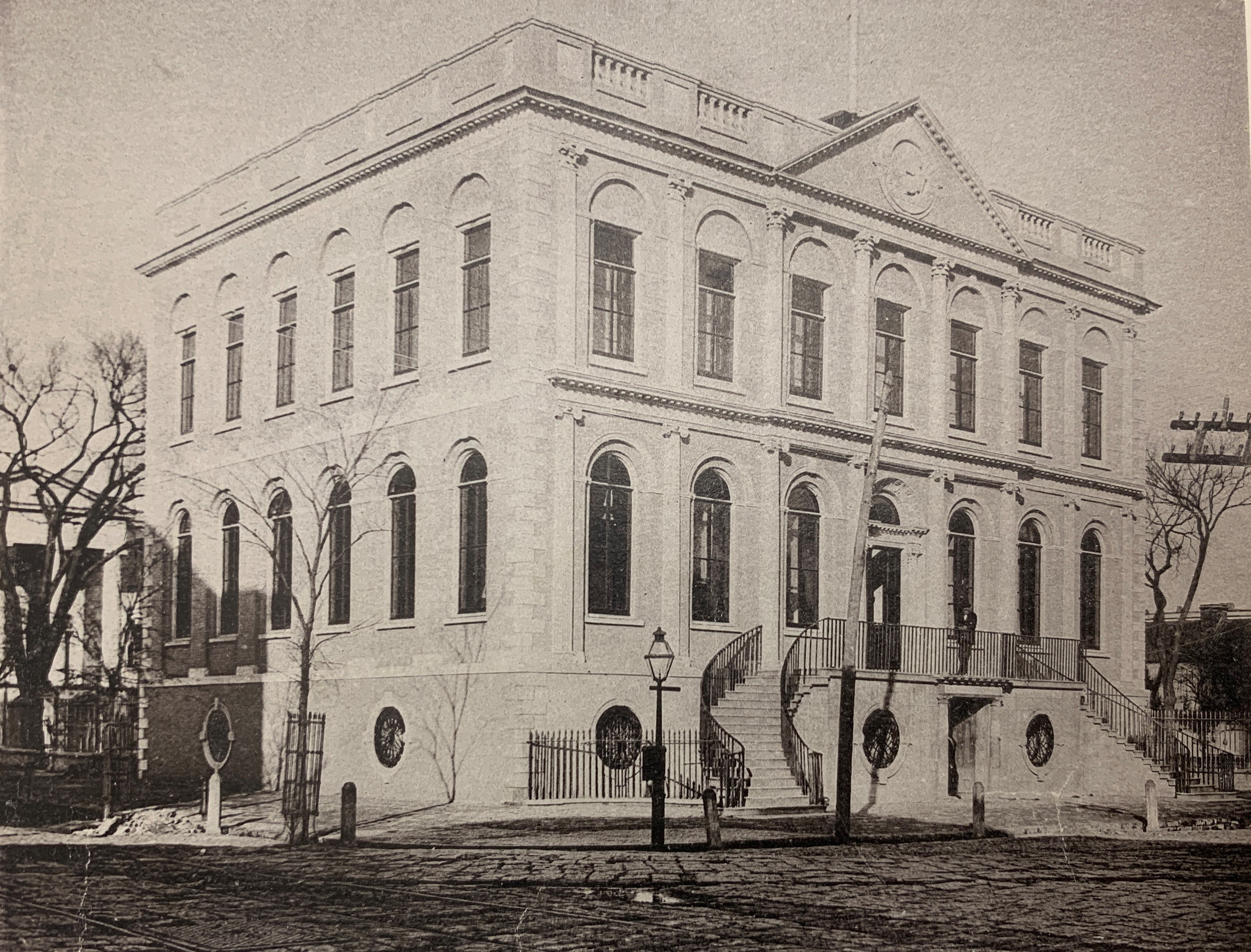
Charleston's historic district contains one of America's finest collections of 18th and 19th-century architecture. The 'single house' - one room wide, turned sideways to the street with piazzas (porches) facing south to catch breezes - is the signature Charleston form. Rainbow Row's pastel facades, the Greek Revival mansions of the Battery, the churches that justify 'Holy City' - the built environment is remarkably preserved. Preservation was initially economic; Charleston was too poor after the war to rebuild. Later, deliberate preservation efforts made maintaining historic character mandatory. The result is a city that looks substantially as it did when it led the South into catastrophe.
The Reckoning
Charleston's relationship to its history has shifted. For generations, the narrative emphasized Confederate heroism and elegant antebellum life. The 2015 massacre at Emanuel African Methodist Episcopal Church - a hate crime targeting the historic Black congregation - forced confrontation with racism past and present. The Confederate flag came down from the statehouse; Calhoun monument came down from Marion Square. The interpretation at plantations has expanded to center enslaved people's experience. The International African American Museum now tells the story of the slave trade that Charleston's traditional tourism long minimized. The beauty remains; the meaning is contested.
Visiting Charleston
Charleston is located on the South Carolina coast, approximately 100 miles north of Savannah. The historic district is walkable; carriage tours provide overview and commentary. Fort Sumter is accessible by ferry from downtown. The International African American Museum at Gadsden's Wharf interprets the slave trade; McLeod and Magnolia plantations provide different approaches to plantation interpretation. Rainbow Row, the Battery, and the French Quarter offer architectural exploration. Restaurants emphasize Lowcountry cuisine - shrimp and grits, she-crab soup. Hotels in the historic district are expensive; North Charleston offers alternatives. The heat and humidity of summer are intense; spring (Spoleto Festival) and fall offer better conditions. The experience rewards engagement with complexity - the beauty is undeniable, but so is the history beneath it.
From the Air
Located at 32.78°N, 79.93°W on a peninsula between the Ashley and Cooper Rivers on the South Carolina coast. From altitude, Charleston appears as a dense historic core on the peninsula, with suburban spread extending north and west. The harbor dominates - Fort Sumter visible as a small structure on an island at the harbor mouth, the beginning of the Civil War marked by brick and water. The rivers converge toward the sea; barrier islands extend down the coast. The Ravenel Bridge spans the Cooper River, a modern landmark. What appears from altitude as a prosperous coastal city is the place where much of America's worst history began - the slave trade's main port, the secession's birthplace, the first shot's location - now navigating how to remember what it prefers to forget.