Château d'Azay-le-Rideau
Balzac called it "a faceted diamond, set in the Indre." The Château d'Azay-le-Rideau floats on its own reflection, built on an island in the river so that its pale facades seem to rise directly from the water. It is considered one of the foremost examples of early French Renaissance architecture, yet the building was never completed. Its distinctive L-shape — one of the most recognizable silhouettes in the Loire Valley — is an accident of scandal, the result of a builder who fled the country before the walls were finished. For five centuries, that elegant mistake has been drawing visitors to a castle whose beauty was born from disgrace.
Azay the Burnt
The château's site carries a memory of violence. During the twelfth century, a local knight named Ridel d'Azay built a fortress here to guard the road between Tours and Chinon where it crossed the Indre. In 1418, during the Hundred Years' War, the future Charles VII passed through as he fled Burgundian-occupied Paris for the Armagnac stronghold of Bourges. Angered by insults from the Burgundian garrison, the dauphin ordered his troops to storm the castle. All 350 soldiers inside were executed, and the fortress was burned to the ground. For centuries afterward, the town bore the name Azay-le-Brûlé — Azay the Burnt — a reminder that the elegant château visitors see today stands on ashes.
A Wife's Commission
The ruins sat untouched for a century until 1518, when Gilles Berthelot, Mayor of Tours and Treasurer-General of the king's finances, acquired the land. Berthelot wanted a residence that would reflect his wealth while embracing the Italian Renaissance styles filtering into France. But his duties kept him away, and the responsibility for overseeing construction fell to his wife, Philippa Lesbahy. The challenges were considerable: the island's damp ground required the château to be raised on stilts driven into mud, and the hard-wearing stone came from the Saint-Aignan quarry some 100 kilometers away, transported by boat. Philippa managed it all. The building she supervised blended Italian proportions and ornate sculpture with French elements — conical turrets, steep slate roofs, and purely decorative machicolations that evoked medieval power without serving any military purpose.
The Unfinished Masterpiece
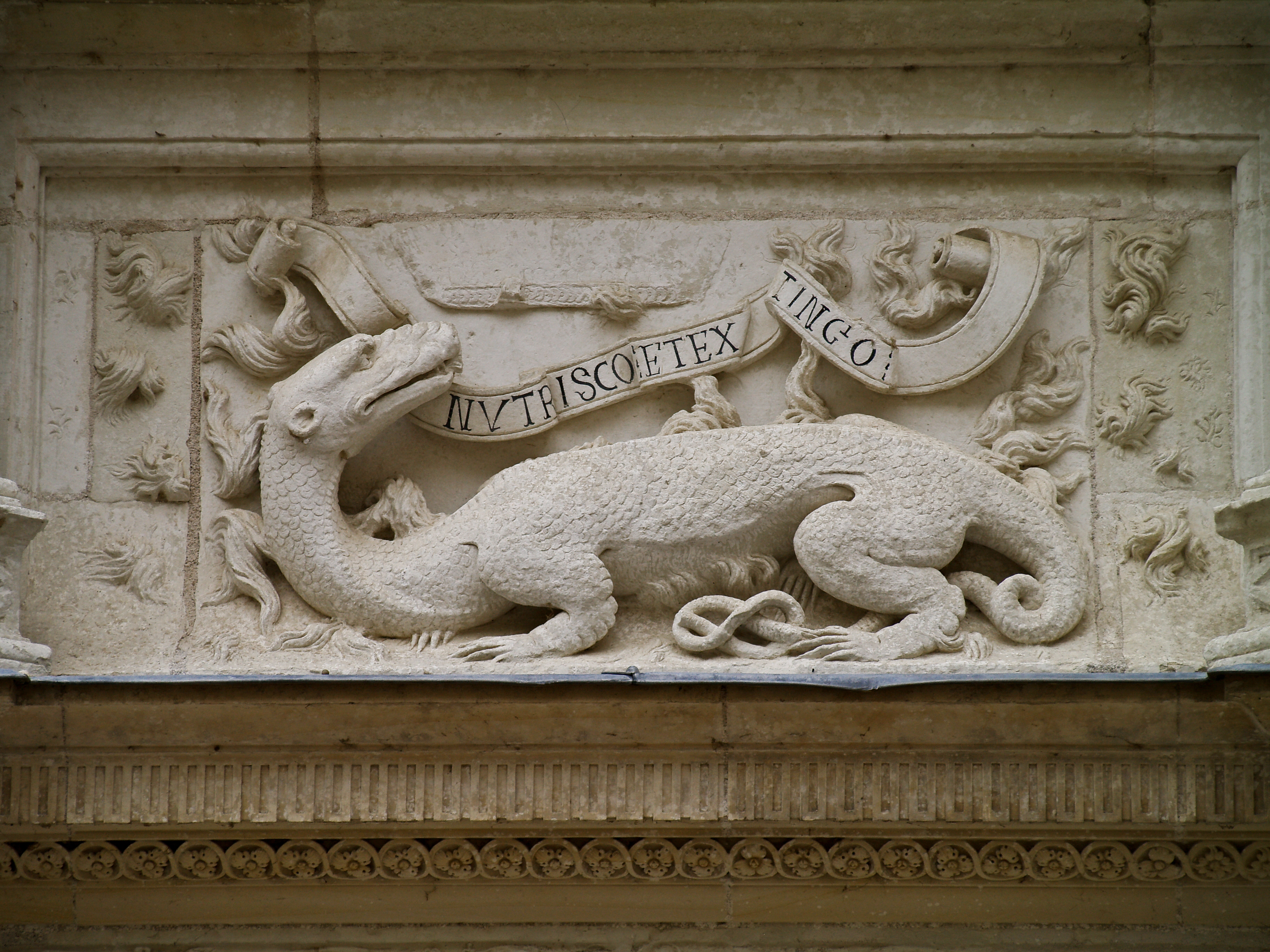
In 1527, the execution of Jacques de Beaune, chief minister of royal finances and Berthelot's cousin, sent Gilles fleeing to exile in Metz and then Cambrai, where he died two years later. Francis I confiscated the unfinished château, ignoring Philippa Lesbahy's pleas, and in 1535 gave it to Antoine Raffin, one of his knights-at-arms. Raffin made only minor changes, leaving the planned quadrilateral forever incomplete. Only the south and west wings were ever built, preserving the accidental L-shape. The château's grand staircase, the escalier d'honneur, survived as the oldest known straight-flight staircase in France. Its three floors of double bay windows are decorated with the initials of Berthelot and Philippa alongside the salamander of Francis I — the builder's pride carved beside the king who took it all away.
A Chandelier Saves the Castle
During the Franco-Prussian War, the château served as headquarters for Prussian troops. One evening, a chandelier crashed from the ceiling onto the table where Prince Friedrich Karl of Prussia was dining. Suspecting assassination, he ordered his soldiers to set fire to the building. Only his officers' assurances that the lamp had fallen by accident stayed his hand, saving Azay-le-Rideau from a second burning. The Biencourt family, who had purchased the château in 1787, later filled it with over 300 historical portraits that the public could visit — unusual for a private collection. Financial difficulties forced a sale in 1899, and the French state purchased the estate in 1905 for 250,000 francs. Today it is a national monument and part of the Loire Valley UNESCO World Heritage Site, its reflection still shimmering in the Indre exactly as Balzac described it.
From the Air
Located at 47.26°N, 0.47°E on an island in the Indre River. The château's white stone and surrounding water mirror are distinctive from the air. Nearest airport: Tours Val de Loire (LFOT), approximately 25 km northeast. The Indre River and surrounding English-style gardens make the site easy to identify. Best viewed at 1,500–2,000 ft AGL in clear conditions.