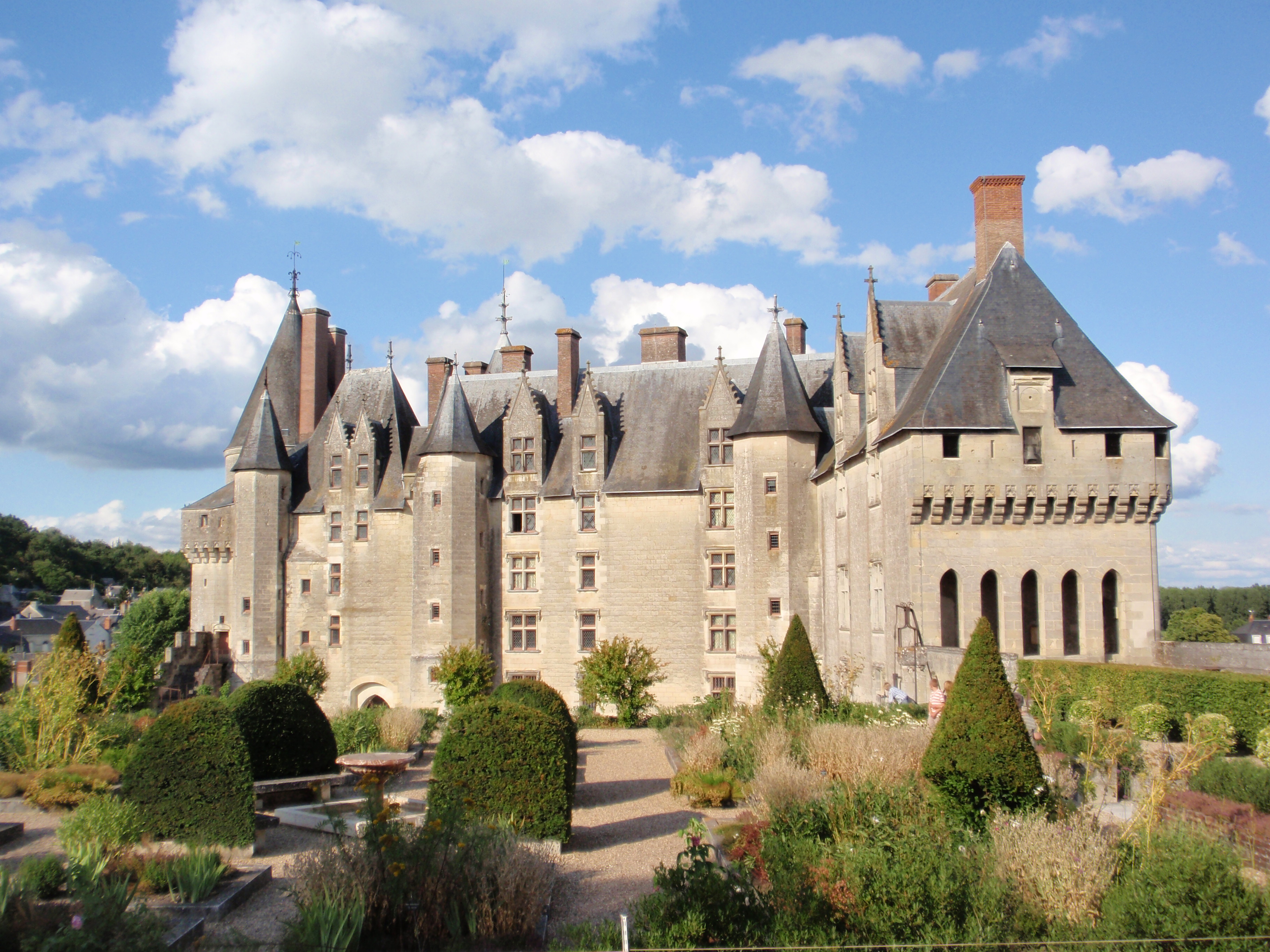
Château de Langeais
The ruined stone tower standing in the garden of the Château de Langeais dates to the 990s, making it one of the earliest datable stone keeps in Europe. It is 16 meters high, 17.5 meters wide, and took an estimated 83,000 working days to build — most of it unskilled labor, hauling and stacking 1,200 cubic meters of stone. That ancient ruin shares its grounds with the far grander fifteenth-century château that replaced it, creating a visual timeline of medieval architecture spanning five hundred years in a single glance.
Fulk Nerra's Gambit
In 992, Fulk Nerra, the famously aggressive Count of Anjou, built a wooden motte-and-bailey castle at Langeais because, as a chronicler noted, he "had no resting place between Bourgueil and Amboise along the Loire." The location was strategic: just 24 kilometers from Tours, a city controlled by his rival Odo I, Count of Blois. When Odo learned of the fortification, he dispatched troops to destroy it. The attack failed, and Fulk reinforced the site with the stone keep that still stands. To distract Odo during construction, Fulk launched intermittent raids on Blois territory — the medieval equivalent of creating a diversion while building a wall.
Three Sieges and a Death
Odo tried again in the spring of 994, this time calling on Norman, Flemish, and Aquitanian allies. Fulk commanded the garrison personally and sent a plea to Hugh Capet, King of the Franks, who promised reinforcements despite being ill. The siege dragged into summer, with Odo's forces swelling as allies arrived. Fulk began negotiating, and a chronicler friendly to Odo claimed the count had agreed to surrender before reneging on the deal. Whether true or not, the Capetian army arrived in time. Odo withdrew. He besieged Langeais again in 995, but in March 996 he fell ill and died, ending the most persistent threat to Fulk's castle. With his rival gone, Fulk captured Tours itself and turned Langeais, Montsoreau, Montrésor, and Montbazon into a defensive chain guarding the Loire Valley.
The Wedding That Changed France
Langeais changed hands repeatedly over the following centuries. The Plantagenet kings expanded it; Richard the Lionheart added fortifications. Philip II of France recaptured it in 1206. The English destroyed it during the Hundred Years' War. King Louis XI rebuilt the château around 1465 into the late medieval masterpiece visible today, famous for its monumental and richly decorated chimneypieces. But the moment that secured Langeais's place in French history came on 6 December 1491, when Anne of Brittany married King Charles VIII in the château's great hall. The marriage permanently united the independent Duchy of Brittany with the French crown — a political union achieved not by conquest but by ceremony, in a castle that had been contested by force for five centuries.
Siegfried's Restoration
By the nineteenth century, the château had fallen into neglect. In 1886, Jacques Siegfried purchased it and began a meticulous restoration. He filled the rooms with an outstanding collection of medieval tapestries and period furnishings, then bequeathed the entire estate to the Institut de France, which owns it today. The château is listed as a monument historique and remains open to the public. Visitors walk through rooms where the tapestries and carved chimneypieces evoke the wealth of the medieval Loire, while in the garden behind, the thousand-year-old keep of Fulk Nerra stands as a reminder that all this grandeur began with a timber palisade and a count who needed somewhere to sleep between Bourgueil and Amboise.
From the Air
Located at 47.32°N, 0.41°E on a promontory at the opening of the Roumer River valley to the Loire. The 15th-century château and the ruined 10th-century keep are both visible from the air. Nearest airport: Tours Val de Loire (LFOT), approximately 22 km east. The town of Langeais sits directly below the castle on the Loire's north bank. Best viewed at 1,500–2,000 ft AGL.