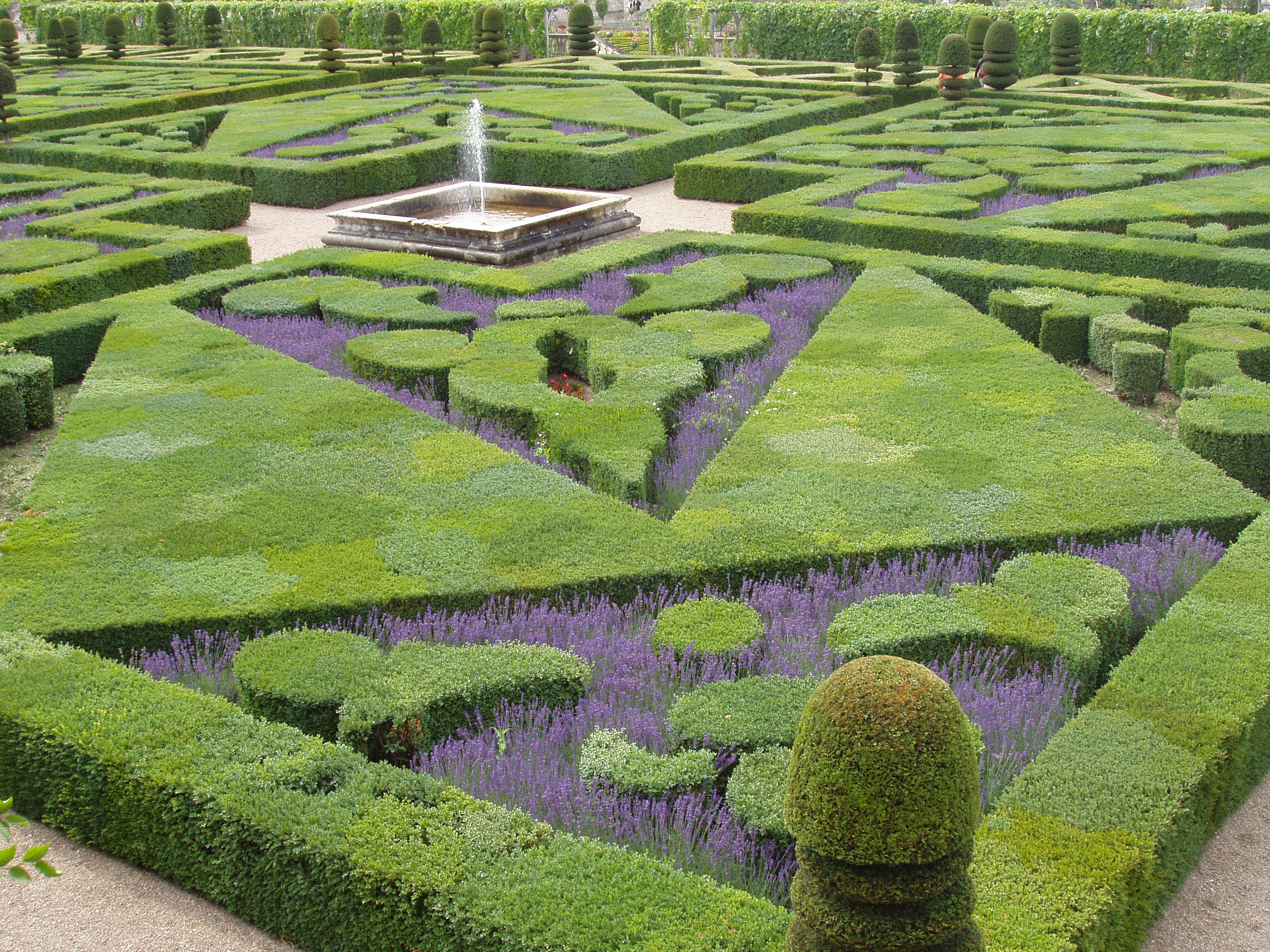
Chateau de Villandry
Most Loire Valley chateaux compete on towers and turrets. Villandry competes on cabbages. The last major Renaissance chateau built along the Loire, completed in the early 16th century, is famous not for its grand halls or royal intrigues but for the extraordinary gardens that cascade down three terraces beside it. Ornamental vegetables are planted in geometric patterns that would satisfy a mathematician, flowering borders shift with the seasons, and a water garden catches the light of the Touraine sky. It is one of the most visited chateaux in France, drawing some 330,000 visitors in a single year, and the surprise is that none of this existed a century ago.
Where Kings Once Made Peace
The site has hosted power long before its current elegance. The lands, known as Columbine until the 17th century, held an ancient fortress where, in the 12th century, King Philip II of France met Richard I of England to discuss peace terms. Jean Le Breton, Controller-General for War under King Francis I, acquired the property in the early 16th century and built a new chateau around the original 14th-century keep. Le Breton had overseen the construction of Chambord and brought that ambition to Villandry, creating what would become the last of the great Renaissance chateaux in the Loire Valley. His family held the property for more than two centuries before it passed to the Marquis de Castellane, then was confiscated during the French Revolution. Napoleon acquired it for his brother Jerome Bonaparte in the early 19th century.
A Spanish Doctor and an American Fortune
By the early 20th century, Villandry had lost much of its character. The gardens had been replaced by an English-style landscape park, and the chateau itself needed extensive repair. In 1906, Joachim Carvallo, a Spanish-born doctor who had been working with the Nobel Prize-winning physiologist Charles Richet, purchased the property. His wife, Ann Coleman, was an heiress to a prominent American industrial fortune, and together they poured their resources into an improbable project: recreating Renaissance gardens based on historical research into 16th-century French garden design. The result transformed Villandry into something unique among the Loire chateaux. Where others offer tapestries and throne rooms, Villandry offers living geometry.
Gardens as Architecture
The gardens descend across three terraces. At the top sits a water garden, calm and reflective, fed by a natural spring. The middle terrace holds ornamental flower gardens laid out in patterns representing different kinds of love: tender love with hearts and flames, passionate love with broken hearts, fickle love with fans and butterflies, and tragic love with swords and daggers. Below these, the famous kitchen garden spreads across more than a hectare, where vegetables are arranged by color and form in nine square beds bordered by low box hedges. Red cabbages alternate with leeks, chard sits beside lettuce, and the effect is less farm than cathedral. The patterns change twice a year, in spring and summer plantings, so the garden is never the same twice.
A Living Inheritance
Villandry was designated a Monument historique in 1934 and, like the other chateaux of the Loire Valley, is a UNESCO World Heritage Site. What makes it unusual is continuity: the Carvallo family still owns and operates the property, carrying forward the restoration that Joachim and Ann began more than a century ago. The chateau itself is handsome but restrained, its interiors furnished in period style, its rooms offering views down into the garden geometry. But the building knows its role. At Villandry, architecture defers to horticulture. The real masterwork is outside, where the disciplined lines of box hedges and the riot of seasonal color make the case that a garden, properly designed, is as enduring as any stone wall.
From the Air
Located at 47.34N, 0.51E in the Loire Valley west of Tours. The chateau and its geometric gardens are clearly visible from the air, with the garden patterns especially striking from 1,500-3,000 feet. The nearby Tours Val de Loire Airport (LFOT) is approximately 15 km to the east. The Loire River provides a strong navigational reference running east-west through the valley.