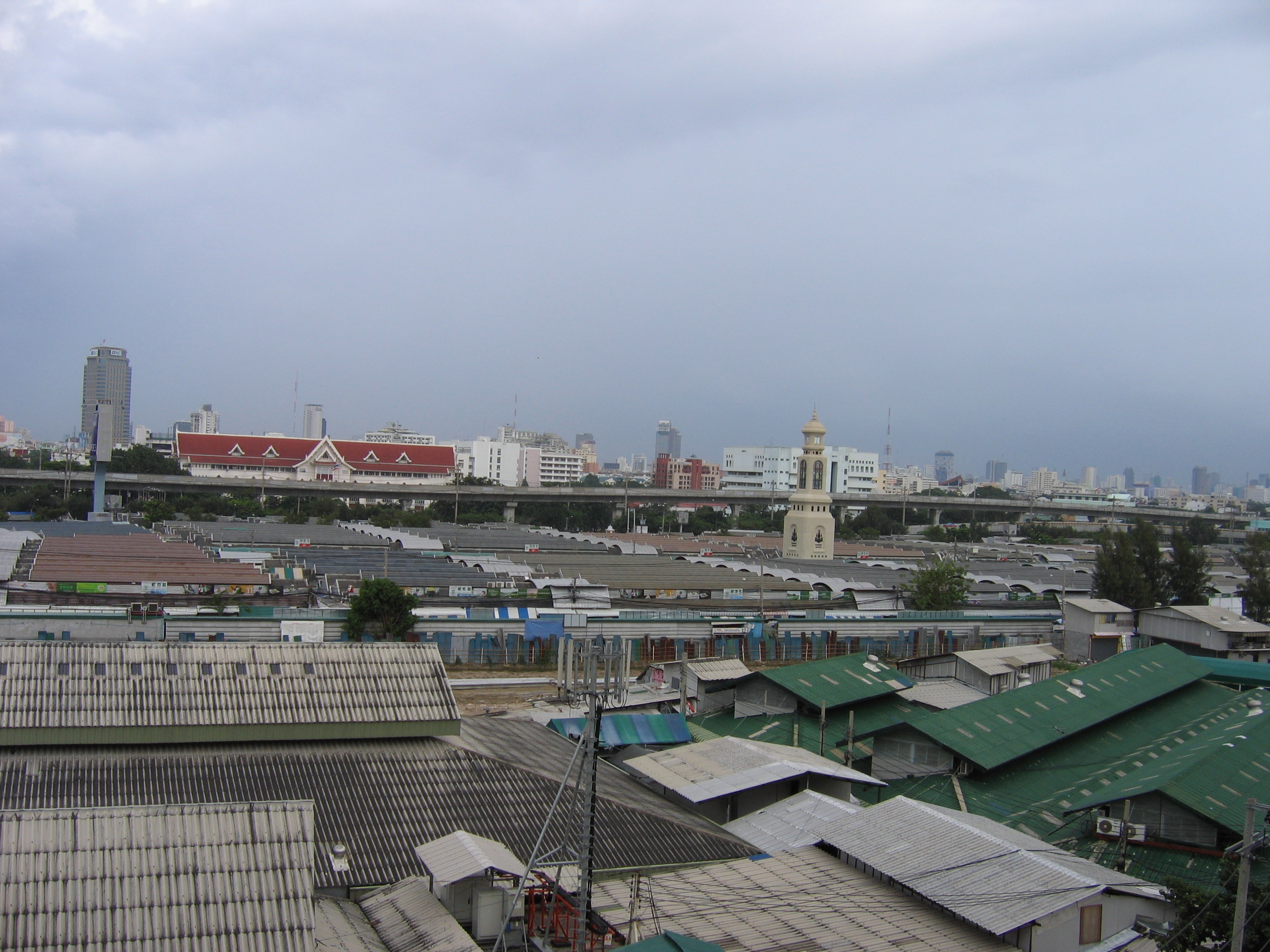
Chatuchak Weekend Market
Getting lost is the point. The aisles at Chatuchak Weekend Market are narrow enough that two people with shopping bags have to negotiate passage, and numbered enough -- twenty-seven sections, fifteen thousand stalls -- that the layout defeats memorization. Regulars navigate by landmark: turn left at the clock tower, right at the coconut ice cream vendor, straight past the section where silk catches light from bare bulbs. First-timers simply surrender to the current of 200,000 weekend visitors and let the market reveal itself. Locals call it JJ Market, after the district's older romanization, and they have been shopping in some version of it since 1942.
From Sanam Luang to the Garbage Mountain
Chatuchak Market's wandering history mirrors Bangkok's own growth. The market began in 1942 and landed at Sanam Luang, the royal ceremonial ground near the Grand Palace, in 1948 under Prime Minister Plaek Phibunsongkhram's policy requiring every province to have a market. It moved to Sanam Chai, moved back to Sanam Luang, and stayed there until General Kriangsak Chamanan repurposed the space in the 1970s. Kriangsak, who also chaired the State Railway of Thailand, offered vendors land south of Chatuchak Park -- land reclaimed from the Din Daeng Garbage Mountain, a decades-old waste heap that military engineers had been leveling. The park opened in 1978 and by 1983 every merchant had relocated. The market was initially called Phahonyothin Market before being renamed Chatuchak in 1987, the same year its iconic clock tower went up to celebrate King Bhumibol Adulyadej's 60th birthday.
Twenty-Seven Worlds Under Corrugated Roofs
What makes Chatuchak extraordinary is not just its size but its range. The 27 sections amount to distinct neighborhoods within the market. Sections 2 through 6 sell clothing, from vintage denim to designer knockoffs. Handicrafts fill sections 8 through 11, where woodcarvers work alongside artisans selling handmade jewelry. Furniture and home decor sprawl through sections 1, 3, 4, 7, and 8 -- buyers have been known to purchase full dining sets and arrange delivery on the spot. The food sections serve everything from pad thai to grilled insects to mango sticky rice, and the plant sections transform narrow walkways into miniature jungles. Art galleries in section 7 show contemporary Thai work alongside antique prints. The ceramics stalls alone span six sections, selling everything from celadon reproductions to modern studio pottery.
Commerce at Every Scale
Monthly stall rent at Chatuchak ranges from 10,600 to 17,700 baht, and a study by the University of the Thai Chamber of Commerce found that the average vendor earns about 139,500 baht per month in sales revenue. Most merchants have been selling at the market for four to six years, long enough to develop regular customers and a reputation. The economics flow outward, too: the market sits at the junction of the MRT Blue Line's Kamphaeng Phet and Chatuchak Park stations, and the BTS Sukhumvit Line's Mo Chit station, making it one of the most transit-accessible commercial zones in Bangkok. Every weekend the surrounding streets fill with taxis, tuk-tuks, and the distinctive Thai minivans that bring shoppers from across the metropolitan region.
A Market That Remembers and Rebuilds
Chatuchak has not been untouched by trouble. In June 2024, a predawn fire swept through the ornamental fish zone of the adjacent Srisomrat Market, destroying 118 stalls and killing roughly a thousand animals, including snakes, spiders, and Siamese fighting fish. The pet trade at Chatuchak has also drawn international scrutiny: a 2015 survey counted 1,271 birds of 117 species for sale, nine of them listed as threatened on the IUCN Red List. These tensions between commerce and conservation reflect a market that operates at a scale large enough to have real ecological consequences. Yet the market endures and adapts, as it has through eight decades and multiple relocations, because it remains what Bangkok's original policy envisioned: a place where a city meets to trade.
From the Air
Chatuchak Weekend Market is located at 13.80N, 100.55E in northern Bangkok, adjacent to Chatuchak Park. From the air, the market appears as a dense cluster of corrugated metal roofs northwest of the park's green expanse. Don Mueang International Airport (VTBD/DMK) is approximately 10 km north. Suvarnabhumi Airport (VTBS/BKK) is 30 km southeast. The nearby Mo Chit BTS station and elevated Skytrain tracks provide useful visual references.