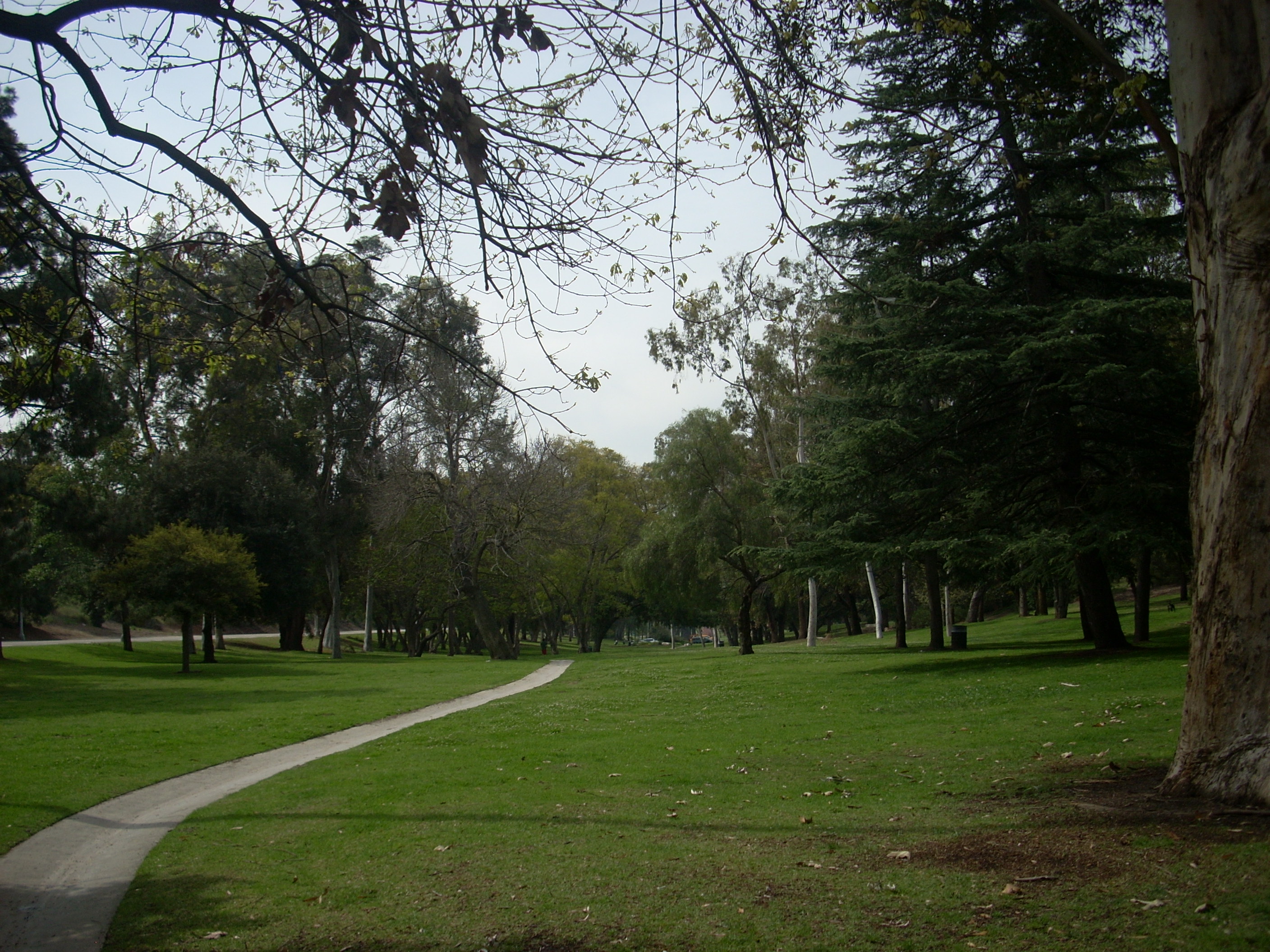
Chavez Ravine
From the stands at Dodger Stadium, you can see the downtown Los Angeles skyline rising to the south and the San Gabriel Mountains spreading to the east. The view is beautiful. What you cannot see from the stands—what the stands were built to make invisible—are the three communities that stood on this land before the stadium, and the decade of resistance it took to remove them.
Palo Verde, La Loma, Bishop
Chavez Ravine is a shallow canyon about a mile north of downtown Los Angeles, named for Julián Chávez, a 19th-century city councilman. By the early twentieth century, three working-class Mexican-American neighborhoods had grown up in its folds: Palo Verde, La Loma, and Bishop. The communities were self-sufficient in the way that immigrant neighborhoods become self-sufficient when the larger city doesn't extend services to them. They had their own churches, schools, and stores. Residents owned their homes.
The housing stock was modest—wooden structures on unpaved roads—and the city had largely neglected the area's infrastructure. That neglect would later be used as justification for what came next.
The Housing Project That Wasn't
After World War II, the Los Angeles Housing Authority announced plans for Elysian Park Heights, a large public housing development on the Chavez Ravine land. Using eminent domain, the city began buying and condemning properties. Residents were told they would have priority placement in the new development and could eventually return to the neighborhood.
They were not told that the project would be canceled. Under pressure from real estate interests and anti-communist sentiment—public housing had been labeled socialist by its opponents—the Los Angeles City Council voted to kill Elysian Park Heights in 1952. The land sat vacant. The communities were gone. There was nowhere to return to.
The Battle of Chavez Ravine
A small number of families had refused to leave. The most famous of them were the Arechiga family, who held out until May 8, 1959. On that morning, sheriff's deputies arrived to physically remove them from the property. Aurora Vargas, a daughter of the family, was carried out of the house in a chair, struggling. News cameras captured it. The footage ran on television and in newspapers across the country.
The event became known as the Battle of Chavez Ravine—though it was not a battle so much as a forced removal. Los Angeles voters had approved, in 1958, a deal giving 352 acres of the ravine to the Brooklyn Dodgers' owner Walter O'Malley in exchange for Wrigley Field in South LA. The deal was controversial. The displacement of the communities to provide land for a baseball team owned by a wealthy man would haunt the city's relationship with its Latino residents for generations.
What the Ravine Became
Dodger Stadium opened on April 10, 1962. It has hosted some of the most significant moments in baseball history and remains one of the most beautiful parks in the sport. Whether any of that beauty is complicated by the history beneath it depends on who you ask.
For many Angelenos—particularly those with family connections to Palo Verde, La Loma, and Bishop—the stadium carries a weight that the franchise has historically been slow to acknowledge. In recent years, the Dodgers have made more deliberate efforts to honor the displaced communities, including oral history projects and commemorative events. The ravine cannot be restored. What happened there can at least be named.
From the Air
Chavez Ravine sits just north of downtown Los Angeles, immediately visible from the air as the distinctive circular structure of Dodger Stadium surrounded by the parking terraces cut into the hillside. Flying north from KLAX, the stadium appears on the right side of the approach corridor about two miles before downtown. The 110 Freeway passes along the ravine's eastern edge. The stadium's coordinates place it at approximately 34.074° N, 118.240° W. Nearest general aviation field: KSMO (Santa Monica Municipal) to the west; KBUR (Burbank) is six miles to the north.