The Checkers Speech
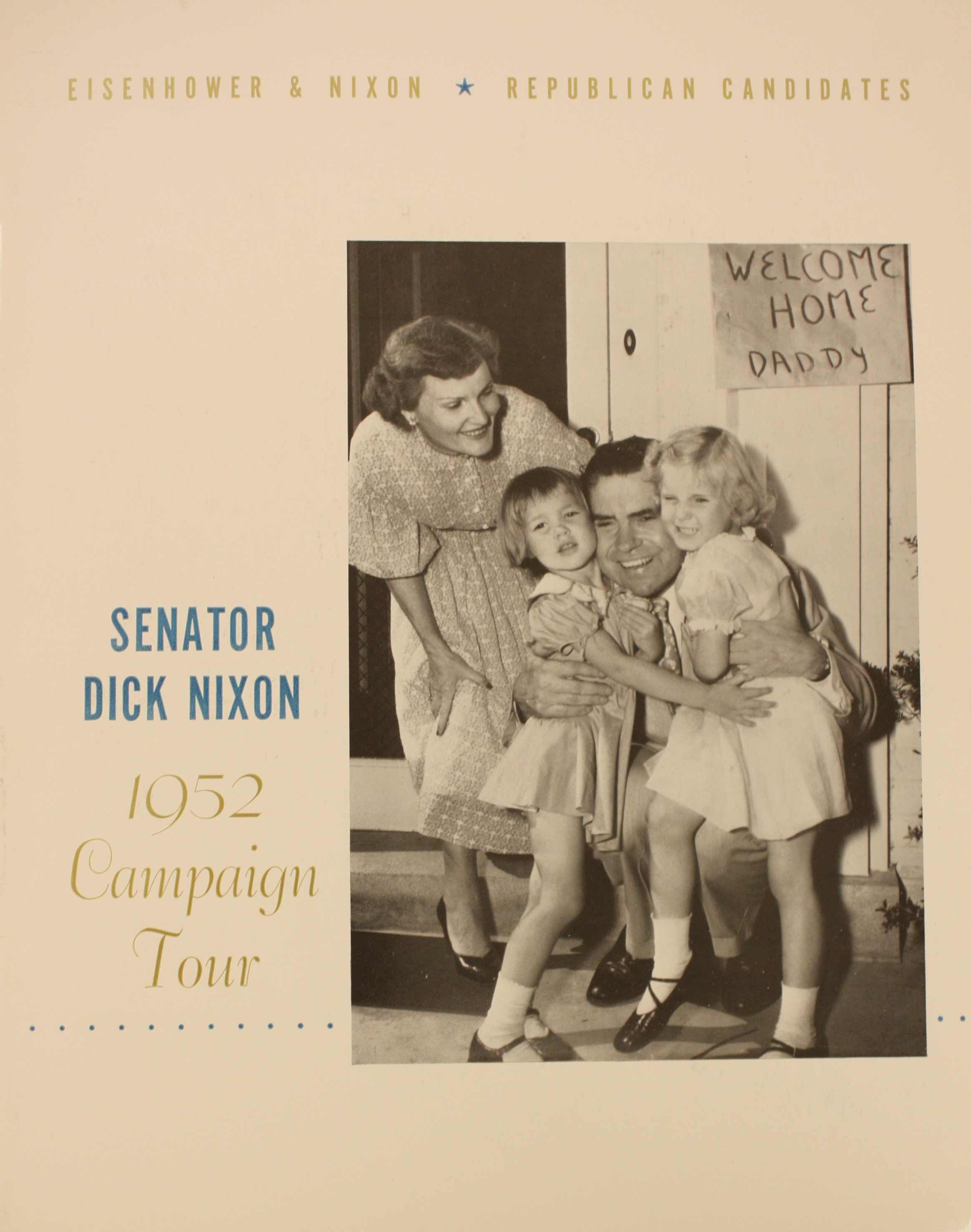
Six weeks before the 1952 presidential election, Richard Nixon's place on the Republican ticket was in doubt. A scandal had broken: his supporters had established a secret fund to reimburse him for political expenses, and the press—and some of his own party—was calling for him to step aside. Nixon flew to Los Angeles, bought thirty minutes of television time, and delivered an address that would become one of the most studied—and most mocked—pieces of political communication in American history. He kept his spot on the ticket. He also introduced America to a dog.
The Fund Scandal
Nixon was the junior senator from California, and he had built his career on aggressive anti-communism and relentless campaigning. As the vice-presidential nominee on Dwight Eisenhower's ticket, he was a significant political figure—and a target. The New York Post broke the story of the fund in September 1952: a group of California businessmen had established a pool of money to reimburse Nixon for political expenses that his $12,500 annual Senate salary couldn't cover. Nixon framed the fund as a legitimate arrangement that allowed him to avoid using taxpayer money for political travel and communication. Critics called it a slush fund and accused him of corruption. Eisenhower's team, uncertain whether Nixon was a liability, left him dangling—telling him he would need to demonstrate that he had the "courage" to face the public.
Buying Thirty Minutes
The Republican National Committee raised $75,000 to purchase thirty minutes of network television time. Sixty-four NBC stations agreed to carry the broadcast; CBS and Mutual Radio would provide audio coverage. Nixon prepared through the night before the September 23 broadcast. He spoke from the El Capitan Theatre in Hollywood—now known as Avalon Hollywood—without a script, without notes, directly into the camera. It was an unusual format for political communication in 1952; television was still new enough that most politicians treated it as radio with pictures. Nixon understood, instinctively, that television required something different: directness, emotion, vulnerability.
The Speech Itself
Nixon spoke for thirty minutes about his finances. He laid out his family's modest circumstances—his father's small store, his mother's hard work—and itemized his assets and liabilities in remarkable detail. He acknowledged the fund but insisted it had never been used for personal enrichment. He attacked the Democratic candidate, Adlai Stevenson, for having a similar fund. He invoked his wife Pat's "respectable Republican cloth coat," contrasting it with the mink coats allegedly gifted to Democratic officials. And then, near the end, he mentioned a gift his family had received: a cocker spaniel puppy that had been sent to them from a supporter in Texas. His daughter Tricia had named it Checkers. "And you know," Nixon said, "the kids, like all kids, love the dog. And I just want to say this right now, that regardless of what they say about it, we're gonna keep it." Nobody had suggested they return the dog. The crowd laughed, then applauded. The speech became known as the Checkers speech.
The Verdict
Approximately 60 million Americans watched or listened. The response was overwhelming: the RNC was flooded with telegrams and calls urging that Nixon remain on the ticket. Eisenhower met with Nixon and, clasping his hand, said "You're my boy." Nixon stayed on the ticket. He and Eisenhower won the election. Nixon went on to serve two terms as vice president, run unsuccessfully for president in 1960, serve as president from 1969 to 1974, and resign in the Watergate scandal. The Checkers speech has been analyzed for decades as a masterpiece of sentimental political manipulation and as a genuine example of a politician connecting with ordinary voters. Probably both readings are correct. The dog died in 1964 and was buried at the Bide-A-Wee Pet Cemetery in Wantagh, New York.
From the Air
The Checkers speech was broadcast from El Capitan Theatre (now Avalon Hollywood) at 1735 N. Vine Street in Hollywood, Los Angeles (34.10°N, 118.33°W), just blocks from the Capitol Records Building. Nearest airports: KBUR (Burbank, ~7 miles north), KLAX (LAX, ~14 miles southwest). The Hollywood area is visible from the air at 2,000–3,000 feet MSL, with Hollywood Boulevard and Vine Street forming a recognizable intersection.