Chennai
Chennai is the gateway to South India, the Tamil Nadu capital of 11 million people that holds cultural traditions that North India doesn't share. The city that the British built as Madras, that the Pallava kings ruled before them, that now produces cars and IT services while maintaining temples and traditions that millennia established. The Marina Beach that stretches for kilometers, the Kapaleeshwarar Temple where devotees gather, the music and dance that December's festival season celebrates - Chennai is India's fourth largest city and its most distinctively South Indian.
The Tamil Heritage
Tamil culture is among the world's oldest continuing traditions, the language whose literature spans two thousand years, the customs that Chennai maintains as Tamil Nadu's capital. The temples where Dravidian architecture reaches its peak, the festivals where tradition displays itself, the food whose flavors differ from what North India eats - Tamil identity shapes everything Chennai does.
The Tamil heritage is what makes Chennai different from Indian cities to the north - the language that visitors cannot read, the script that looks unlike Hindi's, the culture that claims distinction from the Sanskrit tradition that dominates elsewhere. Chennai is South India's claim to separate identity within Indian unity.
The Temples
The Kapaleeshwarar Temple is Chennai's most important, the Dravidian gopuram that rises above Mylapore, the temple that Shiva worshippers have visited for over a millennium. The temple culture that pervades Chennai, the rituals that punctuate daily life, the festivals that temple calendars determine - the temples are where Chennai's spiritual life concentrates.
The temples around Chennai - Mahabalipuram's shore temples, Kanchipuram's temple city - provide the religious tourism that pilgrims and visitors both pursue. The Dravidian architecture that these temples display, the sculpture that adorns them - the temples are what Tamil civilization built when it had resources to build.
The Marina Beach
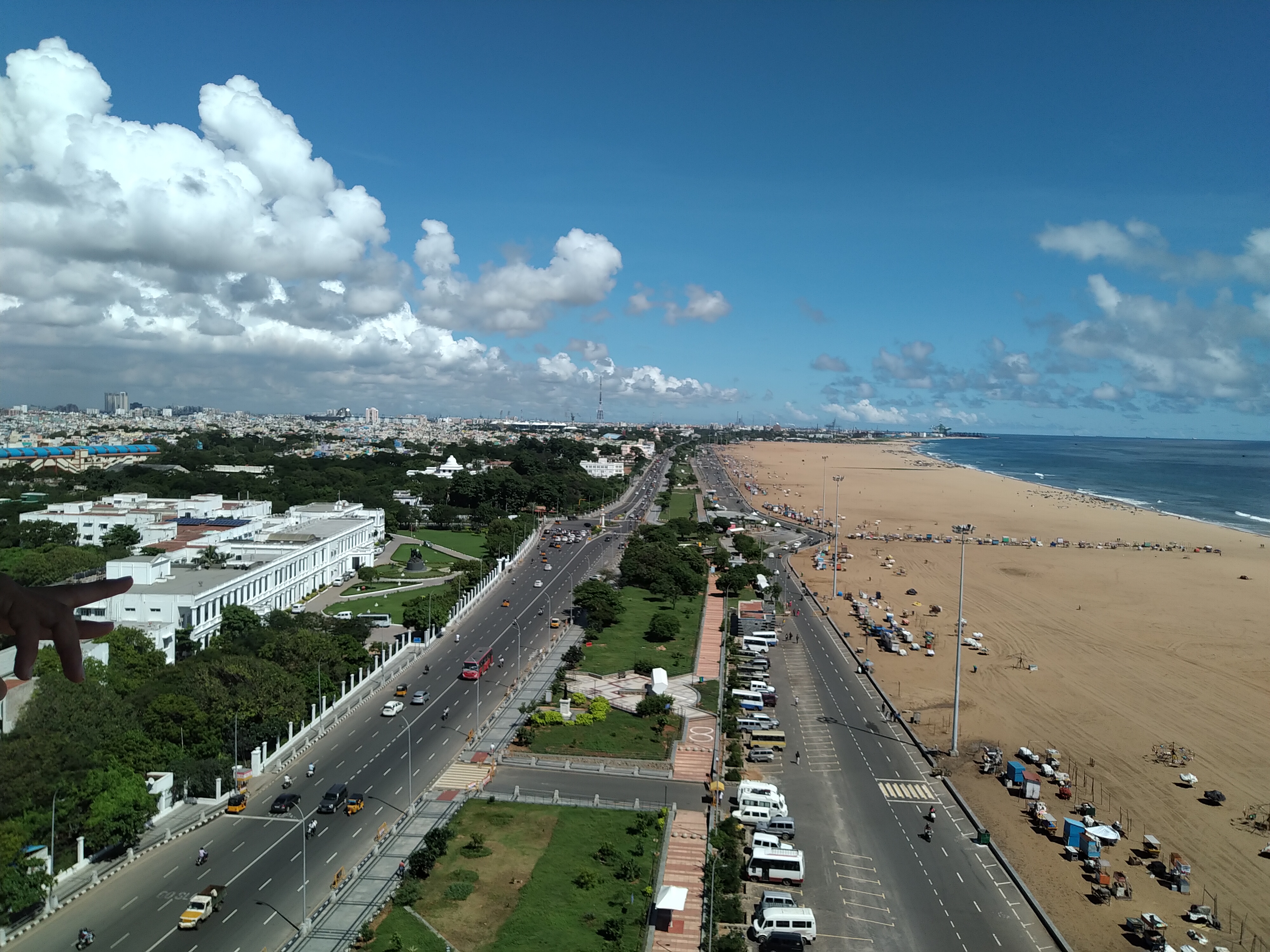
Marina Beach stretches 13 kilometers along Chennai's coast, the world's second longest urban beach, the sand where Chennai gathers in the cooler hours that heat allows. The beach that isn't for swimming - the currents are dangerous, the water isn't clean - but is for walking and talking and being together in public space that density elsewhere denies.
The beach is where Chennai's political history played out - the demonstrations and speeches, the memorials to leaders that line the sand. The beach is where Chennai breathes, the escape from heat and traffic that every evening provides.
The Colonial Heritage
The British built Madras as one of their first Indian settlements, Fort St. George that the East India Company established in 1644 still standing as Chennai's colonial anchor. The churches and government buildings that British administration required, the clubs and institutions that colonial society created - the heritage that Chennai retains while other cities demolished.
The colonial heritage is complicated - the exploitation that colonialism entailed, the infrastructure that it left, the identity that it shaped. Chennai doesn't celebrate colonialism, but it uses what colonialism built, the pragmatism that Indian cities apply to their complicated histories.
The Culture Season
December brings Chennai's music and dance season, the weeks of classical performances that Carnatic music's devotees gather for. The sabhas (cultural associations) that host concerts, the dancers who perform bharatanatyam that South India developed, the critics who assess and the audiences who appreciate - the season makes Chennai world capital of Indian classical arts.
The season is what Chennai offers that no other city can match, the concentration of talent and audience that tradition has accumulated. The season attracts visitors from across the world who come to hear music that recordings cannot replicate, the experience that live performance creates.
From the Air
Chennai (13.08N, 80.27E) lies on the Coromandel Coast of the Bay of Bengal in southeastern India. Chennai International Airport (VOMM/MAA) is located 7km south with two parallel runways 07/25 (3,658m) and 12/30 (1,829m). Marina Beach is visible as a long strip along the coast. The city spreads inland from the bay. Fort St. George and the port area are visible. Weather is tropical - hot year-round with distinct wet season during northeast monsoon October-December. Summer heat can be extreme (45C+). Humidity is high year-round.