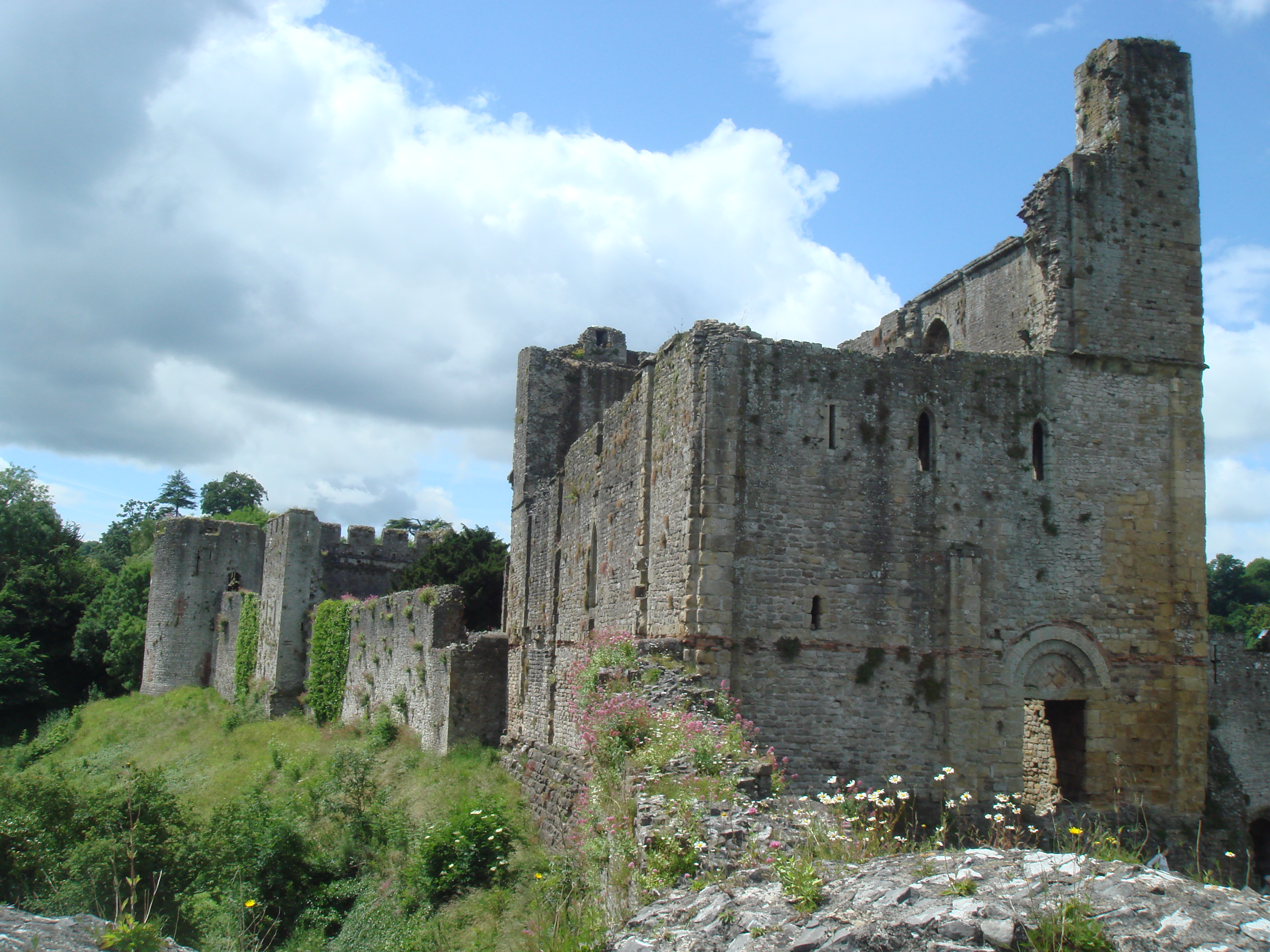
Chepstow Castle
William the Conqueror wasted no time. Just one year after Hastings, in 1067, his trusted lieutenant William FitzOsbern began building a castle in stone at Chepstow, when virtually every other new fortress in England was being thrown up from earth and timber. The choice of material was a statement: this was not a temporary fortification but a permanent declaration of Norman power at the point where England met Wales. Nearly a thousand years later, the Great Tower still stands above the limestone cliffs of the River Wye, making Chepstow the oldest surviving post-Roman stone castle in Britain.
The Border Fortress
FitzOsbern chose his location with a strategist's eye. The castle sits on a narrow ridge above precipitous cliffs where the Wye curves toward the Severn Estuary. The river was a major artery of communication inland to Monmouth and Hereford, and the castle controlled an important crossing point. From here, the Normans could suppress Welsh attacks along the Severn shore toward Gloucester while projecting power into the Kingdom of Gwent, which would become the first independent Welsh kingdom conquered by the Normans. Some of the stones used to build the Great Tower were reused from the Roman ruins at Caerwent, a few miles away, a practical choice that also carried symbolic weight: the new conquerors building upon the ruins of the old.
Four Baileys, Four Centuries
Chepstow grew through four distinct construction phases spread across centuries, each adding a new bailey to the castle's elongated plan. The Great Tower was probably complete by 1090. William Marshal, regarded as the greatest knight of his age and one of medieval England's most powerful magnates, held Chepstow in the late twelfth and early thirteenth centuries, strengthening its defenses. Richard de Clare, known as Strongbow, also held the castle. The result is a long, narrow fortress stretching along its ridge, with four baileys laid out in sequence rather than concentrically. It was never a conventionally powerful castle in defensive terms, lacking either a strong keep or a concentric layout, but its cliff-top position made it formidable nonetheless.
Prison on the Cliffs
After the English Civil War, Chepstow served as a political prison. Bishop Jeremy Taylor was held here, and Henry Marten, one of the regicides who signed Charles I's death warrant, was imprisoned at Chepstow after the Restoration of the monarchy. Marten spent his final years in a tower that still bears his name, dying in captivity in 1680. The castle that had been built to project Norman power against the Welsh had become a convenient place to lock away those who had challenged royal authority from the English side. By 1685, the garrison was disbanded, and the buildings were partly dismantled, leased to tenants, and left to decay. Parts of the castle served as a farmyard; others housed a glass factory.
Picturesque Ruin and Eccentric Searches
By the late eighteenth century, Chepstow had found a new purpose as a scenic attraction. The castle became a highlight of the Wye Tour, the pleasure boat trips from Ross-on-Wye through the valley that helped launch the Picturesque movement in British art and tourism. The first guidebook was published in 1793. One of the more eccentric episodes came in 1910, when Dr. Orville Ward Owen conducted well-publicized excavations in the castle and riverbed, searching for secret documents that would prove Francis Bacon wrote Shakespeare's plays. He found nothing. Three years later, the 1913 silent film Ivanhoe was shot in the grounds. Today, the castle is managed by Cadw, the Welsh heritage body, and its twelfth-century gatehouse retains what may be the oldest surviving castle door in Europe, its iron-studded planks still hanging in their original frame.
From the Air
Located at 51.644N, 2.676W above the River Wye at Chepstow, Monmouthshire, on the Welsh-English border. The castle's elongated plan stretching along the cliff ridge is distinctive from the air, with the River Wye curving below. The Severn Bridge is visible nearby to the south. Nearest airports: EGGD (Bristol, 15 nm southwest), EGBJ (Gloucestershire, 25 nm north). Recommended viewing altitude 1,500-3,000 ft for the best view of the castle's relationship to the cliff and river.