Cheyenne Frontier Days: The Daddy of 'em All
The name says everything that needs saying: 'The Daddy of 'em All.' Since 1897, when Cheyenne held its first one-day cowboy roundup, this Wyoming city has thrown the world's largest outdoor rodeo and western celebration. Clayton Danks, winner of three Frontier Days competitions before 1910, rode a bronc named Steamboat with such iconic style that he became the model for Wyoming's Bucking Horse and Rider trademark - the image that graces every Wyoming license plate. Nearly 200,000 people now descend on Cheyenne each July, filling every hotel room across southern Wyoming and into Colorado and Nebraska. They come for the rodeo, for the Grand Parade of floats and antique carriages, for the carnival midway - but mostly they come because Frontier Days is the closest America gets to touching its cowboy past.
Where Cowboys Prove Themselves
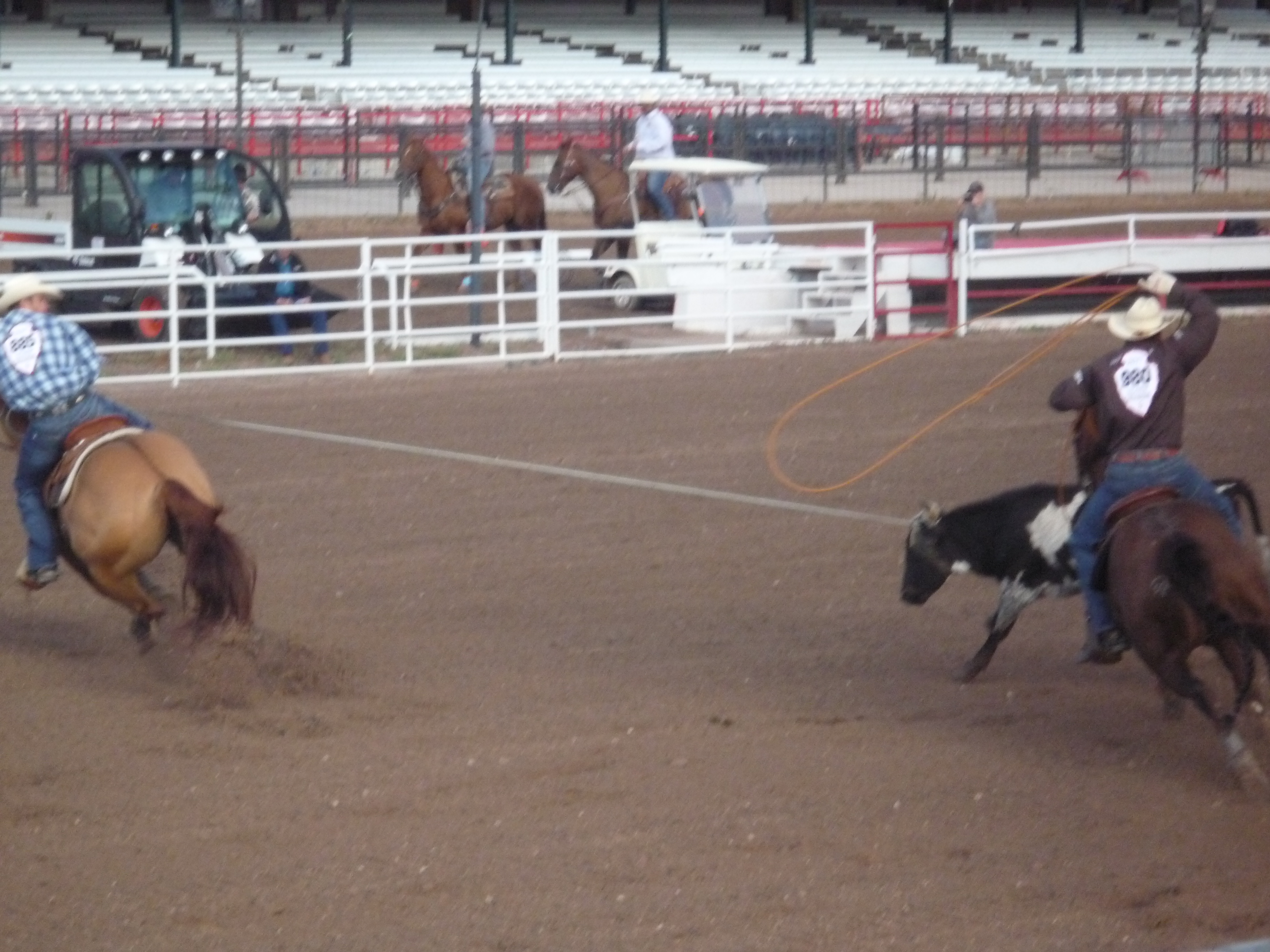
The rodeo has won the Professional Rodeo Cowboys Association's Large Outdoor Rodeo of the Year award 16 times - 11 of them consecutive. Over $1 million in cash and prizes draws the sport's elite competitors to Cheyenne. Frontier Days runs nine days with more sections of bull riding, saddle bronc, and bareback than any other rodeo. Every event runs every day. Roughstock riders risk their bones on two-thousand-pound bulls; timed-event contestants wrestle steers and race barrels in fractions of seconds. The USAF Thunderbirds, who made their public debut at Frontier Days in 1953, still perform their aerial acrobatics over nearby Francis E. Warren Air Force Base each year. But the authentic heart beats in events like the wild horse race and the dinner bell derby - chaos that no script could contain.
The Cattle Drive and Pancake Mountain
The week before Frontier Days officially begins, mounted cowboys herd 550 steers three miles from pastures north of Cheyenne, down along Interstate 25, through city streets and into Frontier Park. The annual Cattle Drive recreates the Old West in the middle of a modern city - a time warp that draws crowds who line the streets to watch livestock walk where cars normally drive. Then come the pancake breakfasts. Every Monday, Wednesday, and Friday, the Kiwanis serve free pancakes to anyone who shows up at the historic Cheyenne Depot Square. The weekly record stands at 39,111 people fed over three breakfast sessions, set during the 1996 centennial. Over one week, volunteers cook more than 100,000 pancakes and 3,000 pounds of ham on military ranges. The breakfast tradition started in 1952 and has missed only one year - 2020, when the pandemic silenced the entire celebration.
The Iron Horse Connection
From 1908 to 1970, a special train carried travelers between Denver Union Station and the Cheyenne Depot for Frontier Days - skipping only World War II and a few other years. The final train in 1970 carried 27 cars and 1,127 guests. The tradition revived in 1992 for the Denver Post's centennial, and since 1994 it has run annually, typically pulled by Union Pacific 844 with as many as 22 passenger coaches. Tickets sell by lottery; proceeds benefit the Denver Post Community Foundation. The train connection speaks to Cheyenne's roots: the city was founded in 1867 when the Union Pacific established its mountain region headquarters at Crow Creek Crossing. Fort D.A. Russell - now Francis E. Warren Air Force Base - was established weeks later to protect railroad workers. City and fort grew together; Frontier Days emerged from that frontier heritage.
Native Voices and Western Art
In 1898, shortly after the second Frontier Days, organizers invited Native American performers to participate. They have come every year since. The Indian Village hosts authentic dancing, music, storytelling, and pow-wows throughout the celebration - free and open to all. Since 1960, the committee has maintained a permanent campground for visiting performers. The Cheyenne Frontier Days Old West Museum, open year-round on Frontier Park, houses an extensive collection of western carriages and a permanent exhibit on Frontier Days history. A statue of rodeo icon Lane Frost - the bull rider who died in the arena at age 25 - stands near the entrance. The Hall of Fame includes Frost alongside country legends Johnny Cash, Reba McEntire, George Strait, and Garth Brooks. Since around 1980, the museum has hosted the Western Art Show and Sale, where top artists work in everything from bronze to oil.
Above the Arena
Cheyenne sits at approximately 6,000 feet elevation on the high plains of southeastern Wyoming, at coordinates 41.155 N, 104.835 W. The nearest major airport is Denver International (KDEN), about 100 miles south. Cheyenne Regional Airport (KCYS) serves general aviation and small commercial flights. From altitude, Frontier Park appears as a green patch on the city's northwestern edge, the oval of the arena visible alongside the midway and exhibition buildings. Francis E. Warren Air Force Base lies just to the west, where Thunderbirds trace their aerobatic patterns in July skies. High temperatures around 85 degrees and fair weather are normal for Frontier Days week - though afternoon thunderstorms can roll across the plains with little warning. The landscape is treeless high plains, broken only by the city itself and the military base, the Rocky Mountains a purple line on the western horizon.
From the Air
Located at 41.155 N, 104.835 W in Cheyenne, Wyoming at approximately 6,000 feet elevation. Frontier Park visible as green space on city's northwest side. Francis E. Warren AFB immediately west. Cheyenne Regional Airport (KCYS) serves the area; Denver International (KDEN) 100 miles south. High plains terrain with Rockies visible to west. Best viewing in late July during the celebration, when the Thunderbirds perform over the base.