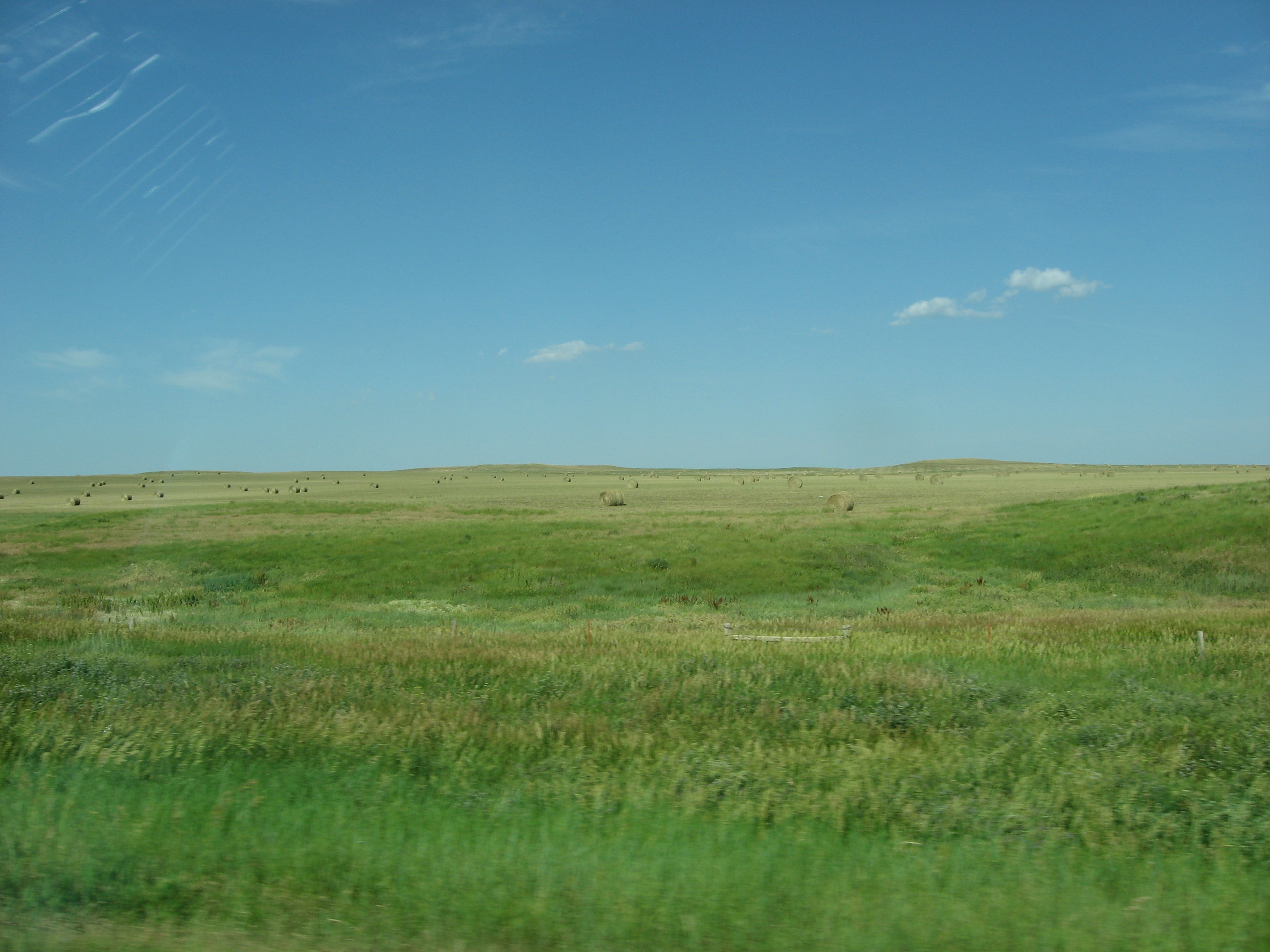
Cheyenne River Indian Reservation
Four bands of the Lakota still call this land home. The Minnecoujou, Two Kettle, Sans Arc, and Sihásapa -- four of the seven traditional bands of the Teton Sioux -- form the Cheyenne River Sioux Tribe, known in their own language as the Cheyenne River Lakota Nation. Their reservation sprawls across 4,267 square miles of western South Dakota, bounded by the Cheyenne River to the south and the Missouri River's Lake Oahe to the east. From the air, it reads as an immensity of rolling grassland, broken by river coulees and punctuated by the small communities of Eagle Butte, Dupree, and Timber Lake. This is terrain that once formed part of the Great Sioux Reservation -- a single, enormous territory covering portions of six states -- before the United States government shattered it into fragments in 1889.
A Treaty Made, a Treaty Broken
The Treaty of Fort Laramie of 1868 promised the Lakota a vast homeland: the Great Sioux Reservation, stretching across what is now the western half of South Dakota and beyond. That promise lasted barely two decades. Gold discoveries in the Black Hills and pressure from homesteaders drove successive treaties in the 1870s and 1880s that chipped away at the reservation until, in 1889, Congress carved it into five smaller parcels. The Cheyenne River Indian Reservation was one of them, originally covering more than 5,000 square miles with the Grand River as its northern boundary. Even that reduced territory would shrink further. In 1908, Congress authorized the sale of unallotted land, and in 1909 President William Howard Taft opened the reservation to white settlement by presidential proclamation. Today, the reservation covers approximately 2,366 square miles in its southern section, much of the land within its boundaries privately owned.
The Death of Sitting Bull
By December 1890, the U.S. government was consumed with fear over the Ghost Dance movement sweeping through the Lakota reservations. Chief Sitting Bull lived just north of the Cheyenne River Reservation, along the Grand River on the Standing Rock Reservation. Authorities believed he was preparing to lead an exodus off the reservation. On December 15, a force of 39 Indian policemen and four volunteers arrived at Sitting Bull's residence to arrest him. He initially cooperated, but when he stepped outside and found some 50 of his followers gathered in support, the situation deteriorated. Gunfire erupted. When it ended, 18 people lay dead, including Sitting Bull and his son. His half brother, Spotted Elk, gathered 350 people and fled south onto the Cheyenne River Reservation, heading for Pine Ridge. The 7th Cavalry intercepted them on December 28 at Wounded Knee Creek. The next day, soldiers killed approximately 250 to 300 Lakota men, women, and children in what became known as the Wounded Knee Massacre.
Drowned Towns and Lost Acres
The Lakota lost land not only to treaties and homesteading but to water itself. Beginning in 1948, the U.S. government dammed the Missouri River for electrical power and flood control. The reservoir that formed behind the Oahe Dam became Lake Oahe, and it swallowed roughly eight percent of the Cheyenne River Reservation. Bottomland -- the most fertile, most sheltered, most livable terrain on the reservation -- vanished under the rising water. Communities were displaced. The eastern boundary of the reservation is now the lake's shoreline, a landscape of drowned river valleys where cottonwood groves and family allotments once stood. The reservation's communities today, from Cherry Creek to Green Grass to La Plant, remain among the lowest-income per capita in the United States, though Eagle Butte, the tribal headquarters, maintains a business district comparable to similarly sized towns elsewhere in the region.
Utes on the Prairie
The Cheyenne River Reservation holds an unexpected story within its borders. In 1906 and 1907, a small number of White River Utes -- a people from the mountains of Colorado, not the Great Plains -- were resettled here by the federal government, allocated four townships totaling 92,160 acres in the northern part of the reservation. Their communities of Iron Lightning and Thunder Butte still exist, dating back to the original 1889 reservation boundaries. This detail hints at the reservation's layered human geography: it is not a single story of a single people but a patchwork of forced relocations, treaty obligations, and government experiments in social engineering, all written onto the same expanse of South Dakota grassland.
Resilience on the High Plains
In January 2010, a blizzard and ice storm tore across the reservation, downing 3,000 power lines and leaving thousands of residents without power, heat, or water in the dead of a South Dakota winter. The state declared a state of emergency, but media attention was slow to arrive and relief even slower. It took three weeks to restore power to most homes. When TV commentator Keith Olbermann highlighted the crisis on his program on February 14, donations surged -- more than $400,000 within days. The episode captured a pattern familiar to reservation residents: crisis met first with silence, then with belated but genuine outside support. Today the Cheyenne River Sioux Tribe continues to govern from Eagle Butte, its population recorded at 8,090 in the 2010 census. Among its citizens are sculptor Rhonda Holy Bear, actor and comedian Jana Schmieding, and the 19th-century Minneconjou leader Touch the Clouds.
From the Air
Located at 45.08°N, 101.23°W in western South Dakota. The reservation covers 4,267 square miles -- visible from altitude as a vast expanse of rolling grassland between the Missouri River (Lake Oahe) to the east and the Cheyenne River to the south. Eagle Butte, the tribal headquarters, sits along US-212. The nearest major airports are Pierre Regional Airport (KPIR) approximately 60 miles southeast and Rapid City Regional Airport (KRAP) approximately 150 miles west. At cruising altitude, look for the distinctive shoreline of Lake Oahe defining the eastern boundary and the Cheyenne River corridor along the southern edge. Best viewed at 8,000-15,000 feet to appreciate the scale of the reservation against the surrounding prairie.