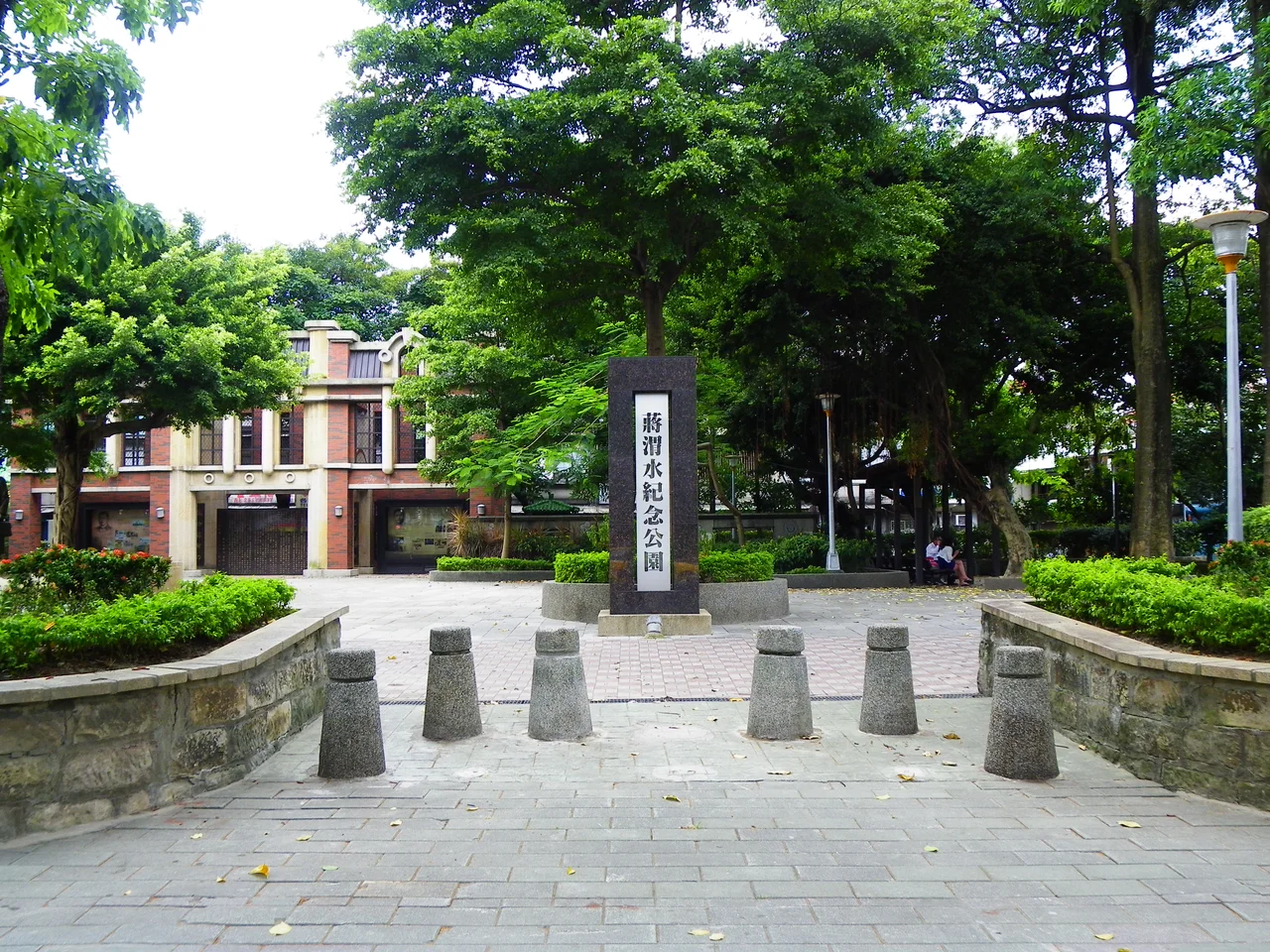

Chiang Wei-shui Memorial Park
A doctor who diagnosed a whole society. Chiang Wei-shui, born in 1890 in Yilan County during the final years of Qing rule, trained as a physician and then turned the tools of medicine — observation, diagnosis, prescription — into a method for understanding Taiwan's condition under Japanese colonial rule. His most famous essay was written in the form of a clinical examination, with Taiwan as the patient. The prognosis was serious: severe cultural malnutrition. The prescribed treatment was education, solidarity, and organized resistance. He spent the rest of his short life trying to fill that prescription.
Physician and Organizer
Chiang Wei-shui graduated from the Taiwan Medical College in 1915 — the institution that would later become the National Taiwan University College of Medicine. He opened a hospital in Dadaocheng, the historic commercial district of Taipei, and later added a bookstore nearby, using it as a conduit for new ideas from Japan, China, and the wider world. Medicine and intellectual life, for Chiang, were inseparable.
In 1921, he co-founded the Taiwanese Cultural Association (台灣文化協會), the first major organization to promote Taiwanese cultural identity and democratic rights under Japanese rule. The association ran lectures, theater performances, and reading groups throughout Taiwan, working to raise political consciousness in a population that had been governed by Japan since the Treaty of Shimonoseki transferred the island in 1895. Chiang's approach was cultural before it was overtly political: he believed that a people who understood themselves could not be governed without their consent.
The Certificate of Clinical Diagnosis
No single document better captures Chiang Wei-shui's method than his 1921 essay 'Certificate of Clinical Diagnosis' (臨床講義), written for the founding of the Cultural Association. In it, he played the role of physician examining a patient — Taiwan — and issued a formal diagnosis: severe intellectual malnutrition, caused by three centuries of foreign rule (Dutch, Chinese, then Japanese) and compounded by inadequate education.
The form was satirical, but the argument was serious. Chiang's prescription for the patient's recovery included education in the mother tongue, cultural self-awareness, and organized civil society. Taiwanese intellectuals read it and recognized themselves. The essay circulated widely and established Chiang as one of the most incisive voices of his generation — a man who could make a political argument in the language of science without sacrificing either rigor or accessibility.
Taiwan's First Political Party
By 1927, the Cultural Association had fragmented over ideological differences. Chiang founded the Taiwanese People's Party (台灣民眾黨) that same year — the first modern political party organized by Taiwanese people under Japanese colonial rule. It was a remarkable act of civic ambition in a context where political opposition to colonial authority carried real risks.
The party advocated for democratic self-governance, legal equality, and the improvement of labor and living conditions. It operated under constant surveillance and pressure from colonial authorities, and Chiang himself was arrested and imprisoned multiple times. He never stopped. When he died on 5 August 1931 — one day before his forty-first birthday, of typhoid fever — he was still leading the movement. His last words, reportedly delivered to comrades at his bedside, were a call to continue the work. He was later called 'Taiwan's Sun Yat-sen,' a comparison that acknowledged both the sweep of his vision and the historical moment at which he died.
The Park and Its Dedication
The park that bears Chiang Wei-shui's name was originally called Jinxi Park. On 5 August 2006 — the seventy-fifth anniversary of his death — the Taipei City Government renamed and rededicated it in a ceremony that brought together Vice President Annette Lu, Premier Su Tseng-chang, and Taipei Mayor Ma Ying-jeou. That these officials from different parties came together that day was itself a statement: Chiang Wei-shui's legacy belongs to Taiwan's democratic tradition broadly, not to any single political faction.
The park spans 5,060 square meters in Datong District, close to the Dadaocheng neighborhood where Chiang ran his hospital and bookstore nearly a century earlier. A baroque arched facade and a commemorative stele mark the entrance. The park is accessible by a short walk southwest from Minquan West Road Station on the Taipei Metro — a walk that passes through some of the oldest fabric of the city, the streets where Chiang once organized, lectured, and imagined a different future for Taiwan.
From the Air
Chiang Wei-shui Memorial Park is located at approximately 25.06°N, 121.52°E in Datong District, in the older northwestern portion of central Taipei. The Datong District borders the Tamsui River to the west and contains the historic Dadaocheng quarter, recognizable from the air by the dense street grid running down to the riverbank. Taipei Songshan Airport (RCSS) is approximately 5 km to the east, with its characteristic parallel runways oriented east-west along the Keelung River. Taoyuan International Airport (RCTP) is approximately 35 km to the southwest.
Nearby Stories
- Dapu Incident 9.3 km away
- Shuanglianpi Wetland 18 km away
- Toufen 41 km away
- North Jiangsu Main Irrigation Canal 980 km away
- General Cliff Rock Paintings 1050 km away
- Sinking of MV Sewol 1061 km away
- Yellow Sea 1111 km away
- Twin Forts of Romblon 1358 km away