Chicago: The City That Reversed a River and Rebuilt Itself in Ash
Chicago shouldn't exist. The marshy swamp where the Chicago River met Lake Michigan was an improbable place to build a city. But location made it inevitable: the portage between the Great Lakes and Mississippi River systems made it the choke point of American commerce. When the Great Fire of 1871 destroyed 17,000 buildings and left 100,000 homeless, Chicago didn't pause - it rebuilt bigger, higher, and more audaciously. Engineers reversed the Chicago River in 1900, making it flow away from the lake to protect the drinking water supply. Architects invented the skyscraper here, the steel-frame construction that would define urban America. The 'Second City' earned its nickname not from size but from rising second from the ashes.
The Fire
On October 8, 1871, fire broke out in a barn on DeKoven Street. The summer had been dry; the city was built of wood; the wind blew from the southwest. Within two days, 3.3 square miles of the city had burned - the entire central business district, 17,000 buildings, 300 dead, 100,000 homeless. Mrs. O'Leary's cow supposedly kicked over a lantern, though the reporter who wrote the story later admitted he invented it. The fire shaped Chicago more than any other event: the city that emerged from the ashes would be built of stone and steel, planned more carefully, designed by architects who came from everywhere to reimagine urban America.
The Skyscrapers
William Le Baron Jenney's Home Insurance Building, completed in 1885, is considered the first true skyscraper - the first building to use a steel frame that bore the weight rather than load-bearing masonry walls. The innovation emerged from Chicago's particular circumstances: valuable downtown land, abundant steel from nearby mills, and architects freed by the fire from rebuilding what had existed before. The Chicago School of architecture developed here - Louis Sullivan, Daniel Burnham, John Wellborn Root - creating the commercial building style that would define American cities. The Rookery, the Monadnock Building, the Marquette Building - the Loop's architectural legacy begins in the decade after the fire.
The River
Chicago's existential problem was sewage. The same river that made the city also carried its waste into Lake Michigan, its drinking water source. Cholera and typhoid killed thousands. The solution was audacious: reverse the river's flow. Engineers built the Sanitary and Ship Canal, opened in 1900, which lowered the river's level enough that it now flowed away from the lake, toward the Mississippi. St. Louis sued, arguing Chicago was now dumping its sewage on them instead. Chicago won. The engineering achievement was considered one of the wonders of the age - a river convinced to flow backward by human intervention.
The Politics
The 'Windy City' nickname doesn't reference the lake breeze - it references the politicians. Rival cities in the 1890s mocked Chicago's boosters for their 'windy' promotion during the World's Fair bid. The political machine that developed here produced bosses, corruption, and colorful characters: 'Big Bill' Thompson, who once threatened to punch King George V; Richard J. Daley, who ran the city for 21 years and whose convention-floor chaos in 1968 broadcast nationally. Chicago politics became a laboratory for urban machine governance, for better and worse - delivering services and extracting tribute in roughly equal measure.
Visiting Chicago
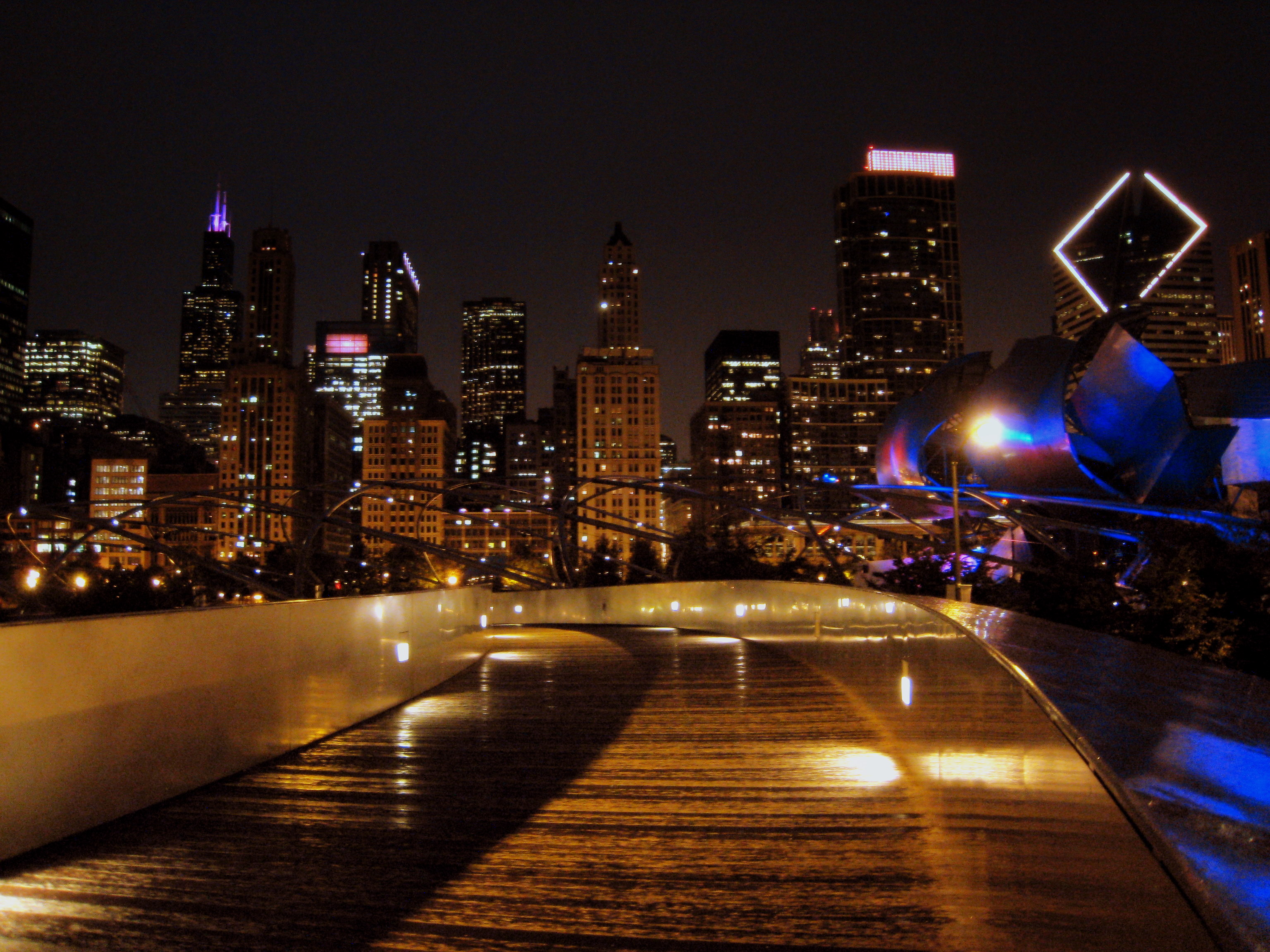
Chicago's central attractions concentrate in the Loop and along the lakefront. The Art Institute houses one of the world's great collections. The Architecture Foundation offers boat tours on the river that reversed itself. Millennium Park includes the Cloud Gate sculpture (the Bean) and Frank Gehry's bandshell. The observation decks at Willis Tower (formerly Sears) and 360 Chicago offer views across four states. Deep-dish pizza is a tourist obligation, though locals debate Giordano's versus Lou Malnati's. The 'L' trains provide both transportation and sightseeing. The experience confronts visitors with American urban ambition - a city that refused to accept limitations, that reversed rivers and invented building types and rose from ashes to become what it is.
From the Air
Located at 41.88°N, 87.63°W on the southwestern shore of Lake Michigan. From altitude, Chicago appears as a dense urban grid pressed against the lake - the Loop's skyscraper cluster visible at the river mouth, the lakefront parks tracing green along the shore. The Chicago River's reversed flow is invisible from altitude, but the canal system extending southwest marks the engineering that made it possible. O'Hare and Midway airports anchor the metropolitan area. What appears from altitude as a massive lakefront metropolis is the city that invented the skyscraper, reversed a river, and rebuilt itself from fire to become America's great inland city.