Chicago Tunnel Company
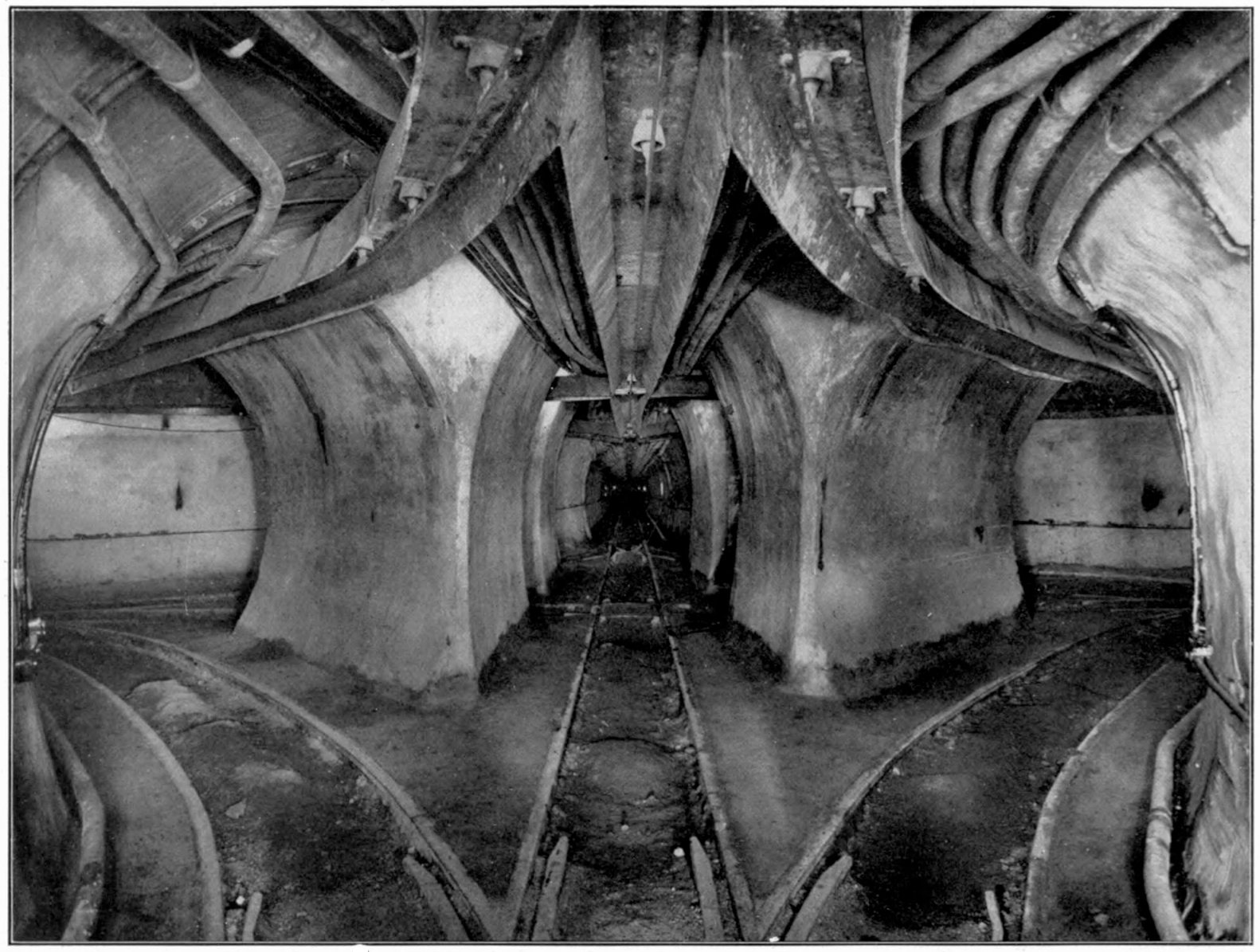
It started with a lie, or at least a creative omission. In 1899, the Illinois Telephone and Telegraph Company received permission from the city of Chicago to dig utility tunnels for telephone cables. What the company actually built was something far more ambitious: a narrow-gauge freight railroad beneath the streets of downtown. The first stretches of tunnel were excavated covertly, workers entering through the basement of a saloon and carting away the spoil after midnight. The city was largely unaware of the true nature of the tunneling. By the time the enterprise became the Chicago Tunnel Company, it had grown into a network of egg-shaped tunnels carrying coal, merchandise, mail, and excavation debris on miniature electric trains that ran beneath the feet of millions of Chicagoans who never knew they were there. The system even inspired the London Post Office Railway.
A Railroad Nobody Could See
When the city refused to permit manholes for unreeling cable, the tunnel builders changed their plans to include rails for hauling cable spools underground. By 1903, the company had renegotiated its franchise to allow freight and mail service on these rails. The actual construction was managed by George W. Jackson, who oversaw the digging of egg-shaped tunnels through a layer of soft blue clay beneath the streets. Workers cut the clay with modified draw knives, and some sections were pressurized during tunneling. By 1914, the system encompassed tunnels with narrow-gauge track, connected to customers through 19 elevators and served by 132 electric locomotives and over 2,000 merchandise cars. A 1916 survey found the tunnel carried 18 percent of all freight traffic in the Chicago Loop.
Coal Down, Ashes Up
The tunnel's core business was elegantly simple. Coal was delivered underground in side-dump cars, dropped into hoppers beneath customers' boiler rooms, then conveyed upward to feed furnaces. Twenty-two buildings had direct tunnel connections for coal delivery in 1914, including the First National Bank of Chicago, Marshall Field's department store, and City Hall. When the furnaces had done their work, ashes went back down into the tunnels. Excavation debris from construction sites across the Loop was also dumped into tunnel trains, cheaper than hauling it through congested streets. Most of this waste went to fill Grant Park -- the land beneath the Field Museum of Natural History and the site of Soldier Field was created from debris hauled through the tunnels and dumped on the lakefront.
Cold Air and Hot Bankruptcy
The tunnel company had a curious sideline: air conditioning. The tunnels maintained a constant temperature year-round, and the company sold this naturally cool air to theaters above. The McVickers, the Rialto, and four other theaters piped tunnel air into their auditoriums. In winter, the same air served as a heat source, requiring far less coal to warm than the frigid outside air -- theaters estimated they used less than one-third the fuel they would have burned otherwise. Despite these inventive revenue streams, the tunnel was never very profitable. By 1909, an estimated $30 million had been spent on construction and operation. The company went bankrupt and reorganized in 1912. It struggled on for decades, but trucks siphoned off freight business, customers switched from coal to natural gas, and by 1959, the Interstate Commerce Commission consented to abandonment. The tunnel assets were sold at auction for just $64,000.
The Day the River Came Down
In late 1991, pilings were driven into the riverbed near the Kinzie Street Bridge to prevent barges from bumping into the structure. A miscalculation placed them just a few feet from the abandoned tunnel wall. A cable television employee videotaped mud and water oozing through cracks where the wooden pilings had punctured the tunnel. Official response was slow -- rather than emergency repairs, a formal bidding process began. Six months later, on April 13, 1992, the oozing clay opened a clear passage from the riverbed. The Chicago River poured into the tunnels. The Merchandise Mart declared a water emergency at 5:57 AM. City Hall flooded by 6:02 AM. The Federal Reserve Bank went under at 8:29 AM. Many businesses had no idea they were still connected to the tunnel network -- old openings had been bricked over but never made watertight.
Still Down There
The downtown shutdown lasted days and caused enormous economic losses. Insurance litigation dragged on for years, hinging on whether the event qualified as a 'flood' or a 'leak' -- a distinction worth millions, since flood damage was not covered. Courts eventually classified it as a leak, giving the episode its informal name: the Great Chicago Leak. The tunnels themselves remain beneath the streets, still carrying power and communication cables. Chief engineer George W. Jackson, who built the system, had understood the flooding risk from the start -- he patented a portable bulkhead in 1909 specifically to seal off breached tunnel sections. The tunnels attracted urban explorers for years, but after a terrorism scare in the early 2000s involving Joseph Konopka, all access was secured. Beneath the glass towers and crowded sidewalks of the Loop, the narrow passages endure -- a ghost railroad that once moved 18 percent of the district's freight, now silent except for the hum of cables.
From the Air
Located at 41.88°N, 87.63°W beneath downtown Chicago. The tunnel network is entirely underground and invisible from the air, but the Chicago Loop it served is unmistakable -- the grid of streets bordered by the Chicago River's main stem and South Branch. The Kinzie Street Bridge, where the 1992 flood breach occurred, is visible at the north edge of the Loop where the river bends. Grant Park, partially built from tunnel debris, stretches along the lakefront to the east. Nearest airports: Chicago O'Hare (KORD, 15 miles northwest) and Chicago Midway (KMDW, 9 miles southwest). Best viewed at 2,000-4,000 feet AGL where the Loop's street grid is clearly defined.