Chicano Park
Chicano Park exists because a community stood in front of bulldozers. The 32,000-square-meter park beneath the San Diego-Coronado Bridge, home to the largest collection of outdoor murals in the United States, was claimed by the residents of Barrio Logan in a 1970 act of civil resistance that shaped the neighborhood's identity for generations.
What the Bridge Cost the Neighborhood
The San Diego-Coronado Bridge was completed in 1969, connecting downtown San Diego to the island community of Coronado across the bay. The infrastructure required to build it — the massive concrete pillars, the approach ramps, the surface roads — cut directly through Barrio Logan, a predominantly Chicano neighborhood on San Diego's southeastern waterfront.
The construction of the bridge was only the latest in a series of decisions that had already cost Barrio Logan thousands of residents. In the years prior, more than 5,000 homes had been demolished to make room for the bridge and related infrastructure. The community lost homes, businesses, and the physical fabric of a neighborhood that had been built over generations.
When the city announced plans to build a California Highway Patrol substation on land under the bridge — land that residents had been promised would become a park — it was one demand too many.
April 22, 1970
On April 22, 1970, city contractors arrived with bulldozers to begin site preparation for the Highway Patrol station. Barrio Logan residents, many of them students and activists who had been organizing for months, arrived first.
They occupied the land. They planted trees and began laying out a park on the ground that had been promised to them. The occupation drew dozens, then hundreds of people. Families came. Children came. Community members who had watched their neighborhood be dismantled piece by piece came and stood on the land and said: this is ours.
The city backed down. The Highway Patrol station was not built. The park was established. It was named Chicano Park.
The Murals
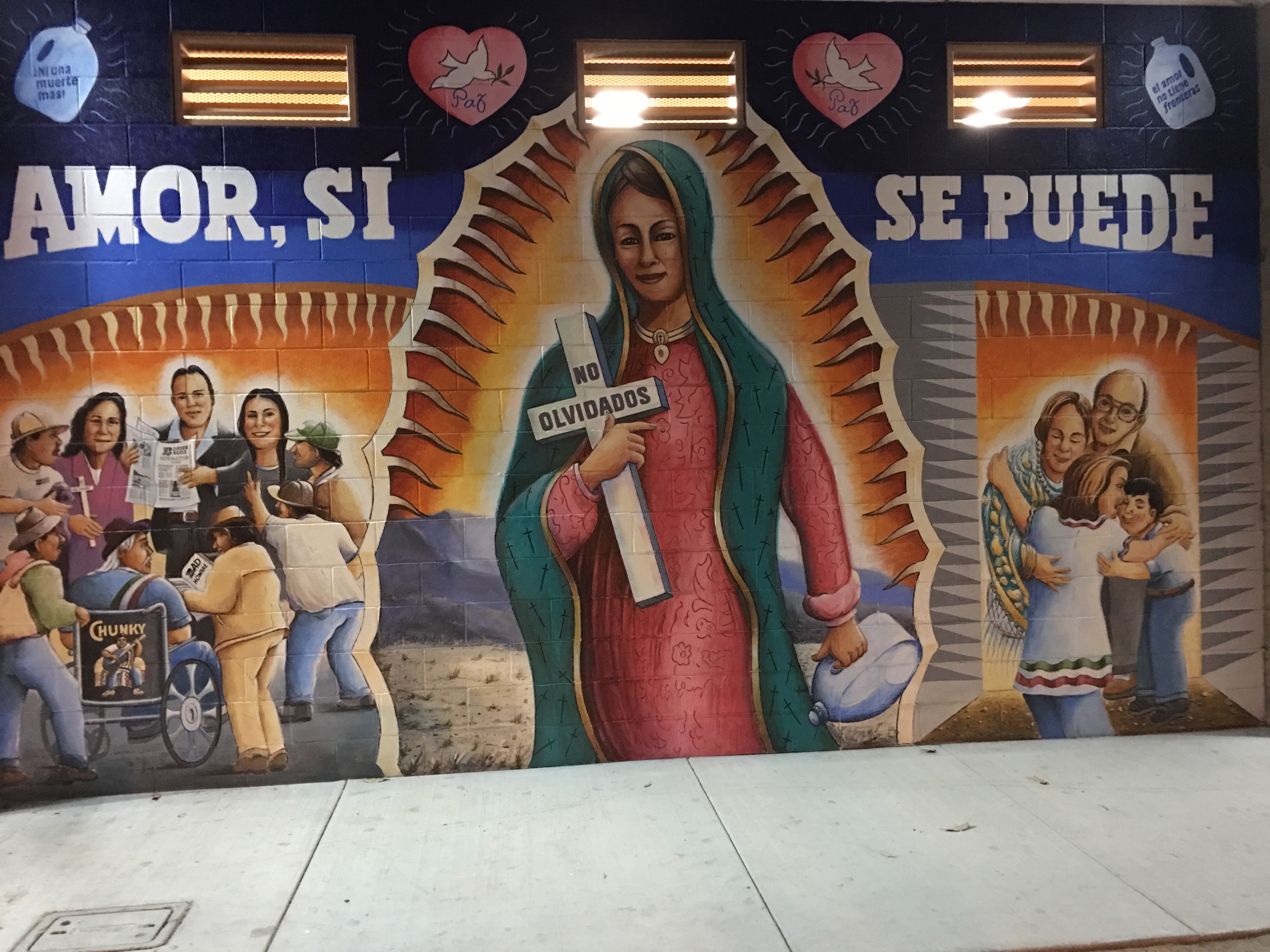
The murals began in 1973. Painted on the concrete pillars and walls that support the bridge, they turned the industrial infrastructure of the freeway system into one of the most significant collections of public art in the American Southwest.
The images are rooted in Chicano experience and history: pre-Columbian civilizations, the Mexican Revolution, the labor movement, the civil rights struggle, barrio life, family, land, and political identity. Artists from across the region contributed. The collection grew over the decades to include over 80 murals, making Chicano Park home to the largest collection of outdoor murals in the United States.
The murals are not just decoration. They are a statement about who was here, who is here, and what this community has chosen to remember and honor on walls that were imposed on their neighborhood by highway engineering.
A National Historic Landmark Under a Bridge
In 2016, Chicano Park was designated a National Historic Landmark — the same status held by Independence Hall and the Statue of Liberty. The designation recognized the park's significance not just as a cultural site but as a site of civil rights history: a place where a community exercised collective power and won.
The park remains active. Community events, ceremonies, and art installations take place under the bridge. The Chicano Park Steering Committee, formed in the immediate aftermath of the 1970 takeover, continues to oversee the park's stewardship. New murals have been added while the original ones have been restored and maintained.
From below the bridge deck, looking up at the painted pillars with the bay visible in the distance, the scale of what happened here is hard to miss. A community took something that had been done to them — a highway through their neighborhood — and transformed it into something they made for themselves.
From the Air
Chicano Park is located in the Barrio Logan neighborhood of San Diego, directly beneath the San Diego-Coronado Bridge. On approach to KSAN (San Diego International Airport) from the east or southeast, the Coronado Bridge is a dominant visual landmark — its graceful arc across San Diego Bay is one of the most recognizable features of the cityscape. The park itself sits at the bridge's northern foot, in the industrial-residential mix of Barrio Logan.