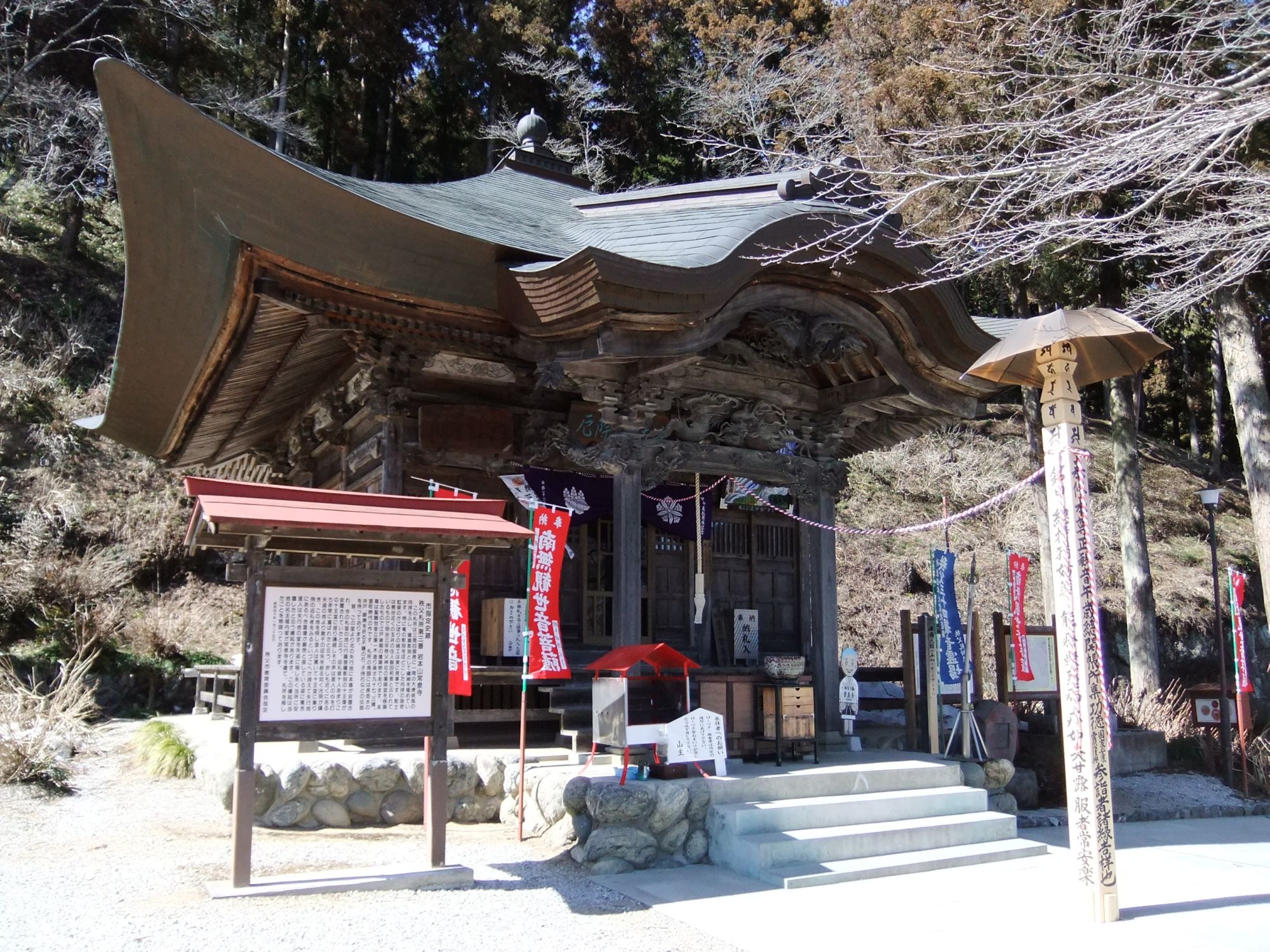
Chichibu 34 Kannon Sanctuary
The number matters. Thirty-three temples in the western Saigoku pilgrimage, thirty-three in the eastern Bando circuit, and thirty-four here in Chichibu -- together forming Japan's 100 Kannon Pilgrimage, a devotional journey across the breadth of Honshu. The extra temple, added in 1536 to round the national total to a clean hundred, is a small act of sacred arithmetic that has drawn pilgrims to this mountain-ringed valley in Saitama Prefecture for nearly eight centuries.
A Valley That Completes the Circle
Chichibu sits in a virtually self-contained basin about 80 kilometers northwest of Tokyo, hemmed in by mountains on every side. The pilgrimage route here dates to the early 13th century -- tradition places its founding in 1234, a time when Buddhism, Shinto, and folk beliefs blended freely across Japan's spiritual landscape. The original circuit comprised 33 temples dedicated to Kannon, the Bodhisattva of Mercy, mirroring the Saigoku route in western Japan and the Bando circuit in the Kanto region. But when a 34th temple was added in 1536, Chichibu assumed a special role: it became the final leg of the 100 Kannon Pilgrimage, the capstone that completed a devotional journey spanning the country. Pilgrims who had walked the Saigoku and Bando routes arrived in Chichibu to finish what they had started, making this small valley the spiritual finish line of one of Japan's great religious undertakings.
Neighborhood Temples, Not Grand Monuments
Visitors expecting the imposing gate structures and manicured gardens of Kyoto will find something different here. The Chichibu temples are small, understated, and scattered across a mix of urban streets and rural hillsides. About two-thirds sit within the town itself -- tucked between shops, standing along residential lanes, blending into the daily fabric of Chichibu life. The remaining temples occupy more remote mountain settings, requiring hikers to climb forested paths to reach them. Unlike the Saigoku or Bando circuits, where prominent monasteries anchor the route, many Chichibu temples resemble neighborhood places of worship. Roughly half lack resident priests altogether, maintained instead by local caretakers who live nearby and keep the grounds swept and the incense lit. Admission to all 34 temples is free. The modesty is the point -- these are not destinations for spectacle but for reflection.
One Hundred Kilometers of Walking Prayer
The full circuit covers approximately 100 kilometers, a distance that pilgrims have been walking since the Muromachi Period (1336-1573). During the Edo period (1603-1868), the route became especially popular with residents of Edo -- present-day Tokyo -- who could reach Chichibu relatively easily and complete the entire pilgrimage in a matter of days rather than weeks. That accessibility remains one of the circuit's defining features. While the Shikoku 88-temple pilgrimage demands months of walking, and the Saigoku route crosses multiple prefectures, Chichibu's compact geography concentrates the experience. A dedicated walker can visit all 34 temples in about a week. Many modern pilgrims break it into weekend trips, collecting the distinctive red-stamped calligraphy seal -- the goshuin -- at each stop, building their nokyocho stamp book temple by temple.
The Mercy of Kannon
Every temple on the circuit is dedicated to Kannon, known as Guanyin in China -- the Bodhisattva of Compassion who hears the cries of all sentient beings. Kannon takes many forms across Japanese Buddhism, and the Chichibu temples house a variety of representations, from the Eleven-Headed Kannon to the Thousand-Armed Kannon. Pilgrims come seeking different kinds of mercy: protection from illness, safe childbirth, relief from suffering, or simply a moment of quiet in a noisy world. The act of walking the circuit itself is considered a form of prayer, each step a small devotion. The route has endured because its promise is simple and universal -- that compassion exists, that someone is listening, and that the journey to find it is worth taking on foot.
From the Air
Located at 36.03N, 139.12E in the Chichibu Valley, Saitama Prefecture. The valley is a distinctive mountain-ringed basin visible from altitude, approximately 80km northwest of central Tokyo. The 34 temples are scattered across the valley floor and surrounding hillsides -- individual temples are not visible from flight altitude, but the compact Chichibu urban area and its mountain backdrop are unmistakable. Nearest major airports: RJTT (Tokyo Haneda, ~100km south) and RJAA (Narita International, ~130km southeast). Recommended viewing altitude: 5,000-8,000 feet AGL to appreciate the enclosed valley geography and the surrounding Chichibu-Tama-Kai mountain ranges.