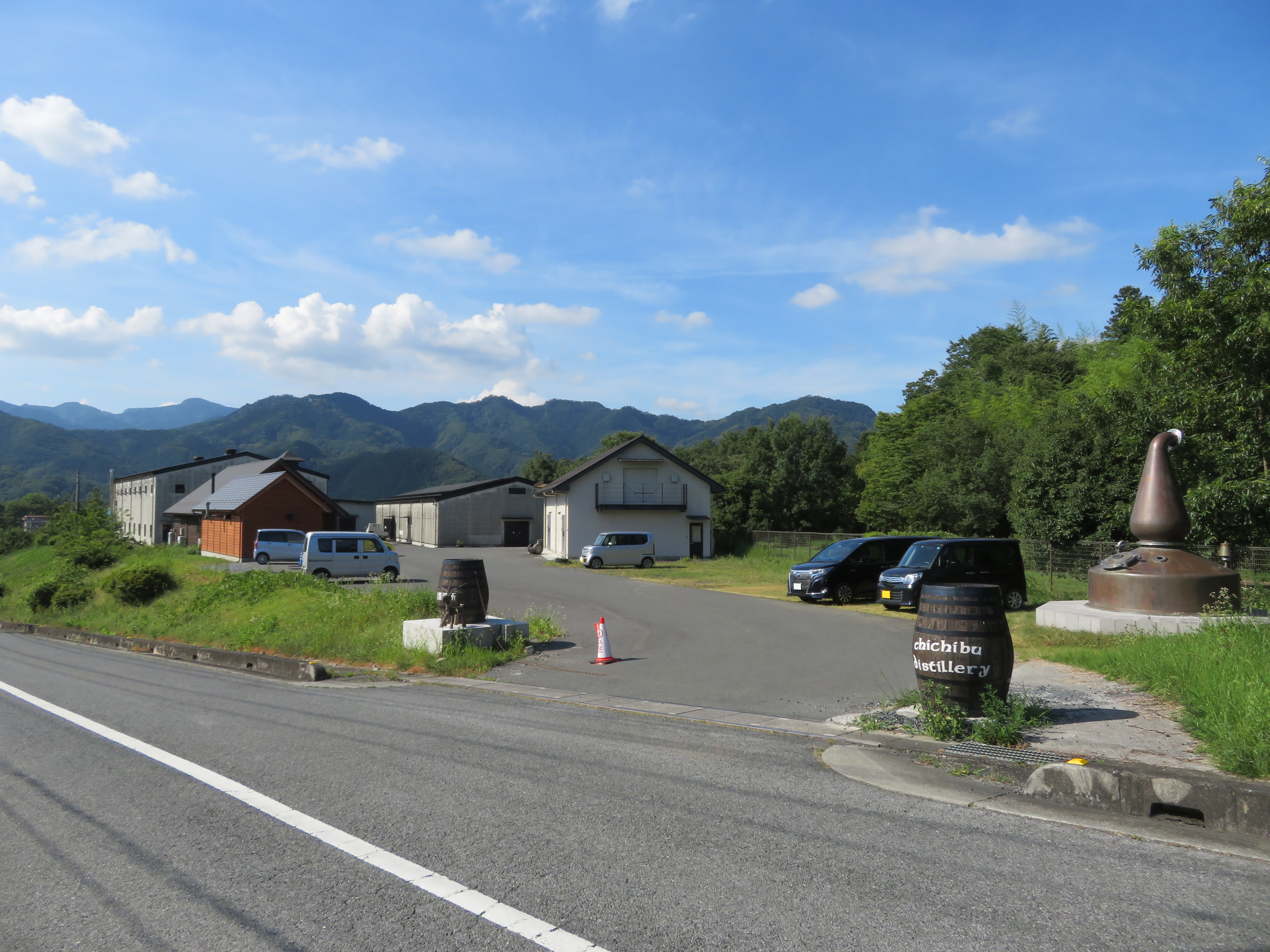
Chichibu Distillery
When Ichiro Akuto borrowed money from relatives in 2004 to buy 400 casks of whisky that a new corporate owner planned to dump, nobody in the industry gave him much thought. The whisky came from the Hanyu Distillery, a struggling operation his own family had been forced to sell after their company entered civil rehabilitation. Akuto had no distillery, no bottling line, and no brand. He had to store the casks at a sake brewery in Fukushima Prefecture and bottle the first releases in borrowed wine bottles with someone else's name on the label. Two decades later, a complete set of those bottles -- the 54-piece Card Series -- sold at Bonhams for 1.52 million dollars, and the distillery Akuto eventually built in the mountains of Chichibu stands at the center of Japan's whisky renaissance.
Four Centuries of Fermentation
The Akuto family has been making alcohol since the Edo period. Akuto Shuzo Honke, their sake brewery, was founded in 1625 in what is now Chichibu, Saitama Prefecture. Ichiro Akuto's grandfather relocated the operation to nearby Hanyu, where it became Toa Shuzo Co., Ltd. and eventually branched into whisky distillation. Ichiro, born in 1965, studied at Tokyo University of Agriculture and then joined Suntory's sales division before returning to the family business at 29 to try to halt its decline. He couldn't. By 2000, the company was in civil rehabilitation proceedings. By 2004, the business was sold outright. What Akuto salvaged was not the company itself but its liquid legacy -- hundreds of casks of aging whisky that the new owners saw as waste.
Wine Bottles and Borrowed Warehouses
Akuto founded Venture Whisky Ltd. in 2004 and began releasing single cask bottlings from the Hanyu stock under the label Ichiro's Malt. The early conditions were almost comically humble. Sasanokawa Shuzo in Fukushima stored the casks; Akuto visited regularly as a technical advisor, blending and selecting on-site. For packaging, he used wine bottles that Sasanokawa already produced, with the brewery's name appearing as manufacturer. These improvised releases quietly gained a following among whisky collectors. The King of Diamonds, drawn from Hanyu stock and released in 2005, won the Gold Award in the Japanese malt category from Britain's Whisky Magazine in 2007 -- a signal that the wider world was beginning to pay attention. The partnership also inspired Sasanokawa itself: encouraged by Akuto's advice, they established the Asaka Distillery on their premises in 2016 and resumed whisky production after years of dormancy.
A License 35 Years in the Making
In 2007, Akuto received something no one in Japan had obtained in more than three decades: a new whisky production license from the government. The Chichibu Distillery opened in the mountains of Saitama Prefecture and began distilling in 2008. Its first single malt, Chichibu The First, arrived in 2011 and was promptly named Japanese Whisky of the Year at Whisky Advocate's 18th Annual Awards in the United States. The success kicked open a door. Distilleries began appearing across Japan, a wave of new entrants that the industry traces directly back to Akuto's proof of concept. In 2019, a second facility -- the Chichibu Daini Distillery, located 600 meters from the original -- began operations with five times the production capacity, using direct-fired pot stills and French oak fermentation tanks instead of the mizunara oak of the first distillery.
The Million-Dollar Deck of Cards
Between 2005 and 2014, Akuto released 54 individual bottlings of Ichiro's Malt, each labeled with a playing card from the standard deck plus two jokers. Every bottle contained whisky from the rescued Hanyu stock -- liquid from a distillery that no longer existed, drawn from casks that had nearly been destroyed. The Card Series became the most sought-after collection in whisky. At Bonhams auctions, complete sets have broken the world record for a whisky series three times: in 2015, 2019, and 2020, when the full set fetched 1.52 million dollars. In 2025, a single bottle -- the Ten of Spades -- sold for 132,910 dollars. Between 2017 and 2025, Chichibu-produced whiskies won the World's Best award in their categories seven times at the World Whiskies Awards. In March 2024, Whisky Magazine inducted Akuto into its Hall of Fame, making him only the fifth Japanese figure ever honored.
From the Mountains to Hokkaido
The annual Chichibu Whisky Matsuri, launched in 2014 and held at Chichibu Shrine and the local products center, drew 4,000 attendees from Japan and abroad in 2024. The distillery's footprint continues to expand. In 2025, a third facility -- the Tomakomai Distillery in Hokkaido -- is scheduled to begin operations, producing grain whisky on a Coffey still to blend with malts from the two Chichibu distilleries and push Venture Whisky into international markets. It is a remarkable arc for a man who started with nothing but borrowed money and casks no one else wanted, in a mountain town whose name most whisky drinkers had never heard.
From the Air
Located at 36.047N, 139.054E in the mountainous interior of Saitama Prefecture, roughly 80 km northwest of central Tokyo. The distillery sits in the Chichibu basin, a valley surrounded by forested peaks. From altitude, look for the distinctive cleared riverbanks of the Arakawa River winding through the basin. Nearest airports: Tokyo Haneda (RJTT) approximately 100 km southeast, Iruma Air Base (RJTJ) approximately 40 km east. The Chichibu mountains create moderate turbulence at lower altitudes; visibility is often excellent in autumn and winter, though summer haze can obscure the valley floor.