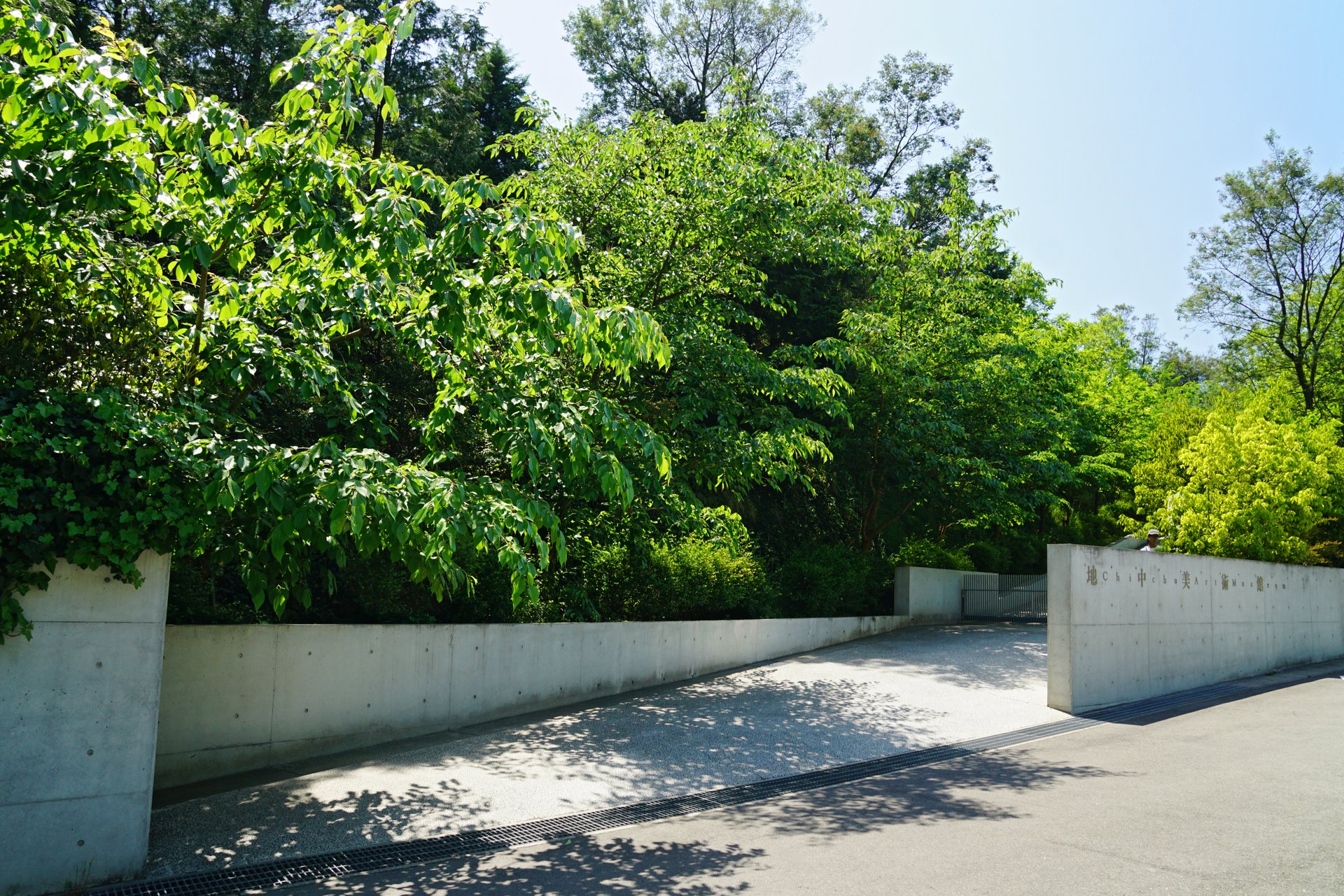
Chichu Art Museum
The name means "art museum in the earth," and it is exactly that. On the southern hillside of Naoshima, a small island in Japan's Seto Inland Sea, architect Tadao Ando carved a museum into the ground. From above, the building barely exists -- just geometric cuts in the landscape, open to the sky. From inside, those cuts become the entire point. Natural light pours through concrete apertures, shifting by the hour, transforming the art it touches into something that changes with the weather, the season, the time of day. The Chichu Art Museum, which opened on July 18, 2004, holds only a handful of works by three artists. That restraint is the point.
Buried in Light
Ando's design is a paradox made physical. The museum sits entirely underground, yet it uses no artificial lighting for many of its exhibits. Skylights, courtyards, and narrow corridors channel sunlight deep into subterranean galleries, so that the character of each room shifts as clouds pass overhead or as the sun tracks across the sky. The concrete walls -- Ando's signature material -- are smooth enough to register the subtlest changes in illumination. Visitors experience not just art but the passage of time itself, rendered visible through light on stone. The Benesse Corporation, led by president Soichiro Fukutake, built the museum as part of an ongoing initiative to rethink the relationship between nature and people. It is one of several art sites that have transformed Naoshima from a quiet Inland Sea island into one of Japan's most visited cultural destinations.
Three Artists, Three Encounters
The museum houses permanent installations by only three artists, each given a dedicated space. Claude Monet's Water Lilies series occupies a white room where five canvases -- painted between 1914 and 1926 -- glow under natural light against walls of small white marble tiles. The floor is set with tiny white stones. No frames, no glass, no labels interrupt the encounter. Walter De Maria's "Time/Timeless/No Time" fills a cavernous staircase hall with a polished granite sphere and gilded wooden columns, their surfaces catching ambient light in ways that seem to stretch or compress the room. James Turrell, the artist who works with light itself as medium, contributes three pieces: "Afrum, Pale Blue," a 1968 projected light sculpture; "Open Field," a luminous portal of fluorescent and neon light; and "Open Sky," a 2004 installation where visitors sit beneath a rectangular opening in the ceiling, watching the sky frame itself as if it were a painting.
A Garden from the Paintings
Between the ticket center and the museum entrance lies a 400-square-meter garden designed to close the circle between art and nature. Chichu Garden contains approximately 150 types of plants, 40 kinds of trees, and nearly 200 varieties of flowers -- all species that either appeared in Monet's paintings or were collected by the artist during his lifetime at Giverny. Monet was a passionate gardener, and his own designs served as direct inspiration for the layout, including ponds planted with the same varieties of water lilies depicted in his famous series. The idea is sensory preparation: by walking through the living world that Monet painted, visitors arrive at his canvases with a deeper physical understanding of what they are seeing. The garden operates as a threshold between the natural landscape of Naoshima and the subterranean galleries below.
An Island Remade by Art
Naoshima was not always an art destination. For much of the twentieth century, the island's economy depended on a Mitsubishi Materials copper smelting operation that left parts of the landscape contaminated. The Benesse Corporation's art initiative, which began in the early 1990s, deliberately chose this scarred island as a site for cultural renewal. Today, Naoshima hosts multiple museums, outdoor sculptures by artists including Yayoi Kusama, and architectural projects scattered across its villages. The Chichu Art Museum sits at the heart of this transformation. Nearby, the Teshima Art Museum and Inujima Art Project extend the vision to neighboring islands. Together, they have turned the Seto Inland Sea into an unlikely archipelago of contemporary art, drawing visitors from around the world to a place most had never heard of two decades ago.
From the Air
Located at 34.45N, 133.99E on the southern coast of Naoshima island in the Seto Inland Sea, Kagawa Prefecture. The island is small -- roughly 3 km across -- and sits between Shikoku and Honshu. From altitude, look for the cluster of small islands in the Inland Sea between Takamatsu (RJOT) and Okayama (RJOB). The museum itself is underground and not visible from the air, but the island's distinctive shape and ferry terminals are identifiable. Recommended viewing altitude: 3,000-5,000 feet for island context.