Chicken Ranch Rancheria
The name sounds like a punchline. Chicken Ranch Rancheria conjures images of dusty coops and scratching hens, not tribal sovereignty or federal recognition. But the Me-Wuk people who call this 2.85-acre parcel home in Tuolumne County have a story far more complex than any name suggests. Theirs is a tale of persistence rooted in the granite and pine of the central Sierra Nevada, where a community that once faced erasure by federal policy rebuilt itself into a self-governing nation with an economic engine visible from the highway outside Jamestown, California.
People of the Foothills
The Chicken Ranch Rancheria Miwok are central Sierra Miwok, one of several branches of an Indigenous people whose territory once stretched from the Sacramento-San Joaquin Delta into the western slopes of the Sierra Nevada. For thousands of years before European contact, Sierra Miwok communities managed the oak woodlands and river valleys of what is now Tuolumne County, harvesting acorns, fishing the Stanislaus and Tuolumne rivers, and burning meadows to encourage new growth. The Gold Rush of 1849 devastated these communities. Miners flooded the foothills, and within a decade the Miwok population had collapsed from disease, violence, and displacement. Those who survived were pushed onto marginal lands. The rancheria system that followed was no grand reservation - it was small parcels, sometimes purchased by the federal government, sometimes donated, where displaced Native families could at least remain near their ancestral territory.
Almost Erased
In the 1950s and 1960s, the federal government pursued a policy known as termination, seeking to dissolve tribal governments and end the special legal relationship between the United States and Native nations. California tribes were hit especially hard. The Rancheria Act of 1958 targeted dozens of small California rancherias for termination, distributing communal lands to individual tribal members and stripping away federal recognition. Chicken Ranch Rancheria was among those terminated. For the Me-Wuk, this meant more than a change in legal status. It meant losing access to federal services, losing the legal standing to negotiate as a sovereign entity, and watching their already tiny land base fragment. The fight to reverse termination would take decades. It was not until the 1970s and 1980s that a wave of legal challenges and legislative efforts began restoring recognition to terminated California tribes. The Chicken Ranch Rancheria regained its federal recognition, reclaiming a sovereignty that had never truly lapsed in the eyes of its people.
From Bingo Hall to Resort
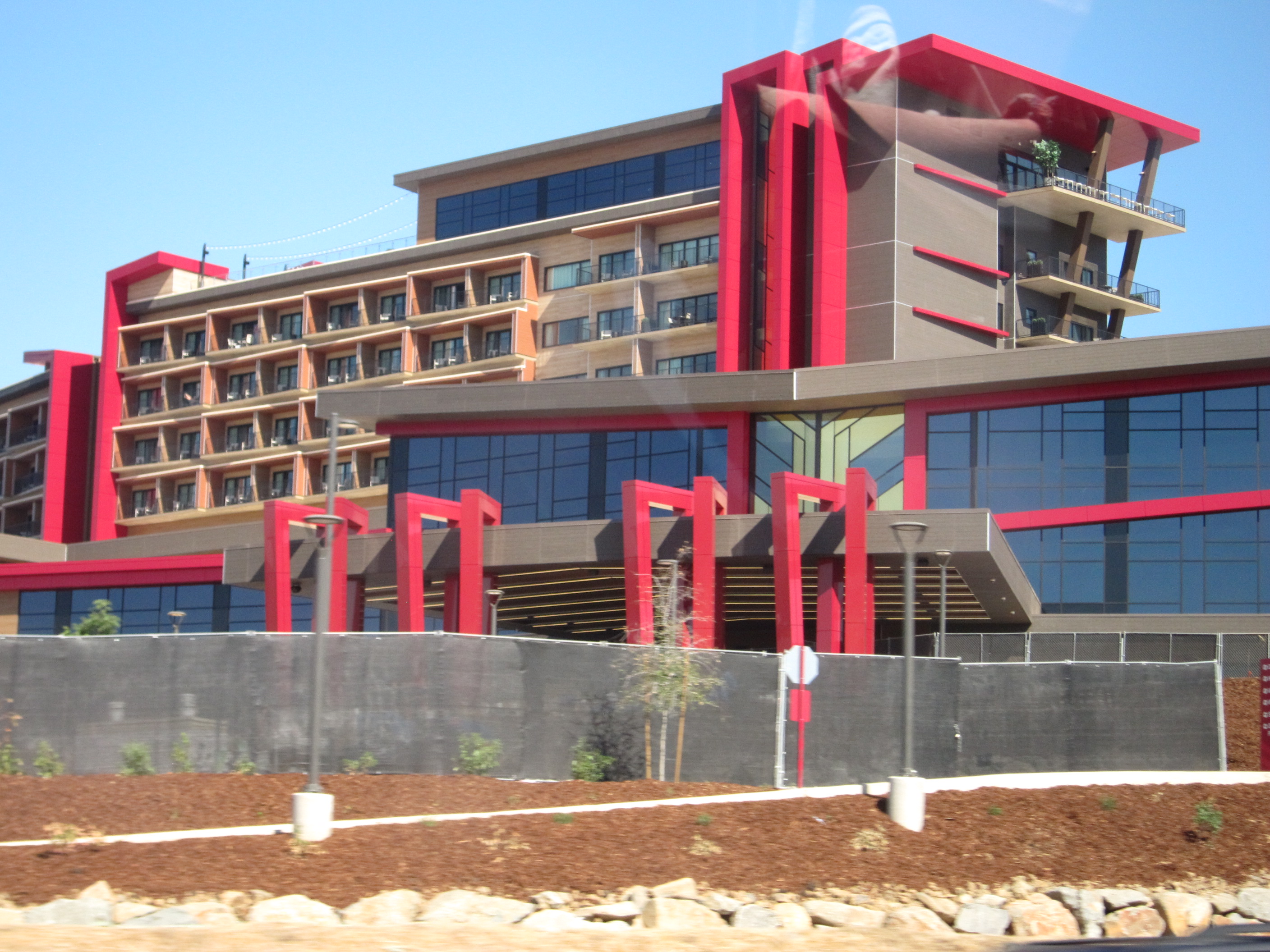
The Indian Gaming Regulatory Act of 1988 opened a new chapter for many tribes, and Chicken Ranch seized the opportunity. In 1985, even before the federal framework was fully in place, the tribe opened a bingo hall on their land near Jamestown. It was modest - a far cry from the neon palaces of Las Vegas - but it represented something profound: economic self-determination on sovereign ground. Slot machines arrived in 2000, and the operation grew steadily through successive expansions. The location proved strategic. Sitting along the Highway 108/120 corridor, the casino draws visitors from the San Francisco Bay Area, Sacramento, Reno, and Fresno, all within a few hours' drive. Its proximity to Yosemite National Park, roughly an hour to the east, brings another stream of travelers looking for lodging and entertainment after a day in the valley. In fall 2024, the tribe opened a new hotel tower, transforming what had been a roadside gaming hall into the Chicken Ranch Casino Resort - a full-service destination with dining, accommodations, and event space.
Sovereignty on 2.85 Acres
The rancheria itself remains remarkably small: 2.85 acres of land in Tuolumne County. To put that in perspective, a typical suburban block takes up more space. Yet on this ground, the Me-Wuk operate a federally recognized tribal government led by an elected council, conduct business from their offices in Jamestown, and exercise the rights of a sovereign nation. The tribe's children attend Jamestown Elementary School District and Sonora Union High School District, weaving their lives into the broader community while maintaining a distinct identity. This duality - being simultaneously a tiny footprint on the map and a fully sovereign government - defines much of the modern rancheria experience in California. Dozens of small tribes across the state navigate similar tensions, balancing cultural preservation with economic development, community roots with the pressures of growth.
The Weight of a Name
Nobody seems entirely certain how the rancheria got its name. Oral tradition points to chickens kept on the original property, a prosaic explanation for a place with a history far from ordinary. Whatever its origin, the name has stuck, appearing on federal registers, casino marquees, and highway signs alike. It carries a certain irreverence that belies the seriousness of what it represents. Behind the name is a community that watched the Gold Rush strip their homeland, survived federal termination, clawed back recognition, and built an economic enterprise from almost nothing. The Me-Wuk did not choose the name, and they did not choose most of what history dealt them. What they chose was to remain - on their land, in their foothills, among the oaks and pines their ancestors tended. That persistence, quiet and unglamorous, is the real story of Chicken Ranch Rancheria.
From the Air
Chicken Ranch Rancheria is located at 37.928N, 120.450W near Jamestown in the Sierra Nevada foothills of Tuolumne County. The casino resort complex is visible from the air along the Highway 108/120 corridor. Best viewed at 2,000-4,000 feet AGL. Nearby airports include Columbia Airport (O22) approximately 8 nm northeast and Oakdale Airport (O27) about 25 nm west. Yosemite National Park lies roughly 45 nm to the east. The surrounding terrain is rolling oak-studded foothills transitioning to pine forest at higher elevations.