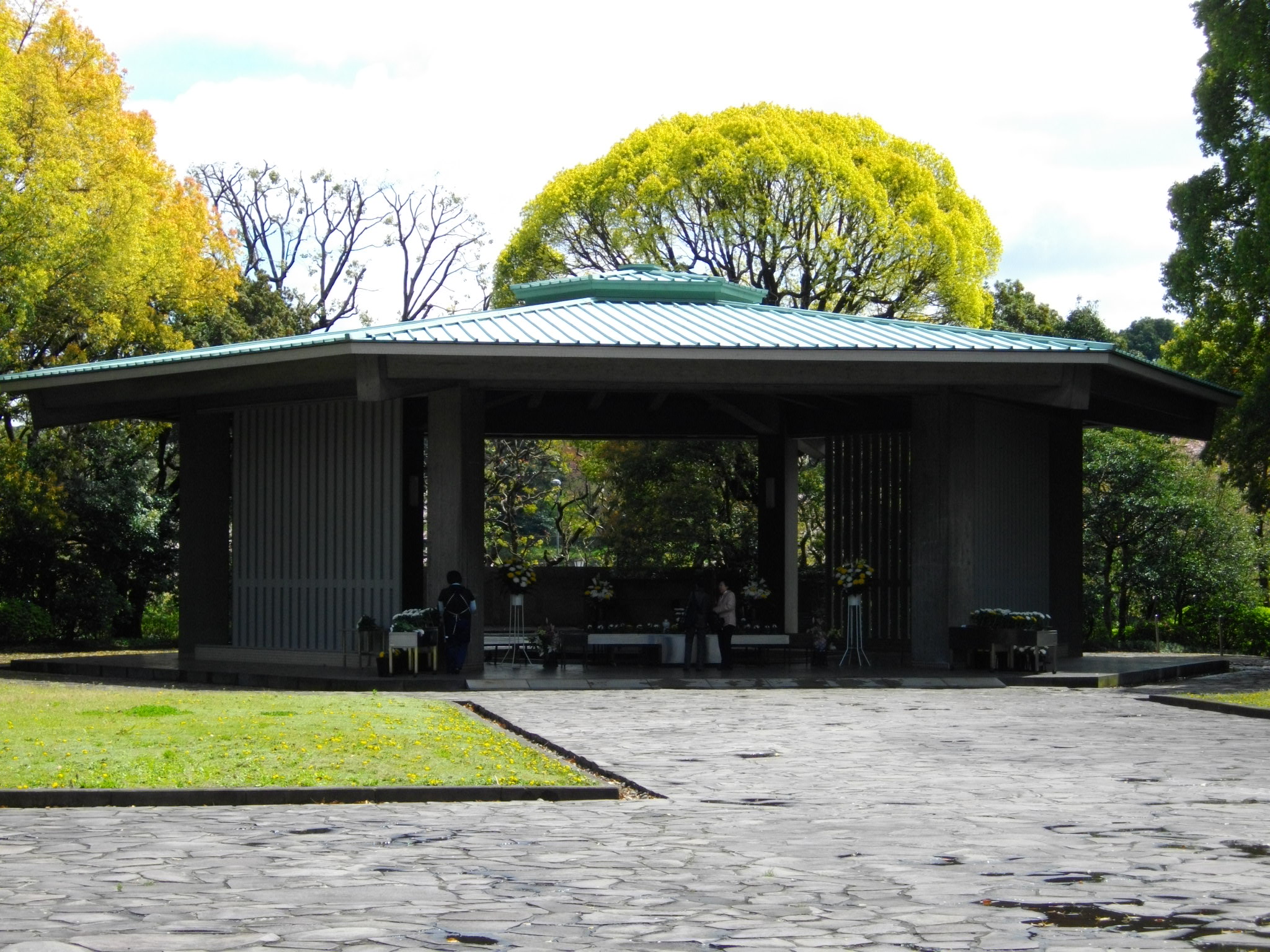
Chidorigafuchi National Cemetery: Japan's Tomb of the Unknown
Beneath a hexagonal roof beside the Imperial Palace moat, a five-ton ceramic coffin holds the ashes of people whose names will never be spoken aloud. Chidorigafuchi National Cemetery is Japan's resting place for 352,297 unidentified war dead of the Second World War -- soldiers and civilians whose remains were recovered from battlefields across the Pacific but who could never be returned to their families. Some families had perished themselves in the air raids on Japan or the atomic bombings of Hiroshima and Nagasaki. Completed in March 1959 on a site purchased three years earlier, Chidorigafuchi sits just meters from both the Imperial Palace and the far more politically charged Yasukuni Shrine. The contrast between the two defines how modern Japan remembers its war dead.
Remains Without Names
The problem that created Chidorigafuchi was unprecedented in scale. As Japan recovered remains from Pacific War battlefields through the 1950s, tens of thousands of bodies arrived that could not be identified. Harsh tropical conditions had destroyed the means of identification. For others, there was simply no one left to claim them -- entire families had been wiped out by the firebombing campaigns or the atomic bombs. Beginning in 1952, the recovery committee stored the remains in the offices of the Ministry of Welfare, an arrangement that was always meant to be temporary. In 1953, the Cabinet of the Prime Minister ordered a proper tomb of the unknown soldier constructed. The site was purchased in 1956 in the Chiyoda ward, along the inner moat of the Imperial Palace. Construction was completed in March 1959. Stones and pebbles gathered from Japan's far-flung conflict zones were used to build the site, tying the physical ground of the cemetery to the places where the dead had fallen.
The Other Side of Yasukuni
Chidorigafuchi is frequently mentioned alongside Yasukuni Shrine, but the two serve fundamentally different purposes. Yasukuni is a privately operated Shinto shrine that enshrines the spirits of all who died in service of the Japanese state, including fourteen Class-A war criminals added in 1978. Visits by Japanese prime ministers to Yasukuni regularly provoke diplomatic protests from China and South Korea. Chidorigafuchi, by contrast, is a public institution that holds actual physical remains rather than symbolic spirits. It makes no judgment about the cause for which its dead served. The Emperor and Prime Minister visit infrequently and without the political friction that attends Yasukuni. In 2006, a Liberal Democratic Party leader proposed expanding Chidorigafuchi to honor all Japanese war dead in a manner similar to Arlington National Cemetery in the United States -- a proposal that reflected ongoing discomfort with Yasukuni's political baggage.
Cherry Blossoms Over the Moat
The cemetery occupies one of Tokyo's most beautiful settings. The Chidorigafuchi moat, part of the Imperial Palace's outer defensive system dating to the Edo period, is lined with hundreds of cherry trees. The first trees along this stretch were planted in 1881 by British diplomat Ernest Satow, and many more were added during postwar reconstruction. Each spring, the 700-meter greenway explodes with sakura, drawing hundreds of thousands of visitors for hanami -- cherry blossom viewing. Rowboats glide beneath the canopy of pink and white blossoms reflected in the still moat water. The cemetery sits within this landscape, its solemnity sharpened by the fleeting beauty surrounding it. In Japanese culture, cherry blossoms have long symbolized the transience of life -- mono no aware, the bittersweet awareness of impermanence. There may be no more fitting setting for a memorial to the anonymous dead.
A Quiet Reckoning
Chidorigafuchi does not draw the crowds or controversy of Yasukuni, and that relative obscurity is itself telling. Japan's public memory of World War II remains contested territory, with competing narratives about victimhood, responsibility, and how to honor the dead without glorifying the war that killed them. Chidorigafuchi offers something simpler: a place where unidentified remains are held with dignity, where grief does not require political allegiance. Foreign dignitaries occasionally visit to lay wreaths -- U.S. Secretary of Defense Chuck Hagel and Secretary of State John Kerry did so together in October 2013. The cemetery's understated character reflects a different model of remembrance, one focused on the human cost of war stripped of the nationalism that makes Yasukuni so contentious. For 352,297 people who cannot be named, it is the closest thing to a family grave they will ever have.
From the Air
Located at 35.69N, 139.75E along the northwestern moat of the Imperial Palace in Chiyoda, central Tokyo. The moat and its cherry tree-lined banks are visible from moderate altitudes, forming a distinctive curved waterway around the palace grounds. Yasukuni Shrine lies approximately 500 meters to the north. The National Diet Building is roughly 1 kilometer to the south. Tokyo Haneda Airport (RJTT) is approximately 10 nautical miles to the south. Best viewed at 1,500-3,000 feet AGL during spring when the cherry blossoms create a visible pink band along the moat.