Chihuahua City
For two years, from 1864 to 1866, this desert city at the edge of the Sierra Madre became the capital of Mexico. President Benito Juarez, fleeing the French invasion and the puppet emperor Maximilian, found refuge here at Ave. Juarez 321, setting up his cabinet and government-in-exile in the only city besides Mexico City to serve as the republic's seat of power. The house where he planned the restoration of democracy still stands, now the Museum of Republican Loyalty, faithfully preserved to the appearance of those desperate, determined years. It is a fitting symbol for Chihuahua - a city that has always thrived at the intersection of remoteness and resilience, where the Pan-American Highway meets the Copper Canyon railway, where three hills guard the valley and a monumental cross blazes on Cerro Grande each Christmas.
Three Hills and a River
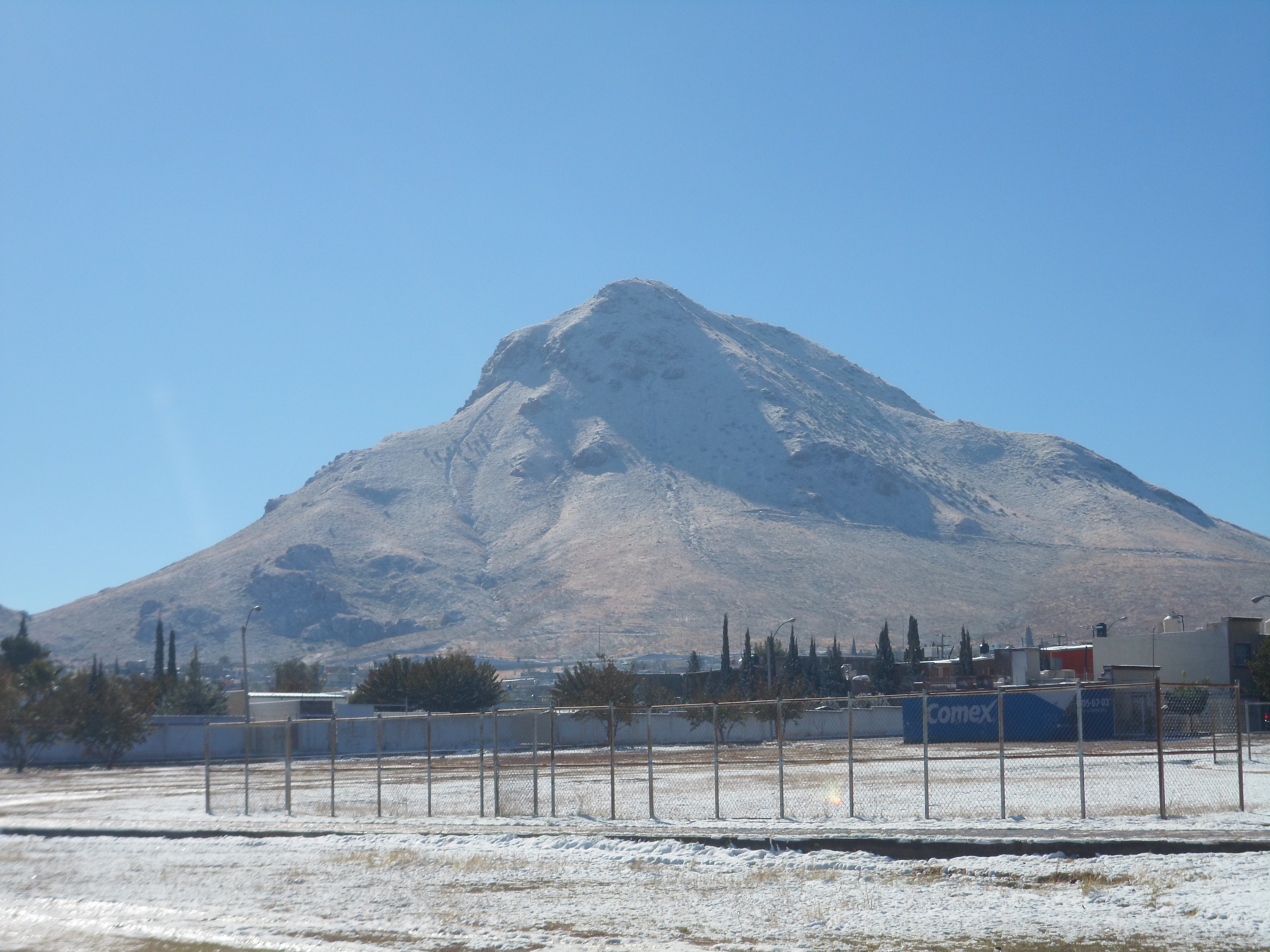
The geography of Chihuahua reveals itself in the city's coat of arms: Cerro Grande, Cerro Coronel, and Santa Rosa, the trio of hills that define the valley. The city sprawls in an L-shape, plains stretching north while hills embrace the east, west, and south. The Chuviscar River flows through it all, its course followed by Teofilo Borunda Avenue, the major east-west artery. To the northeast rises the Sierra Nombre de Dios, hiding within its slopes the Nombre de Dios Caverns - a natural display of minerals and underground formations accessible from Heroico Colegio Militar Avenue. It is a landscape of contrasts: urban sprawl against ancient stone, modern highways tracing the path of rivers older than memory.
Where Father Hidalgo Fell Silent
Before Juarez, another pivotal figure met his fate in Chihuahua. Miguel Hidalgo, the father of Mexican independence who rang the bell of Dolores in 1810 and sparked a revolution, was captured and brought here to face execution. The former Federal Palace of Chihuahua, now a museum on Venustiano Carranza Street, contains the cell where Hidalgo spent his final days - a national shrine to the priest who traded his cassock for a general's command. The Government Palace nearby displays murals depicting the state's turbulent history, as does the Paraninfo - the University Auditorium in the Literary and Scientific Institute building - where artists captured in paint what words alone cannot convey.
Sculptures in the Desert
Chihuahua has a passion for bronze and stone. The Central Park El Palomar features a collection of sculptures including three doves (palomas, giving the park its name) and a monumental flagpole flying one of the largest flags in Mexico. Most striking is the statue of Anthony Quinn, the Oscar-winning actor born here, depicted in his role as Zorba the Greek - arms spread wide, frozen mid-dance, celebrating life in the land of his birth. Works by sculptors Espino, Baltazar, Ponzanelli, and Sebastian (a Chihuahua native) line the boulevards. In the Plaza Mayor, the Angel of Liberty erected in 2003 holds a sword tipped with laser light, capable of rotating 360 degrees on its axis - tradition and technology merged in gleaming metal.
Iron Horses and Modern Rails
Chihuahua serves as the starting point for one of the world's most spectacular rail journeys. The Chihuahua-Pacific Railroad winds westward through the Copper Canyon to Los Mochis, Sinaloa, crossing bridges and tunnels carved through the Sierra Madre. Roberto Fierro Villalobos International Airport connects the city to Denver, Dallas, Houston, and Phoenix, while the Metrobus rapid transit system serves 44 stations across 12.7 miles with plans for expansion. Highway 45 runs north to Ciudad Juarez at the U.S. border and south to Delicias; Highway 16 stretches west to Hermosillo and east to the border crossing at Ojinaga. It is a city built for movement, a crossroads where desert meets mountain.
Mammoths and Matadors
The Mammoth Museum on Gomez Morin and Ave. Juarez houses thirteen halls tracing life from dinosaurs through the Cenozoic Era, complete with prehistoric art exhibits. For those seeking living spectacle, the Fair of Santa Rita draws visitors from across Mexico during the last two weeks of May with internationally known recording artists. The Plaza de Toros La Esperanza hosts corridas during summer and fall, while the Dorados professional basketball team carries the city's sporting pride. The Quinta Gameros, one of the largest pre-revolutionary estate houses, now serves as the state museum for decorative arts - another layer in a city that collects history the way other places collect dust.
From the Air
Chihuahua City lies at 28.64N, 106.08W in a high desert valley at approximately 4,700 feet elevation. The city's distinctive L-shape is visible from altitude, with three prominent hills (Cerro Grande, Cerro Coronel, Santa Rosa) marking the geography. Look for the Christmas cross illuminated on Cerro Grande during the holiday season. Roberto Fierro Villalobos International Airport (MMCU/CUU) is located to the southeast of the city center. The Chuviscar River corridor and major highway intersections are visible landmarks. Clear conditions prevail most of the year, with summer monsoon activity possible July through September.