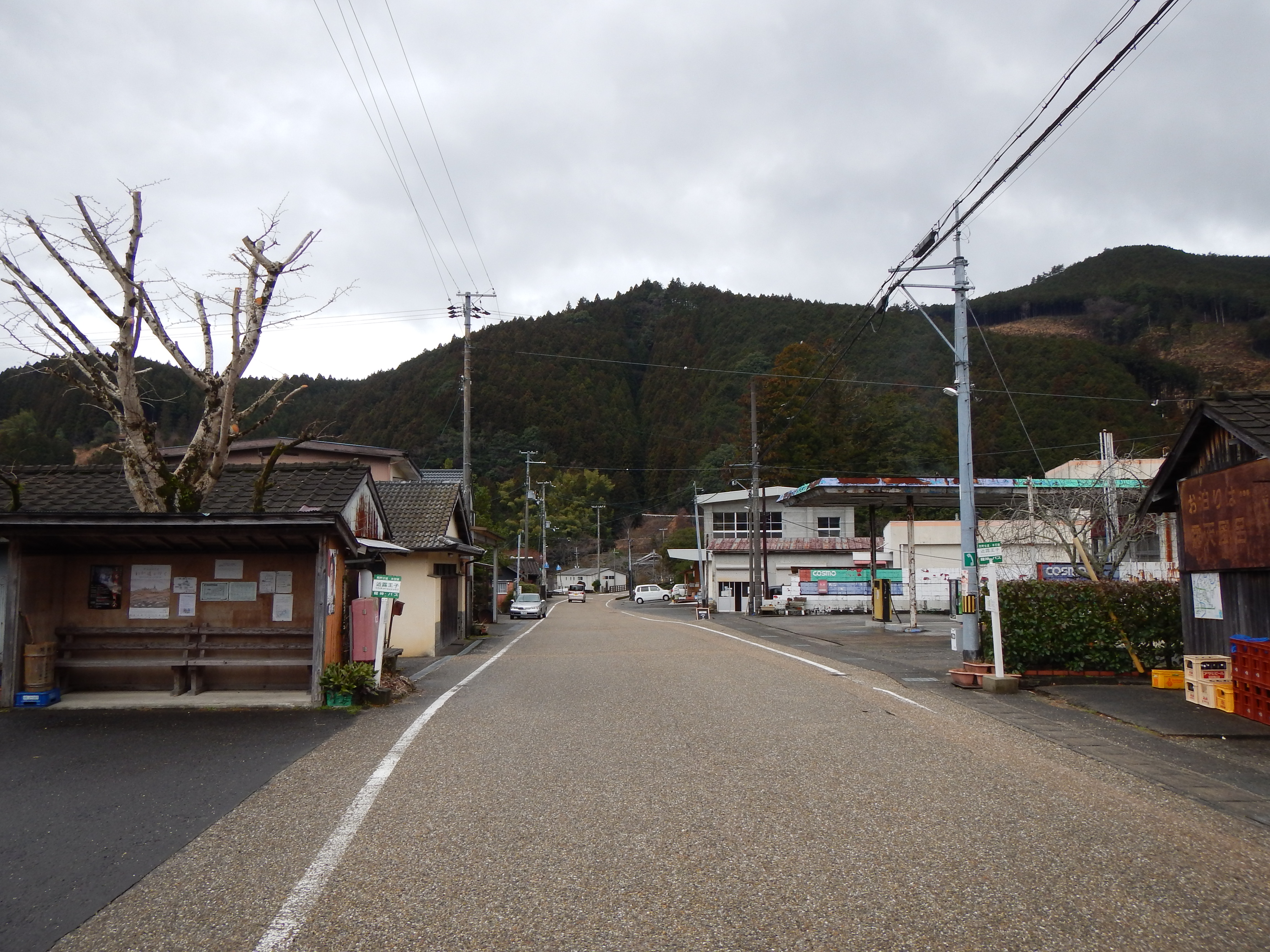
Chikatsuyu
The name itself is a riddle. One tale says a young emperor, traveling through the mountains of the Kii Peninsula, snapped a reed along the path. Watching the liquid bead and drip from the broken stem, he asked: is it blood, or is it dew? Chi ka tsuyu. The question became the name of a village that has been asking its own version ever since -- a settlement of 450 people perched beside the Hidaka River in the deep mountains of Wakayama, halfway along one of the most ancient pilgrimage routes on Earth. During the centuries when emperors and aristocrats walked the Kumano Kodo to seek salvation at the great shrines, Chikatsuyu thrived as a bustling waystation. Today, with pilgrims replaced by hikers and the population a fraction of what it was, the village endures in a quieter register.
The Imperial Road Through the Mountains
Chikatsuyu sits on the Nakahechi route of the Kumano Kodo, the network of pilgrimage trails that crisscross the Kii Peninsula. The Nakahechi was the main route, the one used by emperors and nobility from the 10th century onward, connecting the coastal city of Tanabe to the great Kumano Hongu Taisha shrine deep in the mountains. In 2004, the Kumano Kodo was inscribed as part of the UNESCO World Heritage site Sacred Sites and Pilgrimage Routes in the Kii Mountain Range, one of only two pilgrimage routes in the world to receive the designation -- the other being the Camino de Santiago in Spain. During the Kumano Kodo's peak centuries, Chikatsuyu was far more populous than it is today. Pilgrims needed lodging, food, and spiritual preparation. The village provided all three.
Blood or Dew
The place name has been written in different forms over the centuries. Records from the Heian period show it rendered as both Chikayu and Chikatsuyu. The tale of the boy emperor and the reed is only one explanation -- there are various theories about the name's origin -- but it is the one that has stuck in local memory, perhaps because it captures something essential about the village's character. Chikatsuyu exists in a liminal space, balanced between the coastal lowlands and the sacred mountain interior, between the living world and the spiritual realm that pilgrims sought at journey's end. The village contains the important Chikatsuyu-oji, one of the subsidiary shrines that marked stages along the Kumano pilgrimage. There is also the Chikatsuyu Hoto, a stone tower designated as a National Historic Site, and the remnants of an old castle that hint at a time when this mountain valley had strategic as well as spiritual value.
A Waystation That Endures
What strikes visitors about Chikatsuyu today is how much infrastructure a village of 450 people manages to maintain. The Kumano Kodo Nakahechi Art Museum sits here, a well-funded institution that seems almost improbably ambitious for a mountain hamlet. Multiple inns trace their history to the Edo period, including the Nonaka inn near Tsugizakura-oji. There are campgrounds, hot spring baths, a roadside station stocked with local goods along Highway 311, a grocery store, restaurants, and -- in an unexpected cultural cross-pollination -- a Basque food restaurant on the trail east of town. The village also supports a nursery, an elementary and junior high school, and a martial arts dojo. For a settlement that could fit its entire population into a small auditorium, Chikatsuyu punches well above its weight.
Walking Into Deep Time
Chikatsuyu lies about 50 minutes by bus from Kii-Tanabe Station, but most visitors arrive on foot, having walked the Nakahechi trail from Takijiri-oji or the mountain village of Takahara. The approach matters. The Kumano Kodo was never meant to be a destination reached quickly; the walking itself was part of the spiritual practice, a gradual shedding of the ordinary world. Arriving in Chikatsuyu after hours of hiking through cedar forests and over mountain passes, with the Hidaka River murmuring below, you understand why this spot has been a stopping place for over a thousand years. The clans whose graves still stand here -- the Nonagese and the Yokoya -- knew that some places hold you not because they are grand, but because they sit exactly where you need to rest.
From the Air
Located at 33.815N, 135.609E in a mountain valley along the Hidaka River in the interior of the Kii Peninsula, Wakayama Prefecture. The village is nestled in heavily forested terrain with limited flat ground. From the air, look for the river valley and Highway 311 threading through the mountains. Nearest airport: Nanki-Shirahama Airport (RJBD) approximately 25nm to the southwest. Kansai International Airport (RJBB) lies approximately 70nm to the north. The surrounding terrain is mountainous with elevations rising to 1,000 meters or more, requiring attention to minimum safe altitudes. The Kumano Kodo trail network is not visible from altitude but the valley settlements along the Hidaka River corridor provide orientation.