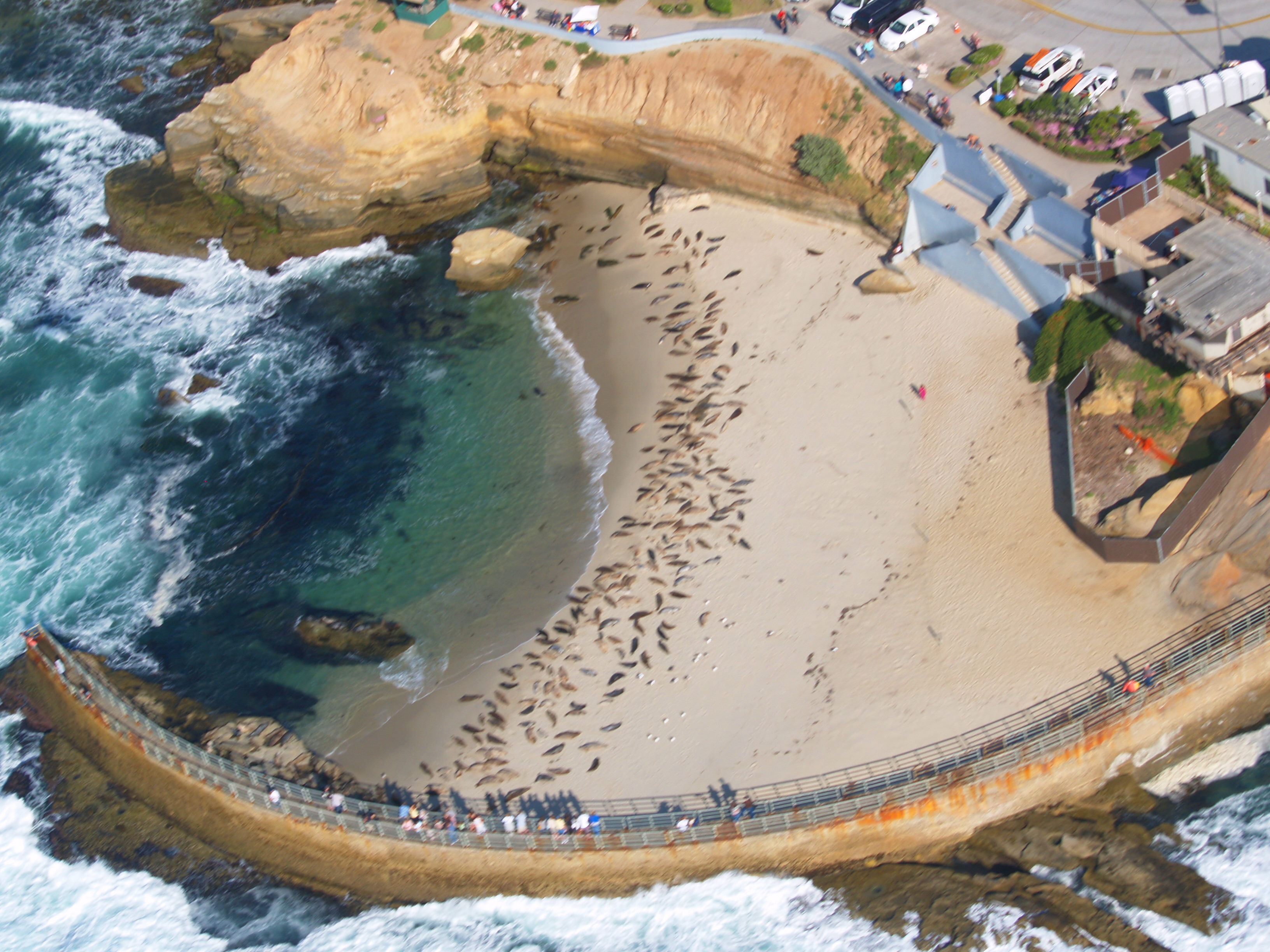
Children's Pool Beach
Ellen Browning Scripps paid for the construction of a concrete breakwater at La Jolla in 1931 to create a calm swimming spot for children. Decades later, a colony of harbor seals moved in — and the resulting conflict between human use and wildlife protection has been running ever since.
The Gift of a Breakwater
Ellen Browning Scripps was one of San Diego's great civic benefactors — a philanthropist who funded libraries, research institutions, and public amenities across the city and region. In 1931, she donated the money to build a concrete breakwater at a small cove in La Jolla, creating a protected pool of calmer water that would give children a safe place to swim in the ocean.
The design worked. The breakwater curved out from the cliff face, deflecting wave energy and creating a sheltered area where families could use the beach without the full force of the Pacific swell. For decades, Children's Pool Beach was precisely what it was named to be: a place where children could play in the ocean, their parents watching from the low seawall above.
The Seals Arrive
Harbor seals began using Children's Pool Beach as a haul-out site in the mid-1990s. The protected cove, with its calm water and its easy access to the beach, was exactly the kind of environment that seals prefer for resting, socializing, and pupping. By the early 2000s, the colony had grown to include dozens of animals. By 2009, the count was approximately 200 seals.
The seals did not read the signs. They did not know the beach had been donated for children. They hauled themselves out because the cove suited them, and they stayed because no one removed them.
The question of whether anyone should remove them became one of San Diego's most prolonged public disputes.
The Battle Over the Beach
On one side: people who wanted to restore the beach to human use, who argued that the original purpose of Scripps's donation should be honored, and who pointed out that the beach had been given to the city with that specific intention. On the other side: wildlife advocates who argued that the seals had a right to remain, that the Marine Mammal Protection Act required their protection, and that the benefit to a self-sustaining seal colony outweighed the benefit to recreational swimmers who had plenty of other options.
The dispute generated lawsuits, city council votes, congressional hearings, and years of rope barriers — physical dividers strung across the beach to keep humans away from the seals, and then removed by courts, and then reinstated, and then contested again. The Citizens for Odor Nuisance Abatement organization formed specifically around complaints about the smell of a large seal colony in close quarters with a residential neighborhood.
The National Marine Fisheries Service eventually determined that the seals at Children's Pool qualified for protection as a rookery — a place where seals pup and raise young — which added additional layers of federal protection to the dispute.
The Cove Today
The seals remain. Seasonal restrictions protect the colony during pupping season, when the beach is typically closed to human use from December through May. Outside pupping season, managed access allows people to view the seals from the seawall and, during certain conditions, use portions of the beach.
Children's Pool Beach has become one of La Jolla's most-visited spots precisely because of the seals. The viewing area on the low wall above the cove draws tourists and photographers who come specifically to see the animals hauled out on the sand — sleeping in piles, nursing pups, scratching themselves on the rocks. The orange garibaldi fish visible through the clear water add to the cove's reputation as a snorkeling and wildlife-viewing destination.
The beach is no longer quite what Scripps imagined. It is something else: a place where human intention met wildlife reality, and where the accommodation between the two is still being negotiated.
From the Air
Children's Pool Beach is located in La Jolla, approximately 12 miles northwest of KSAN (San Diego International Airport). The cove is visible from low-altitude flight along the La Jolla coastline — a small, arc-shaped beach enclosed by a concrete breakwater, distinguishable by the seal colony hauled out on the sand during much of the year. The cliffs of La Jolla rise immediately behind the cove.