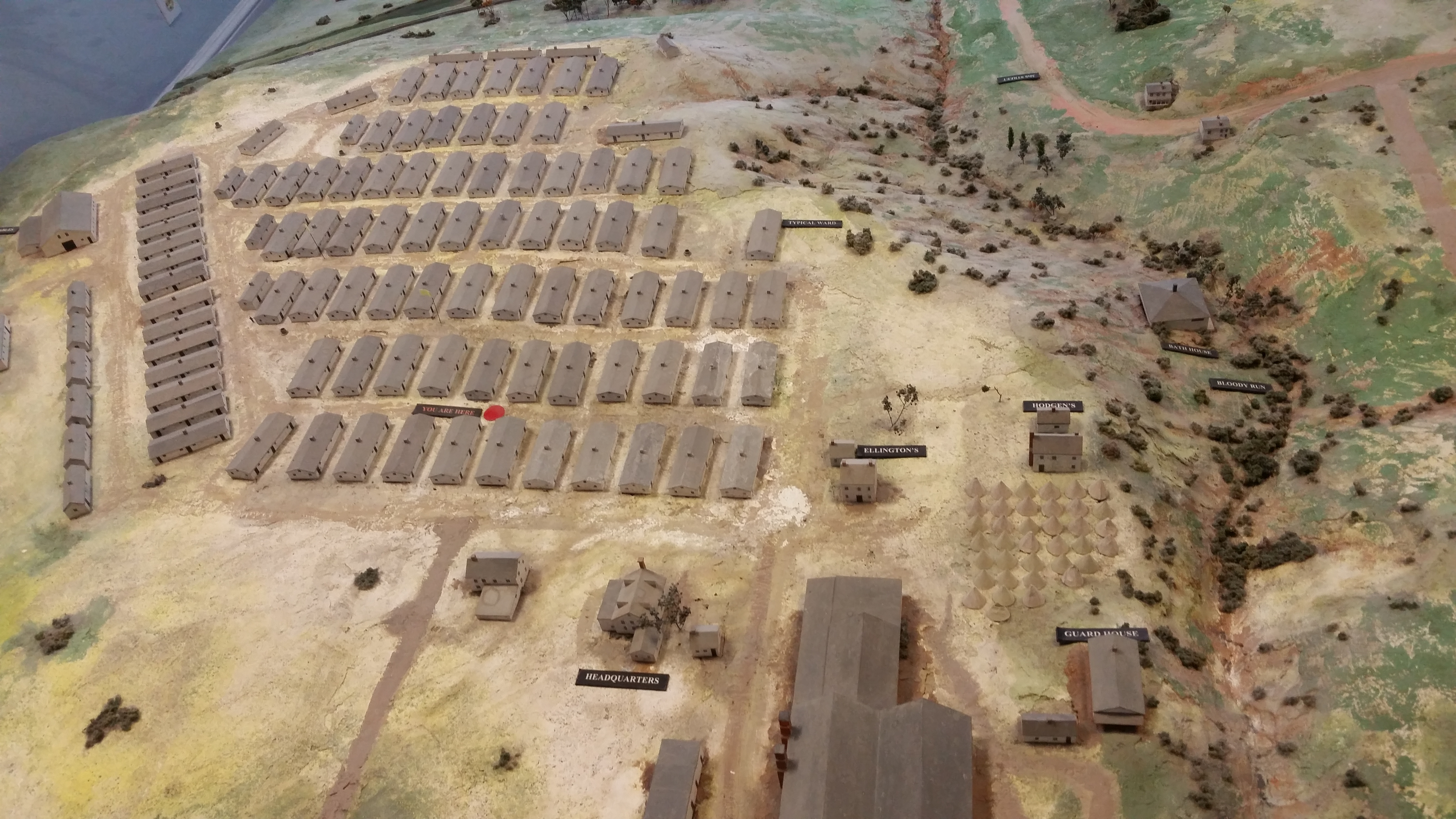
Chimborazo Hospital
Forty acres of whitewashed wooden wards, arranged in neat rows on a windswept plateau above the James River, once formed the largest military hospital in the Western Hemisphere. Chimborazo Hospital opened in Richmond, Virginia, in 1862, and over the next three years it admitted nearly 78,000 Confederate soldiers. Between 6,500 and 8,000 of them died, a mortality rate of roughly nine percent, lower than that of most Union hospitals of the era. Named for the towering South American volcano, this city-within-a-city had its own brewery, its own goat herds, its own canal boat for bartering supplies, and a chief matron who waged open war with surgeons over who controlled the whiskey rations.
A City of Ninety Wards
In the early months of the Civil War, nobody expected the fighting to last. Richmond's wounded were sent to civilian homes, warehouses, and repurposed hotels, arrangements that produced miserable care and sick caretakers. By late 1861, the Confederate government recognized the need for purpose-built medical facilities. Dr. James B. McCaw, a Richmond physician and professor at the Medical College of Virginia, was appointed surgeon-in-chief of the new hospital on Chimborazo Hill. McCaw organized the sprawling complex into five divisions, each functioning as an independent hospital with its own surgeon-in-chief. Ninety ward buildings, each measuring roughly eighty by twenty-eight feet with shingled roofs, whitewashed walls, and wooden plank floors, held about forty beds apiece. Wide avenues separated the rows, allowing fresh air to circulate, a design McCaw considered essential to patient recovery. Beyond the wards stood bake houses, kitchens, a soap house, five ice houses, a chapel, a bathhouse, carpenter and blacksmith shops, and five "dead houses" for those beyond saving.
The Matron and the Whiskey
In December 1862, Phoebe Yates Pember arrived at Chimborazo to become the chief matron of the hospital's Second Division. A 39-year-old widow from a prominent Charleston family, Pember had been offered the position by the wife of the Confederate Secretary of War. She walked into a world of gangrene, amputations, and dying boys, and she did not flinch. Pember's fiercest battles were not with the wounded but with the surgeons and ward masters who resented a woman holding authority over hospital supplies, particularly the whiskey barrel. Medicinal whiskey was precious, and Pember guarded it jealously against pilfering. Her memoir, "A Southern Woman's Story," written between 1865 and 1879, remains one of the most vivid firsthand accounts of Confederate hospital life, a chronicle of courage, bureaucratic infighting, and the grinding human cost of war.
Goats, Gardens, and a Canal Boat
Feeding a hospital the size of a small town during a war that strangled supply lines required ingenuity. McCaw planted extensive vegetable gardens on the surrounding hillsides and maintained herds of goats and dairy cows on nearby farms to provide fresh milk for patients too weak for solid food. He acquired a canal boat christened "Chimborazo" and sent it up and down the James River and the Kanawha Canal, trading Richmond-manufactured goods for food and medical provisions from the interior. The hospital even operated its own brewery, producing beer that served as both a caloric supplement and a morale boost for convalescing soldiers. This self-sufficiency was not a luxury but a necessity: as Union blockades tightened and Confederate currency lost value, Chimborazo's ability to produce, grow, and barter its own supplies kept the wards functioning when other hospitals faltered.
From Wards to Classrooms
When Richmond fell in April 1865, Union forces occupied the Chimborazo plateau and repurposed the hospital buildings. By June 1865, the Freedmen's Bureau established classrooms in the former wards, eventually enrolling 345 formerly enslaved students. What had been a place of Confederate suffering became a place of Black liberation, the whitewashed buildings that once held broken soldiers now holding children learning to read. The transition was not smooth. By 1870, voter registration data showed 651 Black voters in the Marshall Ward, which included Chimborazo and Church Hill, a number that did not count women and children. The city of Richmond gradually acquired the land, demolished the remaining structures, and created Chimborazo Park. Today the site is split between the city, which owns 27.9 acres, and the federal government, which maintains 5.6 acres as the headquarters of Richmond National Battlefield Park. A small museum focuses on Civil War battlefield medicine. A miniature Statue of Liberty stands in the park, an improbable monument on a hill that saw every dimension of American contradiction.
From the Air
Located at 37.429N, 77.374W on an elevated plateau in Richmond's east end, overlooking the James River. The Chimborazo Park hilltop is visible at 2,000-3,000 feet AGL as a green space on the bluff above the river. Nearest airports: Richmond International (KRIC) 7 nm east, Chesterfield County (KFCI) 10 nm south. The James River curves below the bluff, and Church Hill's row houses stretch to the west toward downtown Richmond.