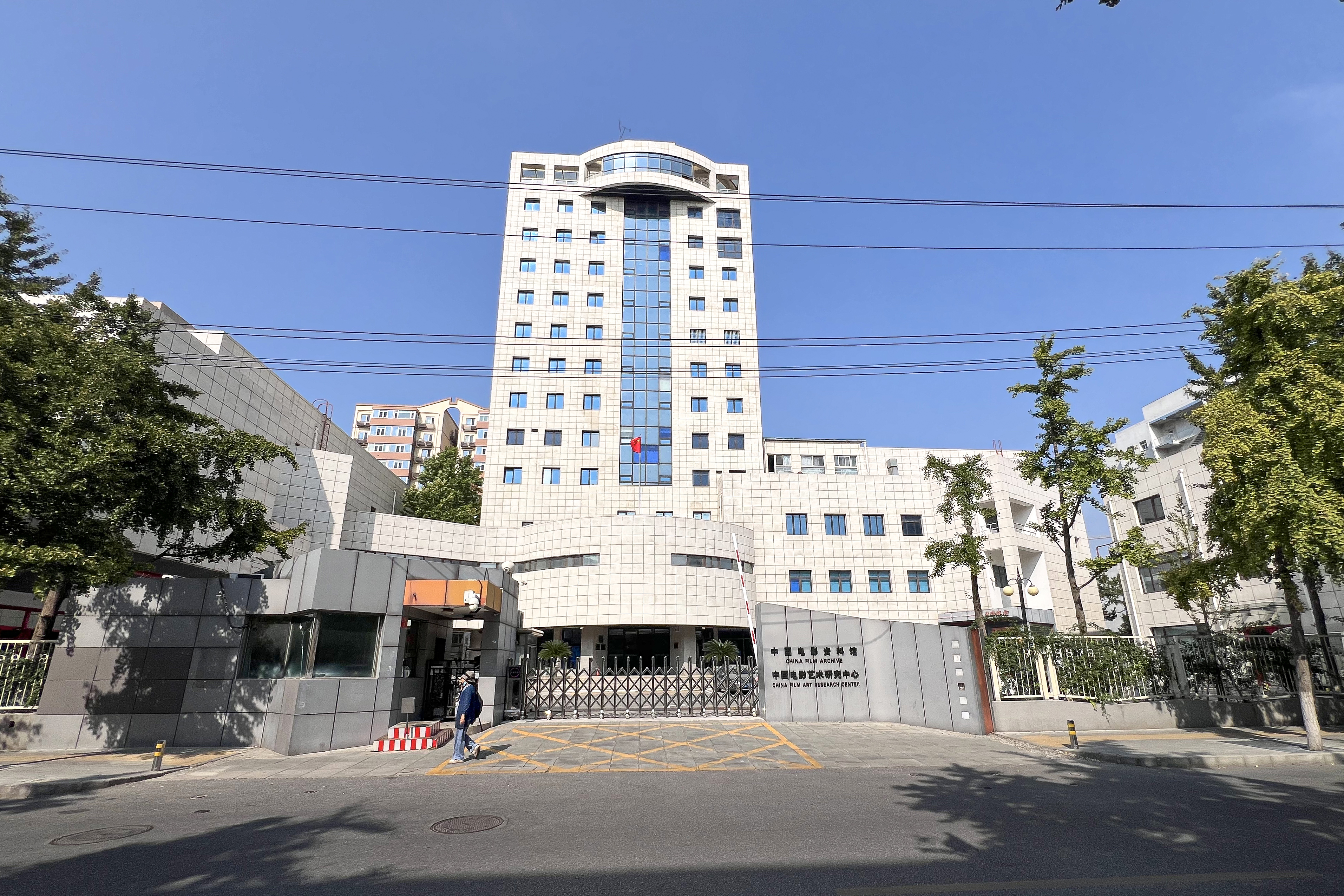
China Film Archive
In 2011, a 1927 Chinese silent film called Pan Si Dong -- The Cave of the Silken Web -- turned up in an archive in Mo i Rana, a small Norwegian town above the Arctic Circle, stored in a section of the National Library of Norway. Nobody in China knew it had survived. Another lost film, Mimong (1936), resurfaced in Korea. These discoveries are part of the quiet, painstaking work of the China Film Archive, an institution headquartered in Beijing that serves as the country's memory bank for over a century of cinema.
Rescuing the Vanished
The Archive's Digital Restoration Project, launched in 2005, has brought some of China's most important early films back from deterioration. The Goddess (1934), a silent masterpiece starring Ruan Lingyu, was digitally restored in both sound and visual quality and premiered in its new form at the 58th BFI London Film Festival in 2014. The restoration work extends beyond individual features into entire categories of Chinese filmmaking. Through its "Restored Treasures" series, presented with the Hong Kong Film Archive, the Archive has screened rediscovered gems including Laborer's Love (1922), Red Heroine (1929), Spring in a Small Town (1948), and Captain Guan (1951). A parallel series recovered pioneering Chinese animations by the Wan Brothers -- The Mouse and the Frog (1934), Princess Iron-Fan (1941) -- films that had been forgotten even within China.
Frames Across Borders
Film preservation is inherently international, and the Archive's work reflects this. When a Thai film from the 1950s needed restoration, a copy from the Archive -- originally purchased at the Southeast Asian Film Festival -- served as a reference guide, while negatives from Russia's Gosfilmofond provided the digital scans. The restored film premiered at the 2016 Cannes Film Festival in the Cannes Classics section, the first Thai film selected for that category. The Archive has co-sponsored international film events since at least 1989, collaborating with organizations in the United States, France, and England. In August 2000, it hosted a landmark moment: the first use of a digital projector in mainland China, when Canadian company Christie Digital screened Xie Jin's Red Detachment of Women (1960) and Two Stage Sisters (1964) in Beijing.
The Newspaper That Survived
Beyond its vaults of celluloid, the Archive publishes China Film News, the country's only film newspaper with secondary legal entity status. The newspaper covers industry news, film criticism, technology, and international developments. It has its own layered history: originally an independent publication, it was taken over by the Archive in 1990 and renamed China Film Weekly before reverting to its original name in 1997. Since 2021, the newspaper has co-organized educational film programs promoting historical awareness in schools. The Archive also manages an arthouse cinema circuit, launched in 2016, designed to increase the diversity of films available to Chinese audiences beyond the commercial mainstream.
A Living Collection
Not every film in the Archive has been digitized, and access for scholars -- both Chinese and international -- remains mediated through its digital encyclopedia. The collection is vast and unevenly catalogued, a reflection of the turbulent decades through which Chinese cinema has passed. Wars, revolutions, and the Cultural Revolution destroyed untold numbers of prints. What the Archive preserves is what survived -- often by accident, often in foreign countries, often in formats that require delicate handling and expensive restoration. Each recovered film is a small victory against entropy, a frame of light pulled back from the dark.
From the Air
Located at 39.95N, 116.36E in Beijing's Haidian District, northeast of the city center. The Archive occupies an institutional building in the university district of northern Beijing. Nearest major airport is Beijing Capital International Airport (ZBAA/PEK), approximately 22 km northeast. Beijing Daxing International Airport (ZBAD/PKX) lies about 55 km south. Best viewed as part of the broader northern Beijing cultural district at 4,000-6,000 ft.