China Railway Museum
Inside a circular test track 15 kilometers northeast of downtown Beijing, locomotives that once hauled coal across Manchuria and passengers through the Yangtze basin stand in permanent retirement. The China Railway Museum preserves these machines in a 16,500-square-meter hall with eight exhibition tracks, a quiet shrine to the industrial power that stitched a vast country together. Its downtown branch occupies a reconstructed Qing-era station steps from Tiananmen Square, bridging the gap between the physical grandeur of old engines and the sleek ambition of China's high-speed future.
From Anniversary Exhibition to National Museum
The museum's origins are rooted in celebration. In the 1950s, the Ministry of Railways created a temporary exhibit for the Economic Achievements Exhibition in Beijing, marking the 10th anniversary of the People's Republic. The Ministry then founded the Central Technical Library in 1958 to promote scientific advancement in the railway industry. Over the following decades, this institution evolved through several names -- the MOR Exhibition Group, the Exhibition Department, the Science and Technology Museum -- before the locomotive exhibition hall opened to the public on November 2, 2002. It was officially renamed the China Railway Museum on September 1, 2003. In October 2009, the Beijing Railway Museum was integrated into the system, giving the museum its current two-site structure.
Engines at Rest
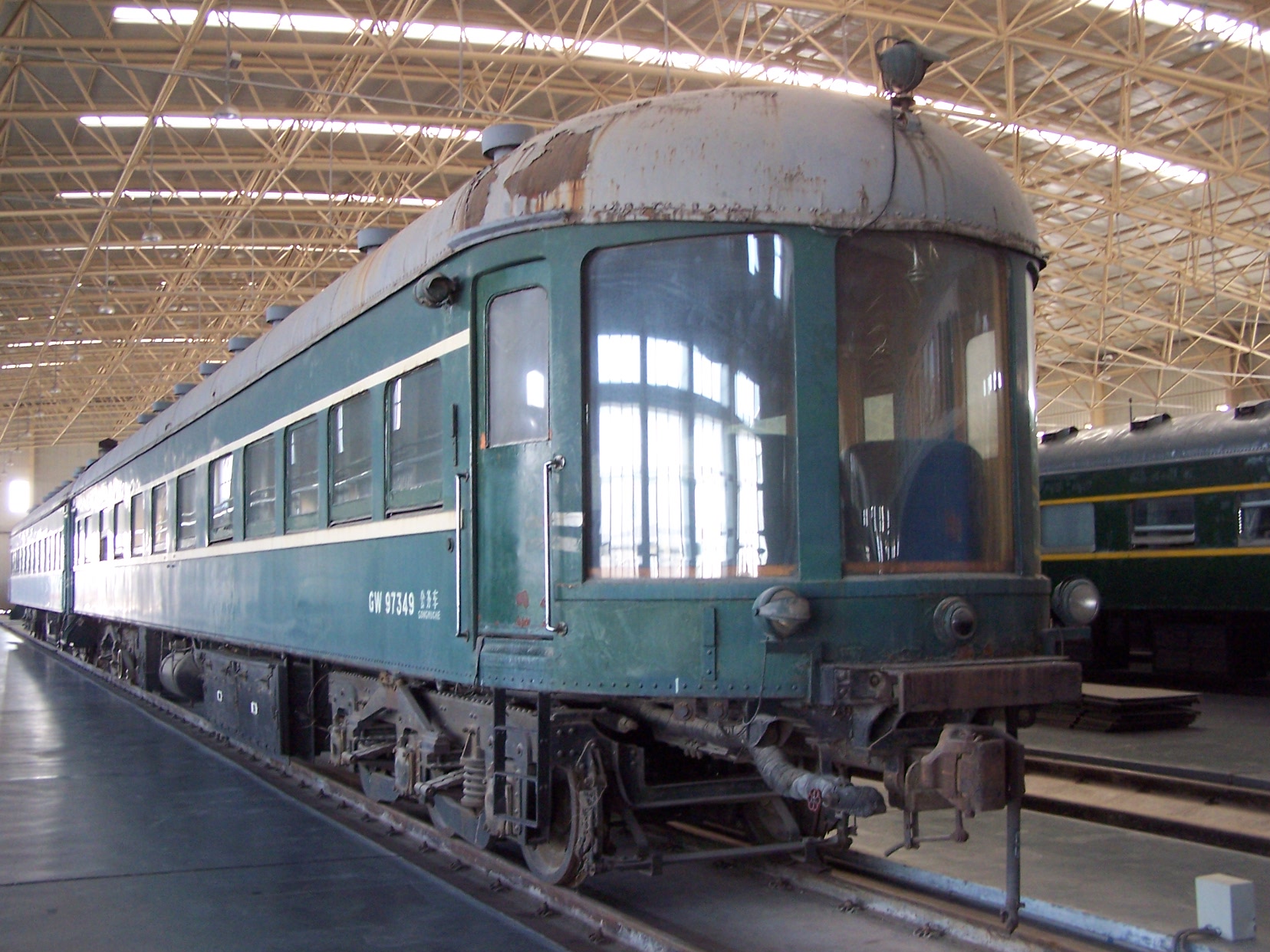
The main hall in Chaoyang District is where the museum's physical presence is most imposing. The locomotives on display represent the full sweep of Chinese rail history, from early steam engines to the diesel and electric workhorses that powered the country's mid-century development. These are not miniatures or replicas. They are full-size machines, some weighing hundreds of tons, arranged on eight parallel tracks inside the hall. The circular test track surrounding the museum grounds adds context -- this was a working railway facility before it became a cultural one. Walking among the locomotives, you can trace the engineering progression that took Chinese railroads from foreign-designed steam power to domestically manufactured equipment.
A Station Reborn Near Tiananmen
The downtown branch occupies one of Beijing's most historically charged locations. The Zhengyangmen East Railway Station, built during the late Qing dynasty as part of the Jingfeng Railway linking Beijing to Manchuria, once stood just southeast of Tiananmen Square. Most of the station was demolished in 1979 during construction of Beijing Subway Line 4, but the clock tower survived. The building visible today includes the original tower and a reconstructed facade, built in mirror image on the opposite side. Inside, the displays shift from hardware to history: models, maps in 3D relief, photographs, and documents trace the development of China's rail network. Architectural models of six new stations on the CRH high-speed system point toward the future, while a CRH3 cab simulator lets visitors experience it firsthand.
Rails Across a Continent
The China Railway Museum tells a story that is ultimately about scale. China's railway network is the second-longest in the world, and its high-speed system is the longest by a wide margin. The museum's exhibits capture the human side of that achievement: the laborers who laid track through mountain passes, the engineers who adapted foreign technology, the passengers whose lives were transformed when a journey that once took weeks could be completed in hours. A display of triple-gauge track -- three different rail widths side by side -- illustrates the complexity of standardizing a system built piecemeal by different colonial powers. The museum does not editorialize about this history. It simply shows the rails, the engines, and the distances, and lets visitors do the math.
From the Air
The main museum is located at 40.00°N, 116.51°E in northeast Beijing's Chaoyang District, inside a visible circular test track. The downtown branch sits near Tiananmen Square at approximately 39.90°N, 116.40°E. Nearest major airport is Beijing Capital International (ZBAA/PEK), approximately 12 km east of the main site.