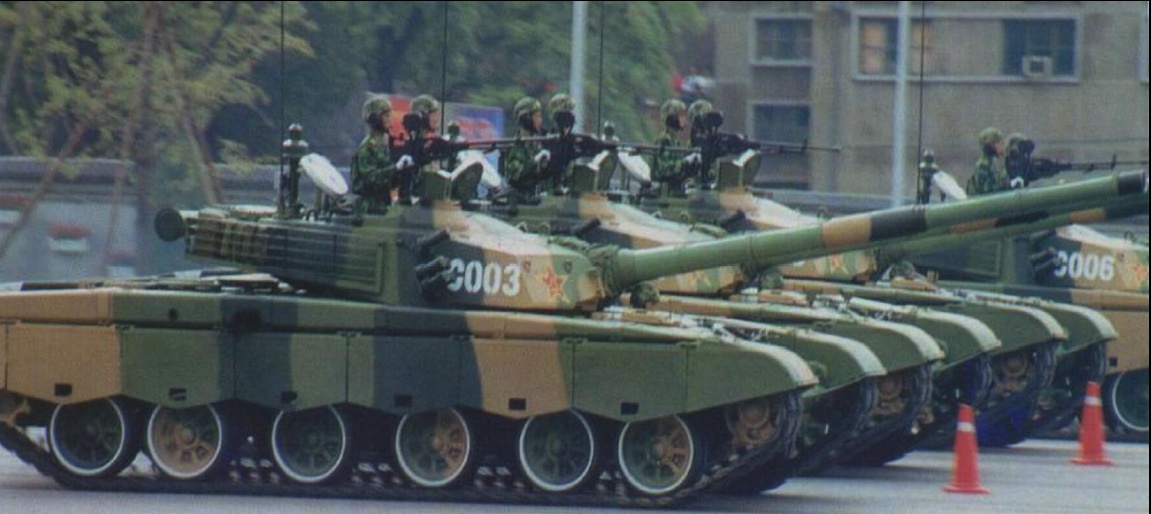
Chinese National Day Parade
"Hello, comrades!" the paramount leader calls from an open-top Hongqi limousine as it glides along Chang'an Avenue. "Hello, Mr. Chairman!" sixteen thousand soldiers roar back in unison. This ritual exchange, repeated battalion by battalion, is the heartbeat of the Chinese National Day Parade, held on October 1 at Tiananmen Square. Since 1950, these parades have marked the anniversary of the People's Republic of China, and their scale defies easy comparison. The 2019 parade, celebrating the PRC's 70th anniversary, featured roughly 15,000 troops, hundreds of military vehicles, and aerial formations that stretched across the Beijing sky.
From Annual Spectacle to Decadal Event
The parade began as an annual affair. From 1950 to 1959, every October 1 brought formations marching past Tiananmen Gate in a pattern modeled on Soviet military traditions. But in 1959, the Chinese Communist Party decided the holiday should be celebrated "with frugality," ending the annual cycle. Parades were still held in 1964, 1966, 1969, 1970, and 1984, but without a fixed schedule. The current decadal format began in 1999, when the golden jubilee parade established the pattern of major celebrations every ten years. Not every scheduled parade has gone forward. In 1971, the Lin Biao incident disrupted plans. In 1979, the aftermath of the Cultural Revolution made celebration awkward. And in 1989, the Tiananmen Square protests and massacre rendered any display of state power on that ground politically unthinkable.
The Mechanics of Spectacle
At 10 a.m. on parade day, massed military bands of the People's Liberation Army sound the Welcome March. What follows is an event choreographed with precision that leaves nothing to chance. The flag-raising ceremony begins with a color guard company marching from the Monument to the People's Heroes as a 21-gun salute thunders from the State Honors Artillery Battery. Once the national anthem, March of the Volunteers, fills the square, the inspection begins. The paramount leader descends to the Tiananmen Gate grounds, boards the open-top limousine, and passes each formation in sequence. Battalions present arms as he approaches, each consisting of 350 soldiers arranged in fourteen rows of twenty-five. The armed forces are followed by a mobile column of nationally produced military vehicles, then aircraft flyovers from the Ground Forces, Navy, and Air Force. Since 1984, a women's company of the Beijing Garrison Honor Guard Battalion has been among the first to march, and since 2015, a female company closes the guard formation.
Power on Display
The parade serves as both celebration and signal. Each decade's event showcases the latest military hardware -- tanks, missile systems, and aircraft that are often being displayed publicly for the first time. The 2019 parade reversed the traditional order, with the paramount leader delivering the keynote address before descending for the inspection rather than after. It was a subtle change, but in a ceremony where every detail carries meaning, it signaled a new emphasis on the leader's words over the ritual of review. The civilian component, which follows the military column, features floats and marching groups representing workers, students, and ethnic minorities. Until 2015, thousands of young men and women assembled at the square grounds to perform massive card stunt displays, creating living mosaics visible from the Tiananmen rostrum. The bands, numbering around 1,900 musicians drawn from service branches across the country, play continuously throughout.
The Absences That Speak
What the parade omits is often as revealing as what it includes. The cancellation in 1989 acknowledged, through silence, that the square had become a place of trauma rather than triumph. The shift from annual to decadal celebrations recognized that national spectacle loses its impact through repetition. Even the selection of the parade commander, traditionally the head of the Central Theater Command or a high-ranking member of the Central Military Commission, sends signals about who holds military power. The square itself sits at Beijing's geographic and symbolic center, the place where Mao Zedong proclaimed the republic in 1949. Every parade since has been a conversation with that founding moment, asserting continuity while displaying how much has changed.
From the Air
Located at 39.91N, 116.39E at Tiananmen Square, central Beijing. The square and surrounding Chang'an Avenue are clearly visible from the air. Nearest airport is Beijing Capital International Airport (ZBAA), approximately 28 km northeast. Note: airspace above Tiananmen is restricted.