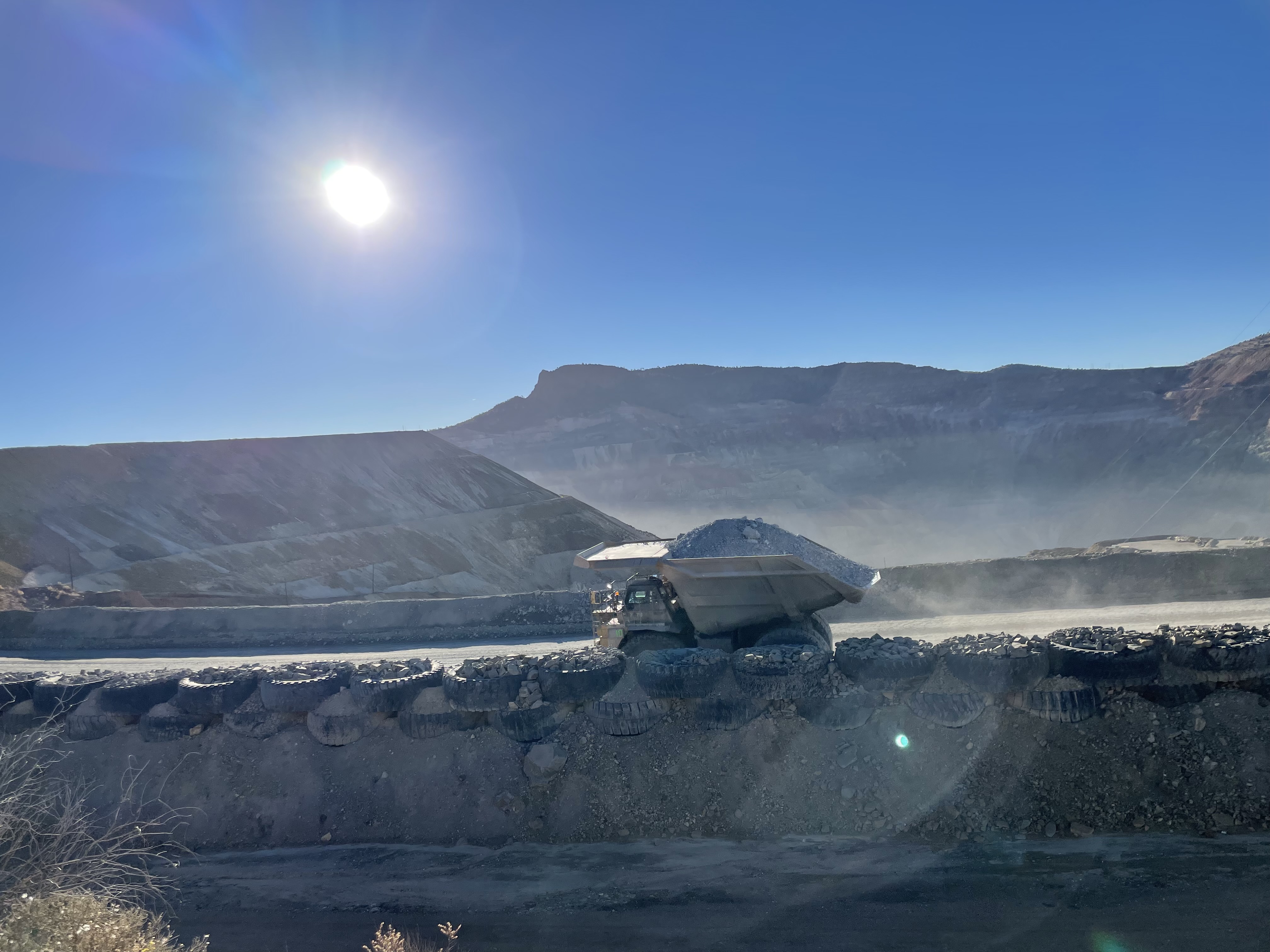
Chino Mine
In 1800, an Apache man led Spanish officer Jose Manuel Carrasco through the pinyon-juniper woodlands of southwestern New Mexico to reveal something extraordinary: native copper so pure it gleamed like polished pennies against the red earth. That moment set in motion over two centuries of conflict, fortune-making, and industrial transformation. Today, the Chino Mine sprawls across the landscape east of Silver City as one of the world's oldest continuously operating open-pit copper mines, a terraced amphitheater of human ambition carved a mile wide into terrain where four cultures fought to control the precious metal beneath their feet.
Blood and Copper
The Santa Rita del Cobre, as the Spanish named it, sat in the heart of Apache territory, and the Mescalero and Warm Springs bands had no intention of surrendering their homeland. Francisco Manuel de Elguea purchased the mine in 1804 and did what colonial powers often did: he imported convict labor to dig copper and build a presidio to protect his workforce from the Apache. Pack trains of mules carried tons of ore south to Chihuahua, making fortunes for men who never touched a pickaxe. But the Apache resistance never ceased. When John Johnson's 1837 massacre enraged warriors across the region, the legendary Mangas Coloradas led increasingly devastating raids. Twenty-two fur trappers died nearby. Supply lines collapsed. In 1838, the 300 to 400 inhabitants of Santa Rita attempted a desperate 150-mile march to the presidio at Janos, Chihuahua. The Apache killed nearly all of them.
The Third Oldest on Earth
The mine fell silent for decades, operating only sporadically until 1873, when Apache chief Cochise signed a peace agreement with the United States. Even then, raids continued until Geronimo's surrender in 1886. By 1909, mining engineer John M. Sully and Spencer Penrose recognized that modern technology could extract copper from low-grade ore that earlier methods had ignored. They founded the Chino Copper Company and launched the present-day open-pit operation in 1910. Today, Chino ranks as the third oldest active open-pit copper mine in the world, after Utah's Bingham Canyon and Chile's Chuquicamata. The terraced walls descend in enormous steps, each bench wide enough to accommodate the massive dump trucks that haul ore to processing facilities in nearby Hurley.
Industrial Giant of the Desert
The mill at Hurley opened in 1911 and was replaced by the modern Ivanhoe concentrator in 1982. A smelter commissioned in 1939 operated for over six decades before permanently closing in 2005 after Clean Air Act compliance became too costly. The mine has weathered boom and bust cycles that mirror copper's volatile global markets. When prices crashed in 2001, Chino sat idle for three years. Freeport-McMoRan, the current owner, suspended mining again in 2009, laying off 600 of its 830 workers before reopening in 2011. By 2014, the operation employed over a thousand people, their livelihoods tied to the same copper deposits that drew an Apache guide and a Spanish officer to this spot over two centuries ago.
Collectors' Paradise
Among mineral enthusiasts, Chino holds a special reputation for its stunning native copper specimens. Unlike most copper mines that produce only ore requiring smelting, Chino has yielded crystalline sheets and nuggets of pure metallic copper, some weighing several pounds. The combination of porphyry copper geology and unique local conditions created specimens prized in museum collections worldwide. For collectors, a piece of Chino native copper represents both geological wonder and historical artifact, formed in volcanic processes millions of years ago and extracted from a site where human drama has played out for generations.
From the Air
Located at 32.79N, 108.07W at approximately 6,000 feet elevation in Grant County, New Mexico. The open pit is visible from cruising altitudes as a distinctive terraced oval roughly one mile wide, appearing as concentric tan and red rings against the surrounding highlands. Approach from the west over Silver City (Grant County Airport, KSVC, 15nm southwest) for best perspective. The processing facilities at Hurley lie a few miles east. Clear conditions typical; summer monsoon afternoon thunderstorms can reduce visibility June through September.