Chobe National Park
Fifty thousand elephants live in the Chobe region. That number is not a typo, and it is not evenly distributed -- during the dry season, these Kalahari elephants concentrate along the Chobe River in herds so large they reshape the riverbank, toppling trees and churning the floodplain into a mudscape of footprints the size of dinner plates. Chobe National Park, in Botswana's far northeast corner where the borders of Zambia, Zimbabwe, and Namibia converge within shouting distance, was the country's first national park when it was established in 1967. It remains its most diverse.
Four Landscapes in One Park
Chobe is not a single habitat but a patchwork of four distinct ecosystems, each drawing different species and offering a different character. The Chobe River riverfront in the north is the park's showpiece -- a ribbon of permanent water flanked by floodplains where elephants, hippos, and crocodiles share the shallows with storks and fish eagles. Southwest of the river, the Savuti Marsh is fed by the enigmatic Savuti Channel, which flows and dries according to tectonic shifts rather than rainfall, irrigating the landscape unpredictably and creating boom-and-bust cycles that the wildlife has learned to exploit. The Linyanti Marshes along the western boundary offer quieter, more remote wetland habitat. Between them stretches a hot, dry hinterland of mopane woodland and sandy plains. Together, these four zones support four of the Big Five -- elephant, lion, leopard, and buffalo -- though rhinos were relocated from the park in the 1970s to protect them from poaching and have not yet returned.
The Kalahari Giants
Chobe's elephants are the Kalahari subspecies, and they are the largest in Africa. Their tusks, however, tell a different story -- many are cracked or broken, a consequence of calcium-poor soils that make the ivory brittle. Watch a herd at the Chobe riverfront during the dry months and you see behavior that is both powerful and tender. Matriarchs lead families to the water's edge, calves stumble between adult legs, and juveniles spray each other in the shallows with the uncomplicated joy of children at a swimming hole. The elephant population has grown significantly in recent decades, creating both a conservation success story and a management challenge, as the herds' appetite for trees visibly transforms the riparian landscape. Beyond elephants, Chobe's lion population has surged since the pandemic years, with park staff reporting increasingly frequent sightings. Rare sable antelopes, giraffes, warthogs, and chacma baboons round out a cast of residents that would be remarkable even without the elephants.
Wings Over the River
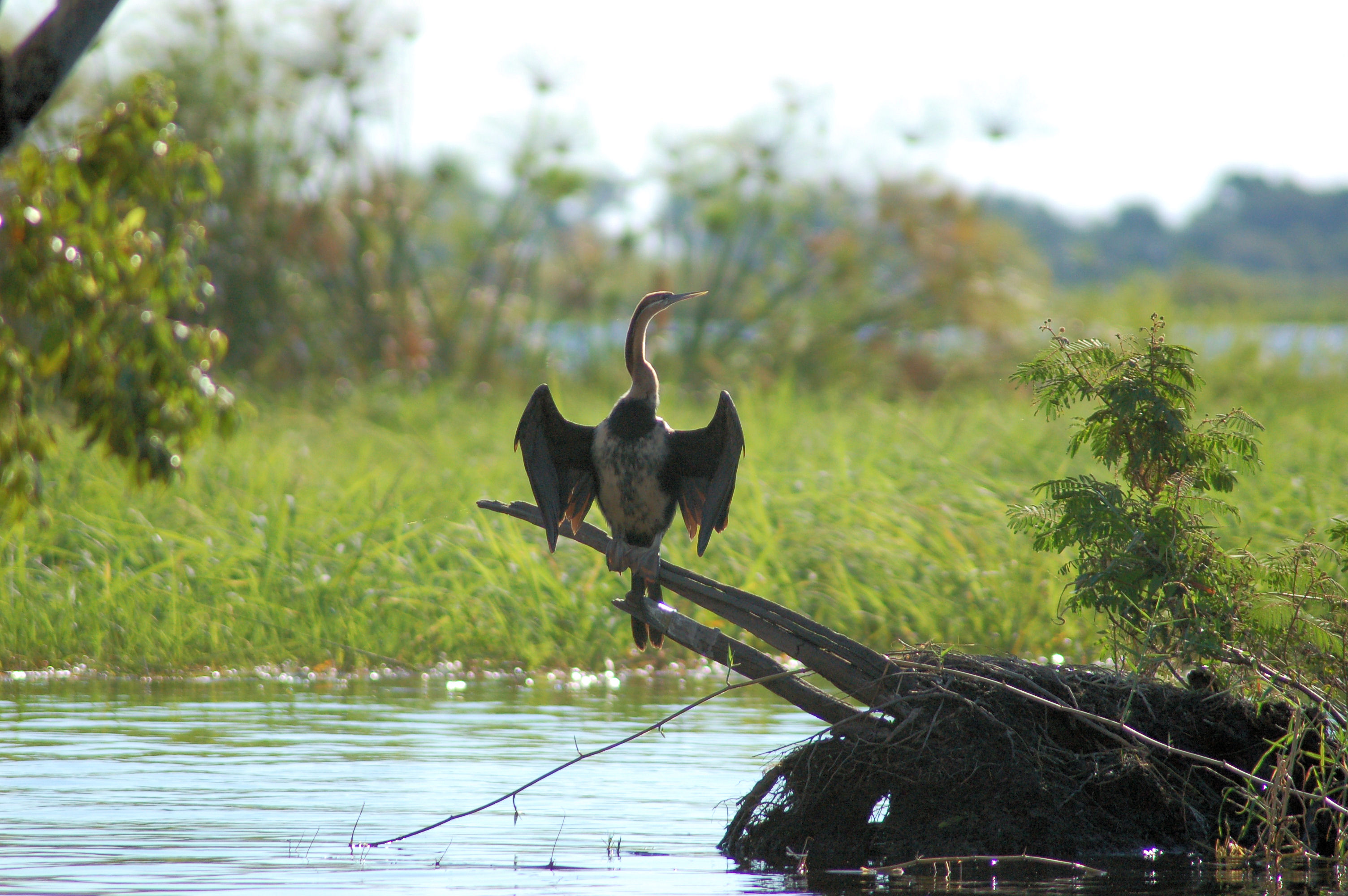
Over 400 bird species have been recorded within Chobe's boundaries, a count that reflects the park's unusual range of aquatic and terrestrial habitats. Along the riverbanks, African fish eagles perch in dead trees, their piercing calls one of the signature sounds of the African bush. Herons, storks, plovers, and kingfishers work the shallows. During the wet season, from December through May, migrant species pour in -- carmine bee-eaters, yellow-billed storks, and flocks of open-billed storks that arrive to feast on freshwater snails in the flooded grasslands. The boat tours that cruise the Chobe River between the park and the Namibian shore offer some of the best birding in southern Africa, with eye-level views of nesting colonies and feeding grounds that would be inaccessible from land. At sunset, the river turns copper and the silhouettes of fish eagles against the sky become the kind of image that sells calendars, except here it is simply Tuesday.
Where Nations Converge
Chobe's location makes it unusually accessible for a major African national park. Victoria Falls -- one of the continent's most visited landmarks -- lies just 60 kilometers to the east, and many visitors combine the two destinations in a single trip. The town of Kasane, perched at the park's northeastern corner where the Chobe and Zambezi rivers meet, serves as the primary gateway. Kasane Airport receives scheduled flights from Johannesburg and Gaborone, and day tours from Victoria Falls cross the Zambezi by boat before entering the park. The Sedudu Gate south of Kasane is the most common entry point. Inside, sandy unpaved roads require four-wheel drive, and a one-way system near Kasane keeps traffic flowing. Most visitors split their time between a morning game drive by vehicle and an afternoon boat cruise on the Chobe -- a rhythm that captures the park's dual personality as both a terrestrial and aquatic wilderness. The proximity to four national borders gives Chobe a cosmopolitan visitor base, but the elephants at the riverfront do not seem to notice.
From the Air
Chobe National Park is centered at approximately 18.65°S, 24.40°E in northeastern Botswana. From altitude, the Chobe River traces the park's northern boundary as a distinct green and blue corridor against drier terrain. The Chobe-Zambezi confluence near Kasane is visible where four countries nearly meet. The Savuti Marsh appears as a greener patch in the park's southwest interior. Kasane Airport (FBKE) is the closest facility, located just minutes from the Sedudu Gate. Victoria Falls Airport (FVFA) is approximately 80 km to the east across the Zimbabwe border. Expect light aircraft traffic serving safari lodges. The Savuti and Linyanti areas have small bush airstrips. Dry season visibility is excellent; wet season brings afternoon thunderstorm buildups and reduced visibility from haze.