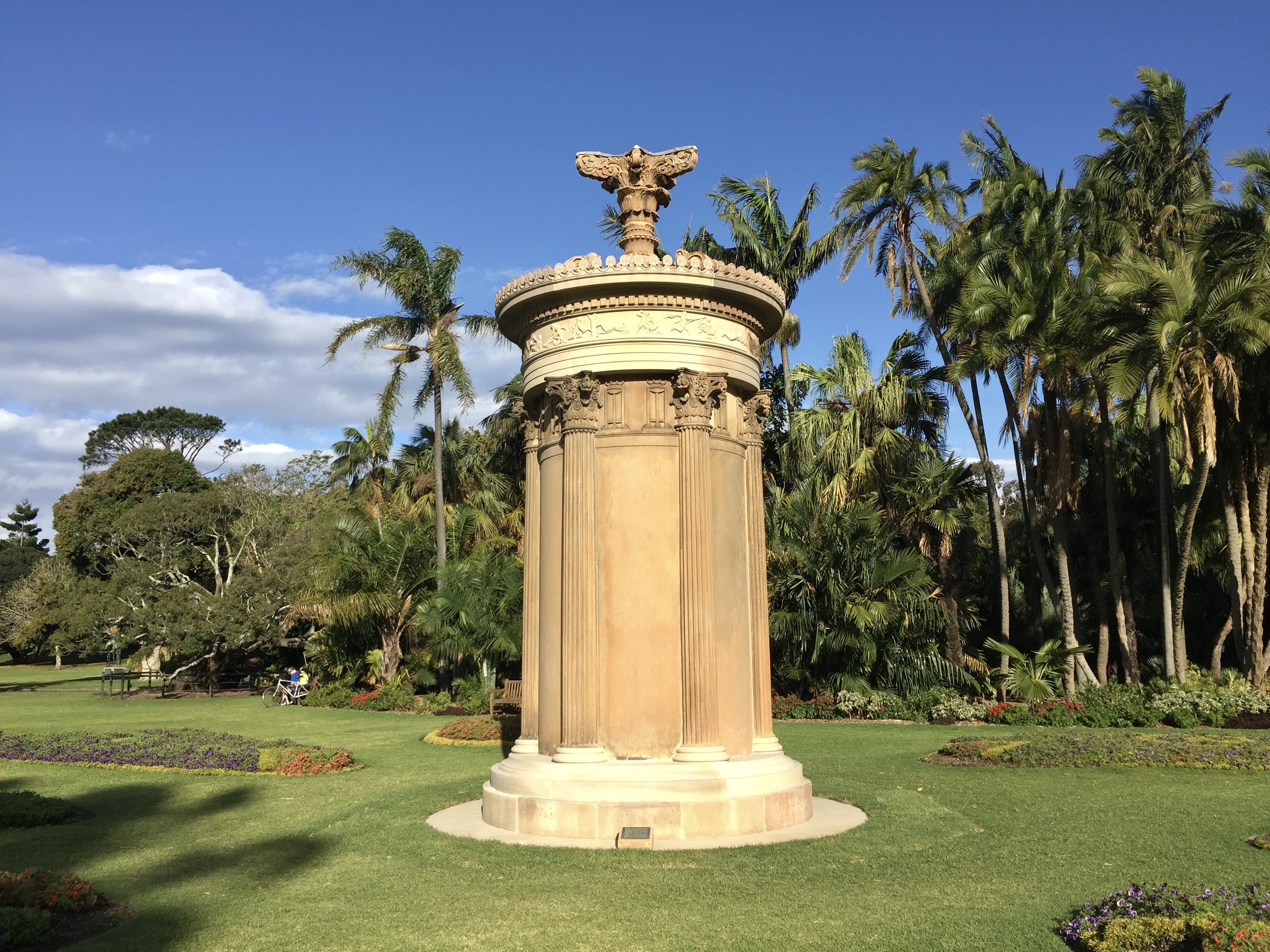
Choragic Monument of Lysicrates
The trophy was a bronze tripod. The rules of the City Dionysia required that whoever paid for the winning chorus of fifty boys in the dithyramb contest get to keep the tripod, and the wealthy patron, the choregos, was expected to display it somewhere visible. In the spring of 335 or 334 BC, Lysicrates, son of Lysitheides of Kikynna, won the boys' competition. His chorus had been part of the tribe Akamantis, his pipe-player was named Theon, his director was Lysiades of Athens, and the archon that year was Euainetos. The inscription preserves all of these names. Lysicrates put up a small marble monument on the Street of the Tripods, the lane that climbed from the Theater of Dionysus, and on its outer surface he did something nobody had ever done before. He put Corinthian columns on the outside.
The First Corinthian Exterior
Until Lysicrates, Corinthian capitals lived inside Greek buildings, hidden among the columns of inner halls. The order was decorative, slightly extravagant, and not yet considered fit for the public face of a structure. The Choragic Monument changed that. Six engaged columns ring its circular drum, each crowned with the elaborate acanthus-leaf capital that would, centuries later, define Roman temples and Beaux-Arts banks alike. The frieze below the architrave depicts Dionysus and the Tyrrhenian pirates from the Homeric Hymn to Dionysus, the moment when the kidnapped god turns his captors into dolphins. A second frieze beneath, between the column capitals, shows other choragic tripods, monuments to other winning patrons that once lined the same street. Foundations of those companion monuments were uncovered in excavations during the 1980s. The Street of the Tripods had been a corridor of victory trophies, and Lysicrates' is the only one left standing.
The Lantern of Demosthenes
By 1658, when French Capuchin monks founded a monastery on the spot, the original purpose of the marble tripod base had been forgotten. The monument was popularly called the Lantern of Demosthenes, or sometimes the Lantern of Diogenes, a folk tradition that ignored the perfectly legible inscription on the marble. In 1669 the monastery purchased the structure outright. By the early 19th century it was being used as the monastery library. Two young British architects, James Stuart, who would soon be nicknamed Athenian Stuart, and Nicholas Revett, finally read the inscription correctly and published the first measured drawings of the monument in their Antiquities of Athens (London, 1762). Through their engravings, the little marble pavilion suddenly became an architectural celebrity in France, England, and beyond. The Greek scholar Jacob Spon had already correctly interpreted the inscription in 1678, but it was the Englishmen who told the world.
Byron's Bedroom and the First Greek Tomato
The Capuchin monastery hosted distinguished travelers, and Lord Byron stayed there during his second visit to Greece. The same monastery, in 1818, has another, quieter claim to fame: friar Francis planted the first tomato plants in Greece in its gardens. New World fruit and Old World poet, both passing through a marble Athenian victory monument turned monastic library. In 1821, the convent was burned by the Ottomans during the Greek War of Independence and subsequently demolished. The monument, now exposed to the weather without the building around it, became a free-standing icon in the Greek Revival movement sweeping Europe. In 1829, the monks offered the structure to a passing Englishman as a souvenir, but it proved too cumbersome to disassemble and ship. Lord Elgin, who had succeeded so spectacularly at removing the Parthenon marbles, negotiated unsuccessfully for it. French archaeologists eventually cleared the rubble, and between 1876 and 1887 the architects Francois Boulanger and E. Loviot supervised a restoration funded by the French government.
The Most Replicated Small Building in the World
Once the engravings circulated, copies started appearing everywhere. In Edinburgh, the Dugald Stewart Monument and the Burns Monument both crown Calton Hill in deliberate echoes of Lysicrates. The Saracen Fountain in Glasgow is another version. So is the Huskisson Memorial in St James Cemetery in Liverpool, the towers of the former North Kirk in Aberdeen, and decorations at Shugborough, Tatton Park, and Alton Towers. Across the Atlantic, William Strickland used the Choragic Monument as the model for the cupola atop the Tennessee State Capitol in Nashville and for the Merchants' Exchange in Philadelphia. The Portland Breakwater Light in Maine borrowed the same design. The Soldiers' and Sailors' Monument on Riverside Drive in New York City, designed by Charles and Arthur Stoughton in 1902, is a Beaux-Arts version. In Australia, the Royal Botanic Gardens in Sydney has a copy, and another forms the crown of the Shrine of Remembrance in Melbourne. A bronze miniature of the monument is given each year to the architect who wins the Driehaus Prize for traditional architecture. A monument originally erected for a winning boys' chorus has become the most repeated single building shape of the Western architectural revival.
A Modern Inscription
In June 2016, anarchists vandalized the monument with spray paint, leaving a message: Your Greek monuments are concentration camps for immigrants. The marble was cleaned, the slogan removed, but the moment is worth pausing on. Greece in 2016 was the front line of Europe's refugee crisis, with thousands of people arriving on Aegean islands every week. The vandalism was not against Lysicrates personally, of course, but against the way that classical heritage gets used in modern political language, claimed by people who do not always extend its hospitality to the living. The monument has now stood on its corner for nearly twenty-four hundred years. It has been a tripod base, a monastery library, the bedroom of a famous English poet, and the original of countless Calton Hill imitations. It is small enough to walk around in a minute. The inscription is still legible. The chorus-master Theon's name is still there. The boys won.
From the Air
The Choragic Monument of Lysicrates stands at 37.9708 N, 23.7300 E, in a small garden on Lysikratous Square in the Plaka quarter of central Athens, just east of the Acropolis. From the air the monument itself is too small to identify directly (the marble drum is only about 4 m / 13 ft tall), but its setting is unmistakable: the tangle of red-tile-roofed Plaka houses immediately northeast of the Acropolis rock. Best viewed at 1,500 to 3,000 ft AGL when navigating central Athens, with the Parthenon as the primary landmark and Plaka stretched between it and the modern city center. Nearest airport: Athens International Eleftherios Venizelos (LGAV), about 18 nm east-southeast.