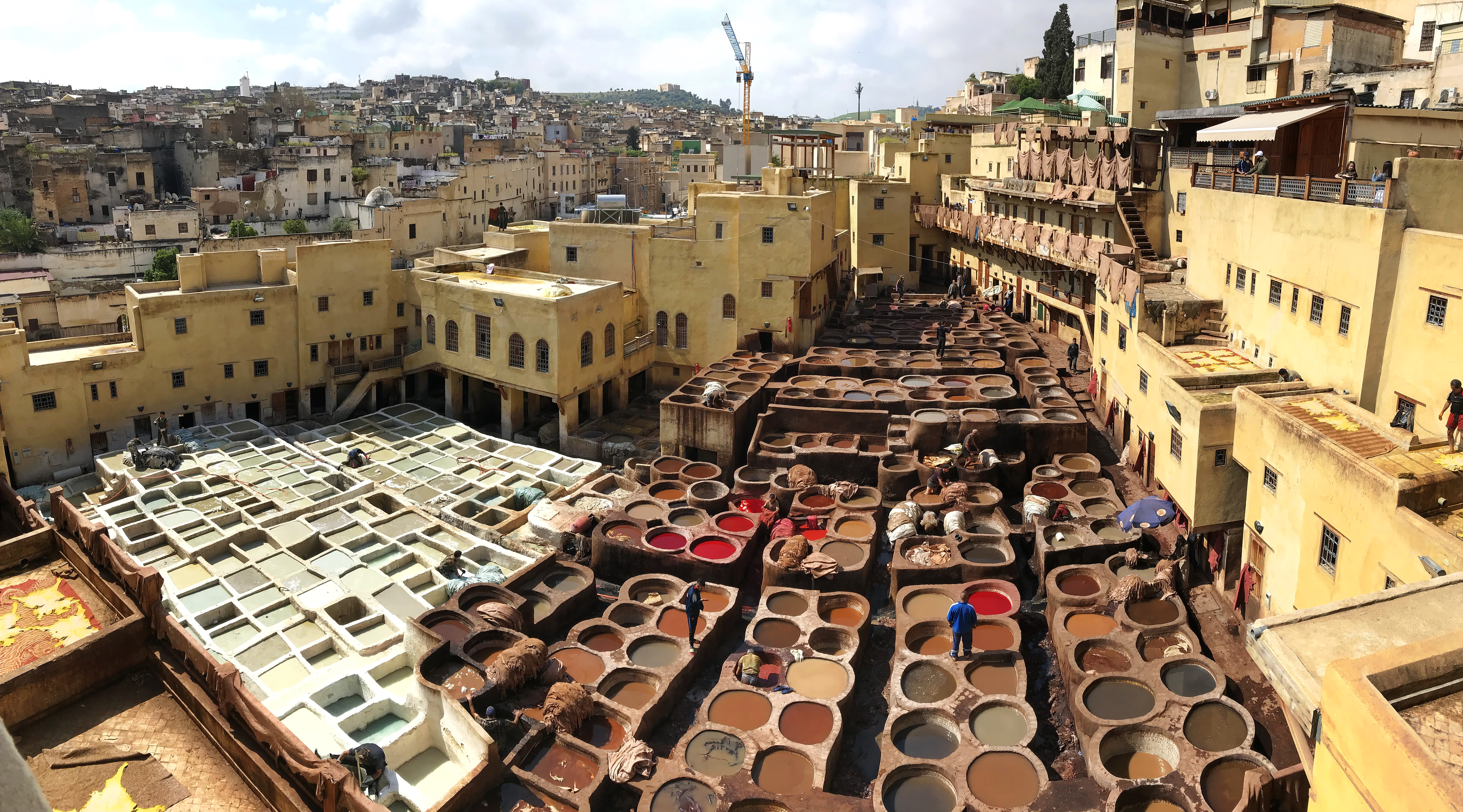
Chouara Tannery
The smell reaches you before the sight does. Tourists navigating the narrow alleys of Fes el Bali are often handed sprigs of mint by shopkeepers as they approach, a small mercy against what is coming. Then the walls open and the Chouara Tannery unfolds below: hundreds of round stone vessels arranged in a honeycomb pattern, some filled with white liquids for softening hides, others blazing with saffron yellow, poppy red, indigo blue, and the deep brown of cedar bark. Men stand knee-deep in the vats, working the leather by hand. The scene has been painted, photographed, and filmed so often that it has become the defining image of Fez. What the images rarely convey is the chemical reality of what is happening in those vats.
Ancient Origins, Uncertain Dates
Local tradition holds that the Chouara Tannery dates from the city's foundation by Idris II at the beginning of the 9th century, making it contemporary with the medina itself. Modern historians are more cautious. The age of the Chouara is unclear, and there is no firm evidence establishing exactly where the city's earliest tanneries were located. What is certain is that tanneries existed soon after the city's founding and would have been sited near water, just as they are today -- the Chouara sits along the Oued Fes, also known as the Oued Bou Khrareb, near the Saffarin Madrasa. The Sidi Moussa Tannery, another of the city's three tanneries, is more definitively documented to the early 12th century. Whether the Chouara predates it or followed it, the tanning industry has been operating in Fez in essentially the same fashion for the better part of a millennium.
The Craft in the Vats
The process unfolds in stages across the honeycomb of stone vessels. Raw hides first go into the white vats, where a mixture of pigeon droppings, quicklime, and water softens the skin and loosens the hair. Workers tread on the hides with bare feet, kneading them for hours. The softened skins are then scraped clean before moving to the dye vats, where natural pigments -- saffron, henna, poppy, indigo, cedar wood, mint -- produce the palette of colors visible from the surrounding terraces. After dyeing, the hides are hung to dry on the rooftops and hillsides around the medina, their bright colors spread like laundry across the city's vertical surfaces. The finished leather is sold in the souqs or exported around the world, becoming bags, shoes, jackets, and the colorful slippers known as babouches.
Beauty's Hidden Cost
Tanneries have always been treated as polluting, and with good reason. The waste runoff and the powerful smells they generate have been a source of complaint for centuries. But the modern reality is grimmer than historical nuisance. Certain types of chromium used in the process are toxic, and the tanneries produce organic waste that has contaminated soil and the rivers downstream. Workers and local residents have long reported adverse health effects, with the most serious cases leading to cancer and early death. The romanticized tourist spectacle -- the aerial view of jewel-toned vats, the sprigs of mint, the leather goods for sale in the shops above -- exists in uncomfortable tension with the reality of what the work does to the people who perform it day after day, year after year, standing in chemicals that eat away at their skin and lungs.
Between Preservation and Change
Proposals to relocate the Chouara Tannery to a site where its pollution could be managed more safely have surfaced periodically. At one point, the tanneries were to be converted to a different economic model or reused as public space. These plans have never fully materialized. The tannery remains one of Fez's primary tourist attractions and a significant source of employment, creating a knot of competing interests that defies easy resolution. Recent renovations have improved the surrounding area, and the tannery itself has been altered over the years -- but the fundamental methods, the round stone vats, the men standing in the dyes, the smell that precedes every visit -- endure. From the terraces above, the view remains extraordinary: a medieval industrial landscape operating in the 21st century, beautiful and brutal in equal measure.
From the Air
Coordinates: 34.066N, 4.971W. The Chouara Tannery is located in Fes el Bali near the Saffarin Madrasa along the Oued Fes. From 2,000-3,000 ft AGL, the tannery's honeycomb pattern of round stone vats is one of the most distinctive features of the medina, especially when the dye vats are filled with vivid colors. Nearest airport: Fes-Saiss (GMFF), approximately 15 km south. Colored hides drying on surrounding rooftops may also be visible.