Christ the Redeemer: The Statue Built from Soapstone Carried Up a Mountain
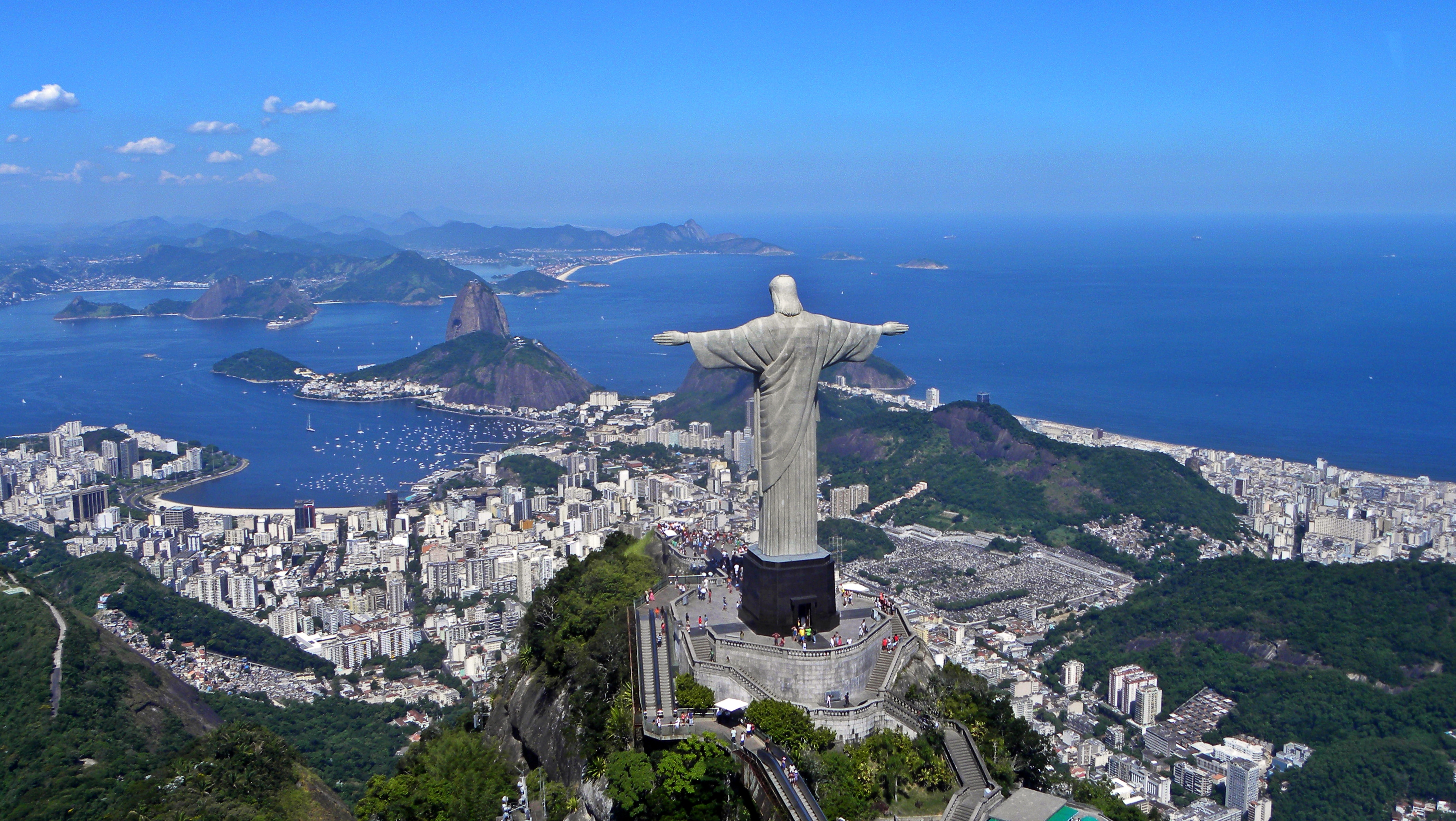
Christ the Redeemer stands on Corcovado mountain with arms outstretched, embracing Rio de Janeiro below. The statue is 98 feet tall atop a 26-foot pedestal, made of reinforced concrete faced with over 6 million soapstone tiles hand-cut in Brazil. Construction took nine years, with materials hauled up the steep mountain by rack railway. When it was dedicated in 1931, Christ the Redeemer was the largest Art Deco statue in the world. Today, it's one of the New Seven Wonders of the World, visited by 2 million people annually, and the defining image of Brazil.
The Vision
The idea for a monument on Corcovado dates to the 1850s, when a priest first proposed placing a Christian monument on the peak. The current project began in 1920, when the Catholic Circle of Rio petitioned for a statue to mark the centennial of Brazilian independence.
Funds were raised from Catholics across Brazil - including donations collected at churches for years. International engineers and artists were recruited. The design evolved from a Christ carrying a cross to the open-armed pose we know today, symbolizing welcome and peace. Construction began in 1922.
The Design
Brazilian engineer Heitor da Silva Costa designed the statue. French sculptor Paul Landowski created the head and hands. Romanian sculptor Gheorghe Leonida created the face. The Art Deco style was chosen for its geometric simplicity - the robes fall in sharp, angular folds rather than naturalistic curves.
The original plan called for bronze cladding, but it was too heavy. Soapstone from Minas Gerais was chosen instead - a soft stone that could be cut into tiles and was resistant to weathering. Workers in Brazil cut over 6 million triangular tiles, each unique, numbered and shipped to the construction site.
The Construction
Building atop a 2,300-foot peak presented immense challenges. All materials traveled up the Corcovado Rack Railway, a steep cog railway built in 1884. Workers constructed the concrete frame first, then applied the soapstone tiles by hand.
The statue's arms span 92 feet, each weighing 30 tons. They had to be built in sections and assembled on the mountain. Lightning strikes during construction killed workers and damaged the framework. Fog and rain made the work dangerous. The project took nine years and employed hundreds of workers. On October 12, 1931, Christ the Redeemer was inaugurated.
The Icon
Christ the Redeemer instantly became Rio's defining landmark - visible from throughout the city, arms open in eternal welcome. The statue appears in almost every photograph of Rio, every film set in Brazil, every World Cup broadcast. It's Brazil's most famous monument.
The statue was named a UNESCO World Heritage Site in 2007 and one of the New Seven Wonders of the World the same year. It has survived lightning strikes (including one in 2014 that damaged a finger, since repaired) and the constant weathering of a tropical climate. Regular restoration replaces damaged tiles.
The Meaning
What does Christ the Redeemer mean? To Catholics, it's a monument to faith, the Sacred Heart of Jesus blessing Brazil. To Brazilians of all faiths, it's a national symbol, representing welcome and openness. To tourists, it's the ultimate Instagram backdrop.
Two million visitors climb Corcovado annually, either by train or van or, for the devout, on foot. They stand at the base, dwarfed by the outstretched arms, and look down at Rio spread below - the beaches, the favelas, the mountains, the harbor. The statue doesn't judge the city's poverty or violence or inequality. It just embraces everything, arms open, silent and serene.
From the Air
Christ the Redeemer (22.95S, 43.21W) stands atop Corcovado mountain in Rio de Janeiro, Brazil. Rio de Janeiro-Galeão International Airport (SBGL) is 25km north. Santos Dumont Airport (SBRJ) is 8km east in the city center. The statue is unmistakable from the air - a white figure with outstretched arms on a green peak overlooking Guanabara Bay. Sugarloaf Mountain is visible to the east. Weather is tropical - hot and humid with rain heaviest December to March.