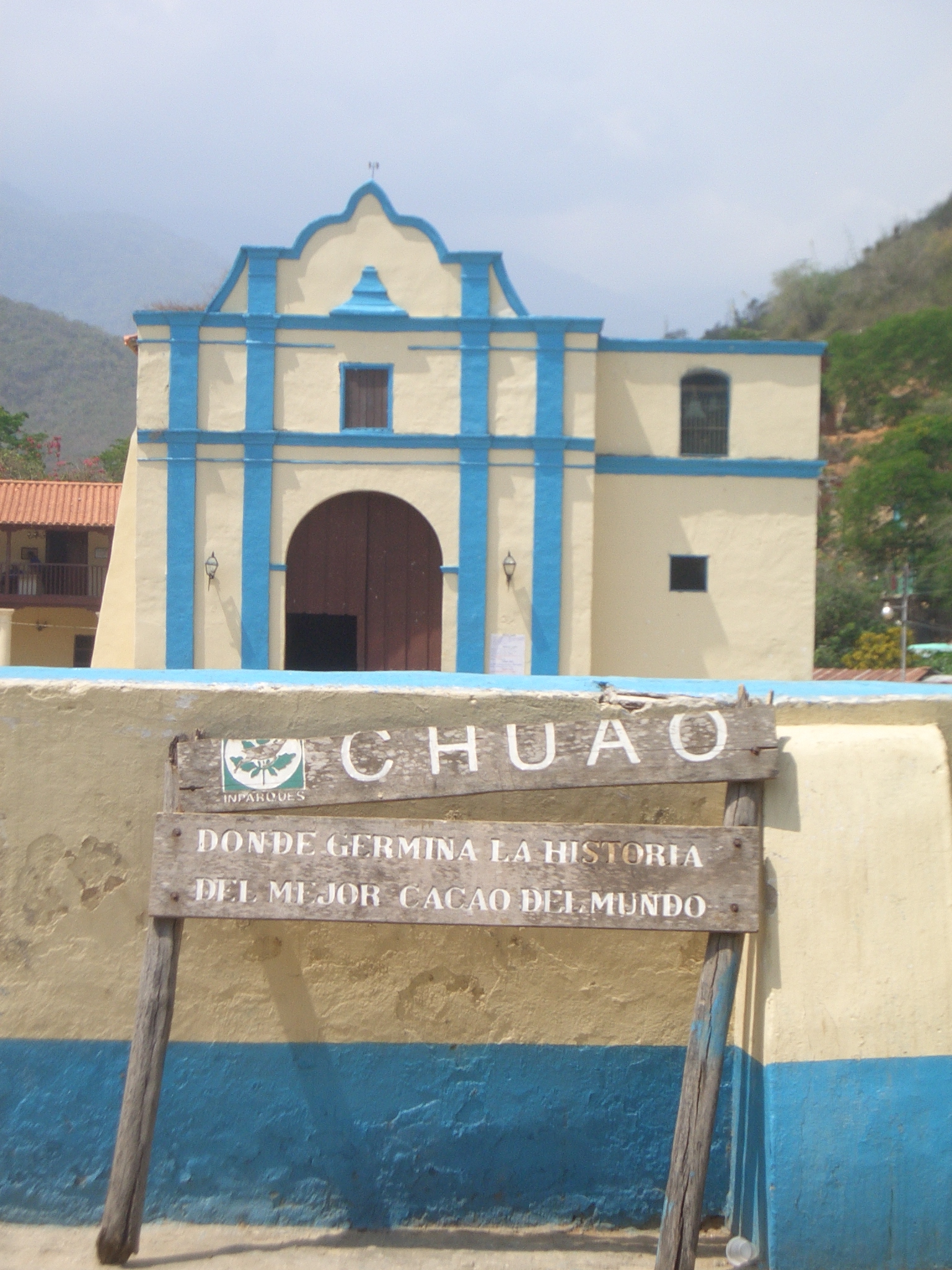
Chuao
There is no road to Chuao. To reach this village on Venezuela's northern coast, you take a boat from nearby Choroní, then walk four kilometers inland through a valley pinched between rainforest mountains and the Caribbean Sea. The isolation is the point. Since 1591, these few hectares of irrigated lowland have produced criollo cacao - a variety so rare and prized that chocolate makers worldwide compete for it, and the village cooperative sells 99 percent of its harvest to foreign buyers. Chuao's beans command premium prices not because of marketing but because of terroir: centuries of careful cultivation in a microclimate that has never been replicated.
Beans That Built an Economy
Founded in 1660, Chuao has been shaped by cacao for longer than most nations have existed. The plantations here represent one of the oldest continuously cultivated cacao landscapes in South America. The Empresa Campesina de Chuao, a workers' cooperative, operates the groves today, drying the beans in the church courtyard - the Plaza de Secado - where the smell of fermenting cacao hangs in the humid air. The criollo variety grown here is considered among the best in the world and is increasingly endangered, as hardier but less flavorful strains replace it elsewhere. Ancient irrigation systems channel mountain water through the plantation year-round, a technology so effective it has sustained production across centuries of political upheaval, colonial exploitation, and economic transformation.
The Dancing Devils and the Promise
Every year, dancers in ornate devil masks move through Chuao's streets in the festival of the Diablos Danzantes, a tradition recognized by UNESCO. The performance fuses deep African roots with Catholic ritual - a cultural synthesis born in the cacao fields where enslaved Africans were forced to work under colonial rule. Those who join the dance enter a lifelong pact: the promise-keepers, committed to transmitting their history and traditions to future generations. The San Juaneras festival adds another layer, celebrating with music and procession. These are not performances for tourists. They are acts of cultural memory, carried forward by the descendants of the people who built the plantation economy with their labor and preserved their identity through rhythm and belief.
Stone, Sanctuary, and Pardon
The church of the Immaculate Conception, built in 1772 to replace an older chapel, anchors the village with its double pilasters, semicircular arch, and colonial religious images including a wooden figure of Saint Nicholas of Bari. It was declared a National Monument in 1960. Beside the church courtyard stands the Pardon Cross, a relic of the slavery era: if an enslaved person being hunted reached the cross and knelt before it, they could not be punished. The House on the Hill dates from 1652, once the hacienda administrator's residence, with Tuscan-capital columns on its verandas. On El Mamey hill, stone ruins from the earliest colonial years still stand in an L-shape measuring 50 by 40 meters, connected to the beach by a royal road so carefully built that it remains perfectly preserved. A circular chalk oven sits along the same path - each structure a piece of the economic machinery that once turned cacao into colonial wealth.
Where Forest Meets Plantation
Chuao's cultural landscape is inseparable from its natural one. The village borders Henri Pittier National Park, Venezuela's oldest, established in 1937. The surrounding mountains and dense rainforest to the south give way to Caribbean coastline to the north, creating a pocket of humidity and shelter ideal for cacao. The combination of natural forest canopy with cultivated groves, sustained by those ancient irrigation channels, forms a landscape unlike any other in Venezuela. Fishing boats line the bay, because the village subsists on the sea as much as on chocolate. Chuao is above all a living place - not a museum, not a ruin, but a community where African-Caribbean rites and Catholic devotion have merged into something that has survived everything the centuries could throw at it.
From the Air
Located at 10.493N, 67.527W on Venezuela's central Caribbean coast, in the northern coastal range of Aragua state. The village sits in a valley approximately 4 km inland from its bay, surrounded by the mountains of Henri Pittier National Park. From the air, look for the small bay with fishing boats and a narrow valley cutting inland through dense forest. There is no airstrip; access is by boat from Choroní. Nearest airport: Arturo Michelena International Airport (SVVA) in Valencia, approximately 60 km to the southwest. The coastal range terrain rises sharply from sea level; expect turbulence near the ridgeline.