Church of Saint Paul, Malacca
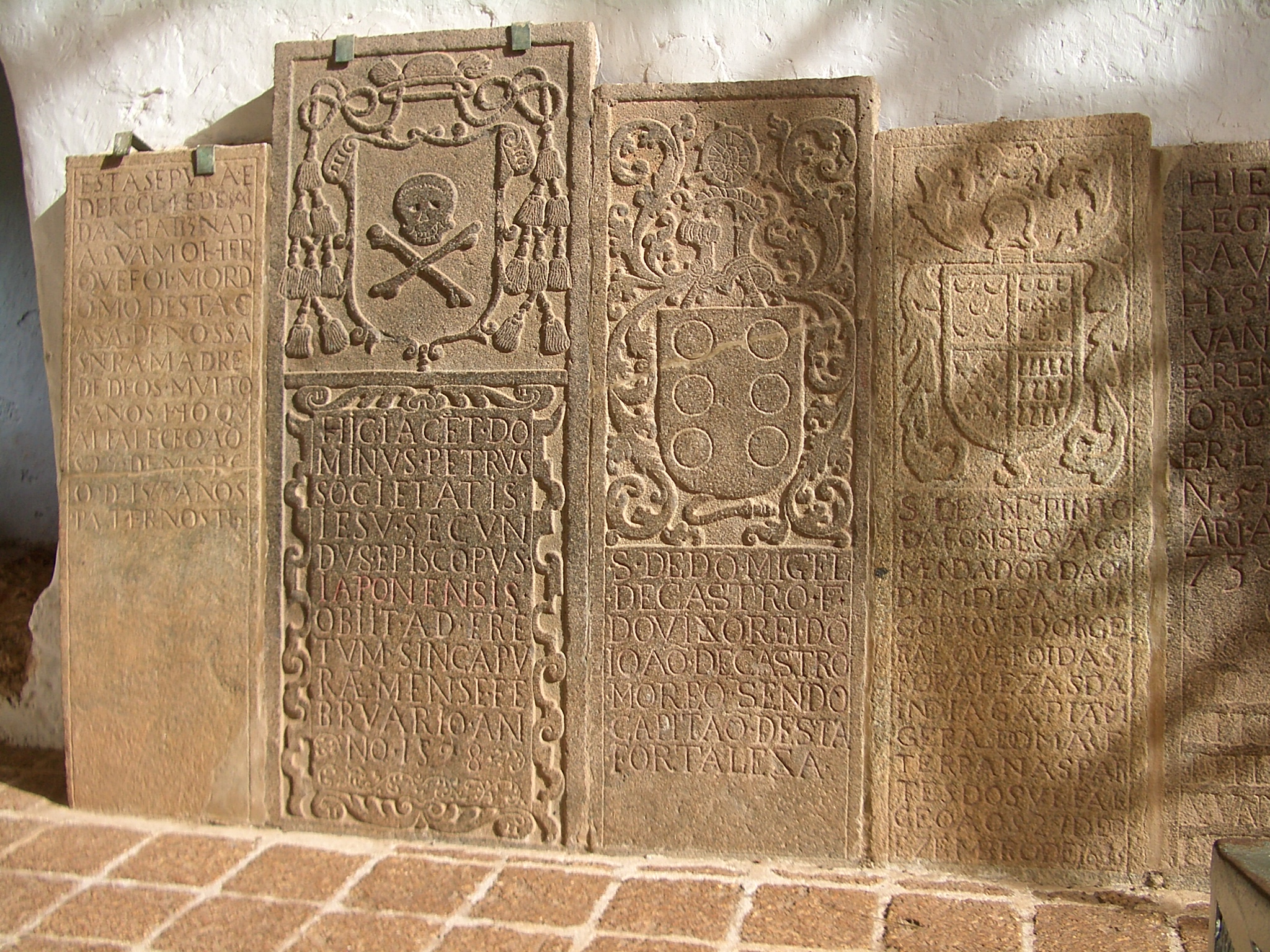
A dead saint's body once rested here, packed in quicklime, waiting for a ship to Goa. That was 1553, and the chapel on St. Paul's Hill was barely three decades old. Today the church stands roofless against the equatorial sky, its laterite walls open to rain and birdcall, the oldest European building east of India. Portuguese tombstones lean against Dutch-era walls. A statue of Francis Xavier watches from outside, missing its right hand -- an absence that mirrors the relic-hunting that followed the saint himself across centuries and oceans.
A Captain's Gratitude
The story begins not with a church but with a storm. In 1521, the Portuguese military commander Duarte Coelho survived a confrontation with a Chinese fleet in the South China Sea. Grateful for his deliverance, he built a small chapel on the hill overlooking Malacca's harbor, dedicating it to the Virgin Mary as Nossa Senhora da Graca -- Our Lady of Grace. Below the hill, the Portuguese had already reshaped the city. Afonso de Albuquerque had constructed the first Catholic church in Malacca at the foot of the hill near the fortress A Famosa in 1511, the year he seized the port. Coelho's chapel was something more personal: a private act of thanksgiving that would eventually anchor one of the most layered religious sites in Southeast Asia.
The Saint Who Passed Through
Francis Xavier arrived in Malacca as a Jesuit missionary with boundless energy and a talent for institution-building. In 1548, the Bishop of Goa deeded the hilltop chapel to the Society of Jesus, and Xavier established St. Paul's College on the premises -- possibly the first school in the modern sense on the Malay Peninsula. He used the chapel as his base for missionary journeys to China and Japan, returning between voyages to the small stone building that overlooked the Strait of Malacca. Xavier would not return alive from his final journey. He died on Shangchuan Island off the Chinese coast in 1552. His body was disinterred months later and brought back to the chapel, where it lay temporarily before being shipped to its permanent resting place in Goa. An open vault in the church floor still claims to mark where Xavier was buried, though historians have found no evidence connecting this particular grave to the saint. The Jesuits demolished Coelho's chapel in 1566 and built a grander church in its place, Nossa Senhora da Annunciada, with three altars, azulejo tiles on the chancel walls, and a clock tower.
The Church on Top, the Church Below
When the Dutch seized Malacca from the Portuguese in 1641, they did what Protestant conquerors often did: they repurposed the Catholic church. Renamed St. Paul's -- or the Bovenkerk, the "church on the top" -- it served the Dutch Reformed community for over a century. But the hilltop location, impressive as it was, proved impractical for regular worship. In 1753, the Dutch completed Christ Church at the base of the hill, the Benedenkerk or "church at the bottom," and abandoned St. Paul's. The building began its long decline into ruin. By 1814, when William Farquhar built a 13-meter lighthouse in front of the church, the structure was already more monument than sanctuary. The square, neoclassical tower -- accessible only by ladder -- served navigation rather than devotion, guiding ships through the strait that had made Malacca wealthy in the first place.
Stones and Missing Fingers
The ruins accumulated stories the way old buildings accumulate moss. In 1924, archaeologists partially uncovered the original Portuguese burial vault beneath the chancel. Major C. E. Bone of the Malacca Historical Society excavated further in 1930, and by 1932 scattered tombstones had been gathered and arranged along the interior walls. A marble statue of Francis Xavier was erected outside the church, but its history grew tangled with legend. One account claims a casuarina tree fell on the statue the day after its consecration, snapping off its right arm. Film footage from 1961, however, shows both arms intact. A 1967 Straits Times article offers a more plausible explanation: visitors chipped away the fingers of the statue's right hand as lucky charms. The detail carries an eerie echo -- Xavier's actual right forearm had been detached as a holy relic back in 1614, centuries before souvenir-hunters reached the statue.
A Living Ruin
Every year on the first Saturday of December, a Catholic mass is celebrated within these roofless walls in honor of St. Francis Xavier's feast day. The tradition dates to 1922, when Father Jules Francois, the parish priest of St. Francis Xavier Church in Malacca, revived the practice. The sky serves as the ceiling, and the congregation gathers among walls that have witnessed Portuguese construction, Jesuit scholarship, Dutch reformation, British pragmatism, and the slow patient work of tropical weather. St. Paul's Hill is no longer the strategic summit it was when Coelho raised his chapel of gratitude. The strait below carries container ships instead of spice traders. But the church remains what it has been for five centuries: a place where empires left their marks, each layer visible beneath the one that followed.
From the Air
Located at 2.193°N, 102.249°E on St. Paul's Hill in Malacca City, Malaysia. The hilltop ruins sit prominently above the surrounding old town, adjacent to the A Famosa fortress remnants. Nearest airport is Malacca International Airport (WMKM), approximately 10 km to the north. Best viewed from 2,000-3,000 ft AGL approaching from the Strait of Malacca to the west. The red-roofed Christ Church and the Dutch Square at the hill's base provide visual reference points.