Church of Santa Prisca de Taxco
Jose de la Borda arrived in Taxco with nothing and built a church that almost took everything back. Between 1751 and 1759, the French-born silver magnate poured his fortune into the Parroquia de Santa Prisca y San Sebastian, a Churrigueresque monument so lavish that it nearly bankrupted the man who commissioned it. The church rises from the east side of Taxco's main plaza, its twin towers commanding the hillside town in the southern state of Guerrero. For nearly half a century -- from 1758 to 1806 -- it was the tallest building in all of Mexico.
A Father's Extravagance
Borda's motive was personal. He wanted a church where his son, the priest Manuel de la Borda, could officiate mass. Having arrived in the Taxco mining district only thirty-five years before construction began, Borda had already become one of the region's most powerful figures -- wealthy enough that the Archbishopric of Mexico granted him permission to build the parish entirely to his own taste. He hired Cayetano Jose de Siguenza to draw the plans, constrained by Taxco's steep terrain into a very narrow Latin cross layout. The architect Diego Duran Berruecos oversaw construction from 1751 to 1759. The altarpieces were entrusted to the brothers Isidoro Vicente and Luis de Balbas, adoptive sons of Jeronimo de Balbas, the master credited with bringing the Churrigueresque style to Mexico. They used the building's structure to trace symbolic and religious axes through the interior.
Stone, Tile, and Gold
The facade faces west, as colonial custom dictated, and it is an exercise in controlled excess. Classicist pilasters stand beside Solomonic columns from the previous century, all wrapped in carved foliage, scrolls, ribbons, niches sheltering saints, heraldic shields, and diamond-point ornament. Inside, the nave stretches beneath Gothic ribbed vaults with tiercerons -- a web of decorative ribs radiating from a central keystone that conceals the passage to the Sagrario, the sanctuary. A side nave serves as a chapel for the Altar of Souls. The dome is covered in Talavera azulejos, the glazed ceramic tiles characteristic of New Spanish architecture, their blue and yellow patterns catching the mountain light. The oldest document in the parish archive dates from 1598, predating the current building by more than a century and hinting at the long religious history of this site.
The Storm and the Apparition
Taxco remembers a legend from the construction years. While Borda was away on business in Guanajuato, a storm rolled over the unfinished church -- black clouds, cold winds whistling through the incomplete towers. The workmen were terrified. Lightning struck the cupola, and instead of destruction, the tiles began to glow with strange light, revealing an inscription: "Gloria a Dios en las alturas y paz en la tierra a los hombres de buena voluntad" -- Glory to God in the Highest and peace on earth for men of good will. The townspeople dropped to their knees, fearing demons. Then, above the church, a woman appeared, smiling and serene, catching the subsequent lightning bolts in her hands. Whether the story is true matters less than what it reveals: from the beginning, Santa Prisca was the kind of building people believed the heavens would bother to protect.
Masterworks Within
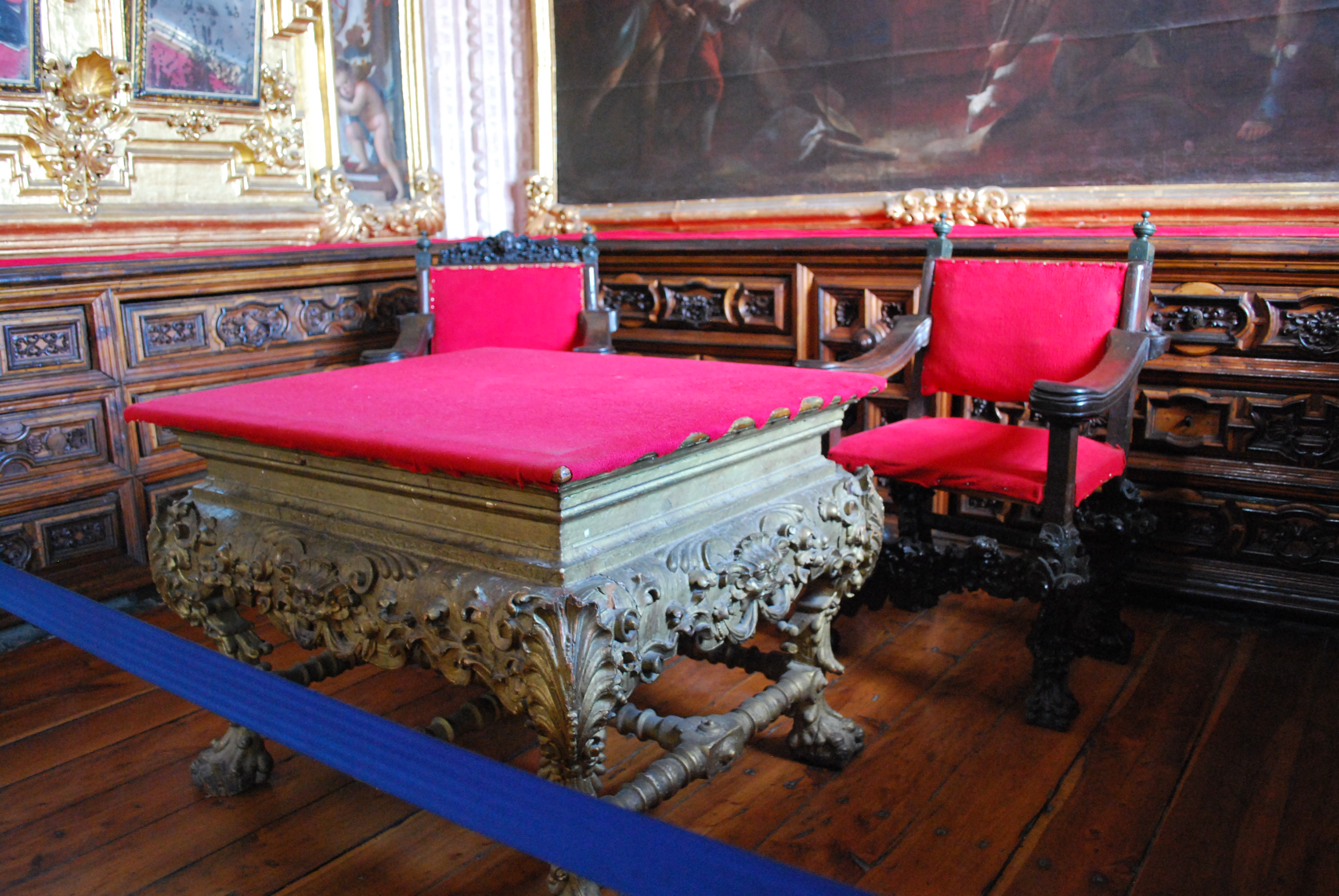
The church houses significant works of colonial art, most notably "The Martyrdom of Saint Prisca," painted in 1760 by Miguel Cabrera, one of the most celebrated artists of New Spain. The painting hangs in the interior alongside gilded retablos -- ornate altarpiece screens -- that climb the walls in tiers of carved and painted wood. The sacristy contains period furniture, and the monumental organ occupies the choir loft above the entrance. Photographs from 1908 and the 1920s show the interior largely unchanged, its gold leaf and carved stone surviving revolution, earthquake, and time. Today, the Church of Santa Prisca is considered one of the finest examples of New Spanish Churrigueresque architecture, a style that took the European Baroque and pushed it further than its inventors ever imagined -- more ornament, more gold, more drama. Borda would have approved.
From the Air
Located at 18.56N, 99.60W in the hillside silver town of Taxco de Alarcon, Guerrero, at approximately 1,750 meters elevation. The church's twin Churrigueresque towers are the most prominent features on the skyline and are visible from the air as the tallest structures in the tightly packed colonial town center. Look for the town clinging to steep hillsides with the church dominating the main plaza. Nearest airport: Acapulco International (MMAA/ACA) approximately 130 km south. Cuernavaca (private strips) is closer to the north. Terrain is mountainous Sierra Madre del Sur -- maintain safe altitude.