Church Rock Uranium Mill Spill
Four months after Three Mile Island became a household name, a far larger release of radioactive material occurred in the remote desert of western New Mexico. Almost nobody heard about it. At 5:30 in the morning on July 16, 1979, a crack in the dam wall of United Nuclear Corporation's uranium mill tailings pond near Church Rock split wide open. Solid radioactive waste and acidic tailings solution poured into Pipeline Arroyo, a tributary of the Puerco River, and flowed downstream through Gallup, New Mexico and onward into Navajo County, Arizona. It was the largest release of radioactive material in United States history. The contaminated water backed up sewers, poisoned aquifers, and left stagnant, radioactive pools along the riverbanks where Navajo children had recently waded.
A Dam Built to Fail
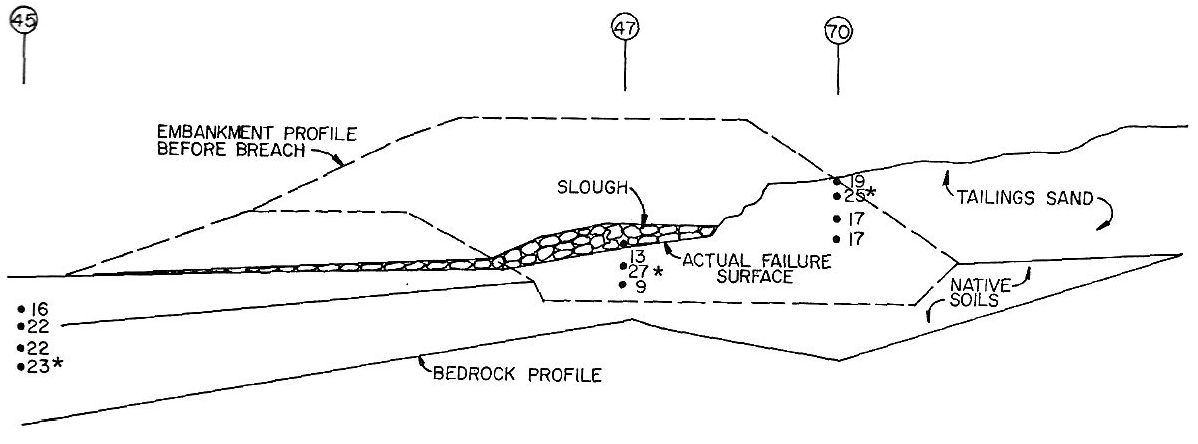
The United Nuclear Corporation mill operated from June 1977 to May 1982 on privately owned land northeast of Gallup, bordered on two sides by Navajo Nation Tribal Trust lands. The mill processed uranium ore into an acidic slurry of ground waste rock and fluid, pumped into holding ponds for evaporation. The dam forming the southern wall of one pond was built on a deposit of collapsible clayey, silty sand. The holding pond was not lined, a direct violation of the Uranium Mill Tailings Radiation Control Act of 1978. The United States Army Corps of Engineers later concluded that the principal cause of failure was differential settlement of the foundation beneath the dam wall. At a Congressional hearing, the Corps testified that had the dam been constructed to legal specifications, the failure would not have occurred. Warnings of an impending spill had been ignored by both the state and by United Nuclear Corporation.
Poison Flowing Downstream
The contaminated water traveled downstream through Gallup and reached as far as Navajo County, Arizona. As the highly acidic spill moved along the river, alkaline soils partially neutralized the acid, but yellow salt crystals containing metals and radionuclides precipitated onto the arroyo bed. These toxic salts washed further downstream during subsequent rainstorms. The flood contaminated shallow aquifers that residents relied on for drinking water and livestock. Some 1,700 Navajo people lost access to clean water. Prior to the spill, families had used the riverside for recreation and herb-gathering. Children waded in the Puerco River. The spill contaminated the water they drank, the wells they depended on, and the land where their sheep and cattle grazed.
A Response That Never Came
The states of Arizona and New Mexico failed to immediately warn their residents. United Nuclear Corporation employees were dispatched to notify Navajo-speaking communities downstream, but not until days after the breach. The Navajo Nation asked New Mexico Governor Bruce King to request federal disaster assistance, but he refused, limiting the aid available. Ponds of uranium-contaminated water lined the river and seeped into wells. United Nuclear denied claims that the spill caused livestock deaths, even as the Navajo economy, dependent on the sale of mutton, suffered. The Nuclear Regulatory Commission left the state to handle the situation until October 1979, when it learned New Mexico planned to let the mill resume operations. The NRC suspended United Nuclear's license temporarily. After fewer than four months of downtime, the mill resumed operations on November 2, 1979, further contaminating the groundwater.
Studying Cattle, Ignoring People
The human cost received remarkably little attention. A few Navajo children were sent to Los Alamos to be checked for radiation exposure, but no long-term health monitoring was ever established. A local writer observed that the Indian Health Service spent more effort studying livestock than the people affected. An IHS study did find significantly higher levels of radionuclides in Church Rock cattle compared to livestock from non-mining areas but advised the contamination posed no risk as long as residents did not depend on livestock for food over long periods. Local Navajos did exactly that. No ongoing epidemiological studies have been conducted at Church Rock. Meanwhile, studies since the 1950s have documented significantly higher cancer rates among the Navajo associated with uranium mining contamination and radiation exposure.
The Longest Cleanup
Initial cleanup efforts were almost comically inadequate. United Nuclear sent small crews with shovels and drums, retrieving an estimated one percent of the solid waste spilled over three months. The Navajo Nation again appealed to the governor to declare the site a federal disaster area; he again refused. In 1981, the state and federal governments stopped delivering clean water by truck, which they had provided since the spill. United Nuclear neutralized the tailings with ammonia and lime through 1982. In 1983, the site was placed on the EPA's National Priorities List for Superfund cleanup. In 2007, the EPA and United Nuclear removed radium-contaminated soil around five buildings, some residential. As of 2016, the EPA acknowledged that groundwater migration at the Church Rock site was still not under control. In 2003, the Navajo Nation's Church Rock Chapter launched its own uranium monitoring project, finding significant radiation from both natural sources and decades of mining. The largest nuclear accident in American history remains, in many ways, unfinished.
From the Air
The Church Rock uranium mill site is located at approximately 35.65N, 108.51W, northeast of Gallup, New Mexico. The area is remote high desert on the border of the Navajo Nation. From the air, the Puerco River drainage is visible tracing southwestward. Nearest airports include Gallup Municipal Airport (KGUP) and Albuquerque International Sunport (KABQ) about 140 miles to the east. The terrain is arid and sparsely vegetated, with good visibility in typical conditions. The mill site itself is not visually prominent, but the surrounding Navajo landscape of mesas and arroyos is distinctive.