Cincinnati: The Queen City Where Chili Comes on Spaghetti
Cincinnati was the Queen City of the West before there was much West to be queen of. In the 1850s, it was among America's largest cities - a pork-packing center whose German immigrants brought brewing culture that produced over 30 breweries. The railroads bypassed it; Chicago rose instead. Cincinnati became what it remains: a prosperous but overlooked Midwestern city, proud of its chili (which isn't really chili), its German heritage (still visible in Over-the-Rhine), and its claim to baseball's first professional team. The Queen City aged gracefully while other cities declined dramatically; what remains is preservation others would envy.
The Chili
Cincinnati chili is not Texas chili - it's a Greek-American creation, spiced with cinnamon and allspice and chocolate, served over spaghetti with shredded cheddar on top. The nomenclature is numerical: 'two-way' is chili over spaghetti; 'three-way' adds cheese; 'four-way' adds onions or beans; 'five-way' adds both. Skyline and Gold Star are the rival chains; the debate between them is heated. Outsiders find the dish bizarre; natives find the outsiders' confusion amusing. The chili emerged from Greek immigrants adapting Mediterranean flavors to Midwestern expectations, creating something that exists nowhere else.
Over-the-Rhine
Over-the-Rhine was Cincinnati's German neighborhood - named because residents crossed the Miami and Erie Canal (nicknamed 'the Rhine') to reach it. The neighborhood's 19th-century Italianate architecture survived urban renewal because no one wanted to redevelop it; the buildings that remained intact through decades of poverty became prime for gentrification. The transformation is ongoing: craft breweries occupy former saloons, restaurants fill storefronts, young professionals buy renovated condos. The German heritage is commemorated more than practiced; what survives is architecture that most cities demolished.
The Reds
The Cincinnati Reds were baseball's first professional team - the Red Stockings of 1869 went 57-0 in their first season, demonstrating that paying players produced winning teams. The franchise has operated continuously since 1882, winning five World Series, producing Pete Rose (the hit king whose gambling permanently banned him), and anchoring a city's identity for over a century. Great American Ball Park sits on the riverfront, its views of Northern Kentucky across the Ohio an asset unusual among ballparks. The Reds aren't often good; they're always Cincinnati's.
Procter & Gamble
Procter & Gamble was founded in Cincinnati in 1837, making candles and soap. The company that emerged makes Tide, Pampers, Gillette, Crest, and dozens of other consumer products used daily by billions of people. P&G headquarters remain in Cincinnati, employing thousands and shaping the local economy and culture. The company's influence extends beyond employment: P&G's marketing innovations (soap operas, brand management) shaped American advertising; its corporate culture shaped Cincinnati's self-image. The city makes soap that the world uses; the soap empire headquarters in the city that made it.
Visiting Cincinnati
Cincinnati is served by Cincinnati/Northern Kentucky International Airport (CVG), actually located in Kentucky. The riverfront offers views from Smale Riverfront Park and the Roebling Suspension Bridge (prototype for the Brooklyn Bridge). Over-the-Rhine concentrates restaurants, breweries, and Findlay Market (Ohio's oldest public market). The Cincinnati Art Museum in Eden Park is free and excellent. The American Sign Museum preserves neon and commercial art. The chili pilgrimage requires visiting Skyline or Gold Star and committing to the experience without Texas comparisons. The experience rewards appreciation for Midwestern elegance - a city that's aged well because it was built well.
From the Air
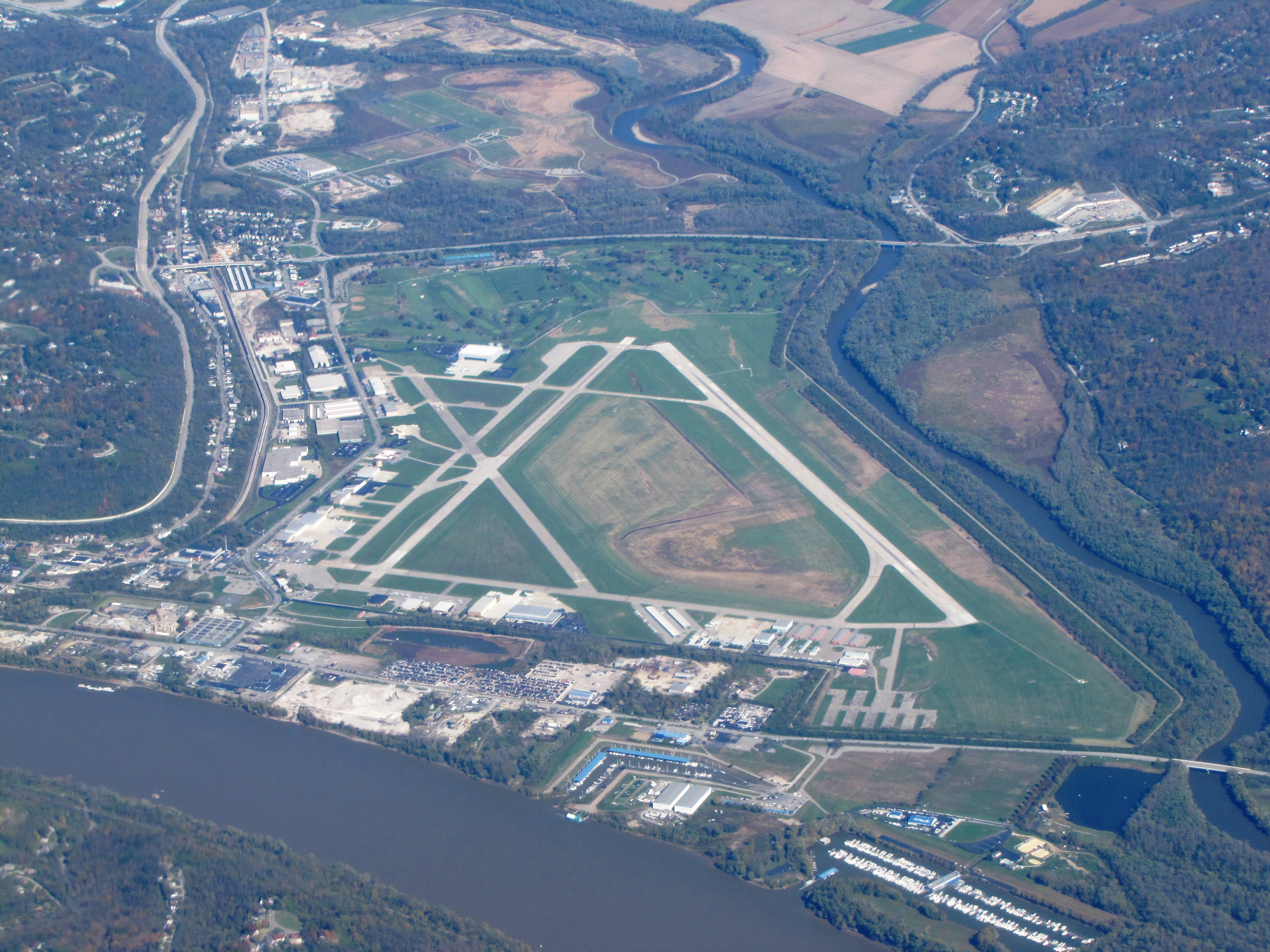
Located at 39.10°N, 84.51°W on the Ohio River at the Kentucky border. From altitude, Cincinnati appears as a city of hills along the river - downtown in the basin, residential neighborhoods climbing the surrounding ridges. The Ohio River curves past; Covington and Newport in Kentucky are visible across the water. The sports stadiums anchor the riverfront. What appears from altitude as a hilly river city is the Queen City of the West - where German immigrants made beer, Greek immigrants made chili, and the Reds invented professional baseball.